
Pruning
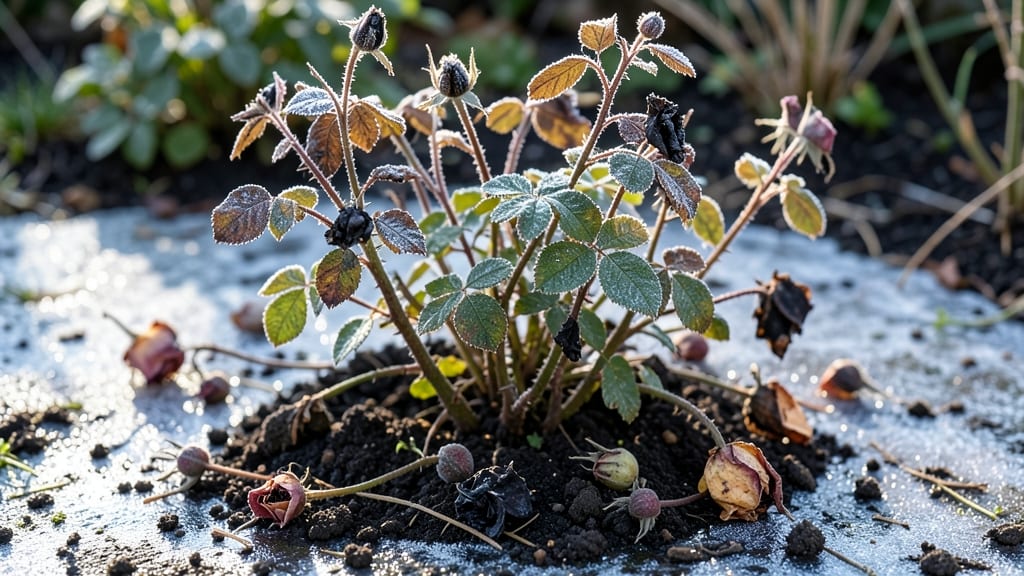
When frost turns your roses into blackened sticks, don't panic—frost damaged roses can bounce back with the right care. 🌿 I've nursed back more than my share of winter-wrecked bushes, and these three steps bring them roaring back to life every time.
The key is acting fast, cutting out the dead, and giving them a fighting chance before new growth starts.
First, you'll need to identify what's truly dead—sometimes stems look worse than they are. Grab your pruners and snip any blackened canes right back to healthy green wood or bare wood.
Mulch heavily around the base with 4-6 inches of straw or shredded leaves to insulate roots, then add a layer of frost cloth if another freeze is forecast. This simple first aid keeps roots alive while the plant recovers.
By late spring, you'll see fresh green shoots pushing through, and with a balanced fertilizer (10-10-10) applied in early May, those canes will thicken and bloom like nothing happened.
The secret? Timing—wait until daytime temps stay above 50°F before pruning or fertilizing, or you'll shock the plant into new growth too soon.
For next year, choose hardy varieties like 'Knock Out' or 'Dr. Huey' that shrug off light frosts, and protect tender roses with frost cloth or a mini greenhouse when temps dip below 25°F. Your roses will thank you with vibrant blooms that outlast the winter blues.
Cold Weather’s Hidden Attack
Frost isn’t just a chilly nuisance—it’s a silent assassin for roses, turning vibrant blooms into brittle, browned husks overnight. Understanding why frost damages roses is the first step to protecting your garden.
Below, we break down the science behind the damage, so you can spot the warning signs and act fast.
When temperatures drop below 28°F (-2°C), the water inside rose cells begins to crystallize, forming sharp ice shards. These ice crystals pierce cell walls, rupturing them like glass.
The damage isn’t just cosmetic—it disrupts the plant’s vascular system, cutting off water and nutrient flow. Without proper hydration, leaves wilt, stems blacken, and buds fail to open in spring.
Key trigger: Rapid freezing (especially after a warm spell) forces cells to expand uncontrollably, amplifying damage.
Not all roses are created equal when it comes to frost tolerance. Hybrid teas, grandifloras, and some climbers are particularly vulnerable because they’re bred for long stems and large blooms—traits that often come at the cost of cold resistance.
Even hardy roses (like Rugosas or some Old Garden varieties) can suffer if they’re stressed by drought, poor soil, or late-season growth before winter.
Pro tip: 🌡️ Check your USDA Hardiness Zone—roses rated for Zone 5 (down to -20°F/-29°C) won’t survive a Zone 7 freeze (-5°F/-21°C) without protection.
Water acts like an insulator—it absorbs heat and slows temperature drops. But if roses are water-stressed (dry soil, wilting foliage) before frost hits, their cellular membranes weaken, making them more susceptible to ice damage.
Additionally, wet foliage (from rain or overhead watering) freezes faster, creating heavy ice buildup that snaps stems under its own weight.
Avoid this: 💡 Deep-water roses 5–7 days before the first frost (but stop 48 hours prior to prevent soggy roots).
Wind accelerates frost damage by stripping heat from leaves and stems. This is why roses in exposed areas (like hilltops or open patios) suffer more than those sheltered by fences or buildings.
The wind chill effect can make 30°F (-1°C) feel like 15°F (-9°C), pushing temperatures below a rose’s tolerance threshold faster.
Solution: 🌬️ Windbreaks (burlap, lattice, or evergreen hedges) can raise microclimate temps by 5–10°F, buying your roses critical survival time.
A sudden burst of nitrogen (like a fall fertilizer application) encourages new, tender growth that hasn’t hardened off for winter. This soft tissue freezes easily, leading to brown, mushy stems come spring. Even organic matter (like compost) can overheat roots, making plants more frost-sensitive.
Rule of thumb: ⏰ Stop fertilizing 6–8 weeks before the first frost—let your roses focus on root development, not top growth.
Roses struggle with temperature fluctuations—especially when warm days (60°F+) are followed by freezing nights (32°F or below). This thermal shock confuses the plant’s dormancy signals, keeping it metabolically active when it should be conserving energy.
The result? Delayed hardening, making them three times more frost-prone.
Watch for: 🌡️ Bud swell in late winter—a sign the plant is "tricked" into thinking spring has arrived.
Low-lying areas, north-facing slopes, and valleys collect cold air, creating frost pockets where temps can drop 10°F lower than surrounding areas. If your roses are planted in these zones, they’re first in line for frost damage, even if the rest of your garden survives.
Fix it: 📏 Elevate beds slightly (6–12 inches) or group roses together to create a warmer microclimate through shared heat retention.
How to Revive Frostbitten Roses
Frost can leave your roses looking like they’ve been through a battle, but with the right care, you can nurse them back to health—and even prevent future damage.
Below, we’ll break down practical fixes for common frost-related issues, from blackened stems to mushy leaves, plus prevention tips to keep your roses resilient.
Before jumping into fixes, inspect your roses carefully:
- Blackened or brown stems 🔴 → Likely dead (prune these).
- Wilted but still green leaves 🟢 → Probably recoverable with care.
- Mushy, slimy stems ⚠️ → Sign of rot (act fast—these may need removal).
Pro Tip: 💡 Use your fingernail to gently scrape a stem. If it’s soft and squishy, it’s dead. If it’s firm but discolored, it may still pull through!
✂️ When to Prune:
- Wait 1–2 weeks after frost to prune—this gives time for hidden damage to show.
- Cut 6–12 inches above ground level for severely damaged canes (but leave some buds near the base).
- Remove all blackened, mushy, or hollow stems—these won’t recover.
👨🍳 How to Prune:
- Sterilize your shears with rubbing alcohol to prevent disease.
- Make clean cuts at a 45-degree angle (just above a healthy bud or node).
- Avoid leaving stubs—this invites pests and rot.
Pro Tip: ✨ If your roses are barely hanging on, give them a hard prune (cut back by ⅓) to encourage new growth from the base.
Frost weakens roots, so hydration and warmth are key to recovery.
💧 Watering Tips:
- Deep water 1–2 times per week (not just a light sprinkle).
- Water at the base, not the leaves, to prevent fungal issues.
- If the ground is frozen, mulch heavily (3–4 inches of straw or shredded leaves) to insulate roots.
☀️ Sun & Shelter:
- Move potted roses to a sheltered spot (like against a south-facing wall) for a few days to recover.
- Avoid full sun until new growth appears—gentle morning light is best.
Pro Tip: 🌡️ If nighttime temps drop again, cover roses with frost cloth (not plastic—it traps moisture and causes rot).
Frost-stressed roses are vulnerable to disease and pests.
Act fast: - Fungal issues? Spray with neem oil or copper fungicide if you see black spots. - Bugs moving in? Check for aphids or spider mites (hose them off or use insecticidal soap). - Prevent rot: Ensure the soil drains well—amend with compost if it’s too dense.
Don’t let frost catch you off guard again! Plan ahead with these tricks:
| Risk | Fix |
|---|---|
| Late frosts | Plant late-blooming varieties (like ‘Knock Out’ roses) or use frost blankets. |
| Poor drainage | Add organic mulch (straw, wood chips) to insulate roots. |
| Young, tender roses | Delay planting until after the last frost date in your zone. |
| Wind exposure | Plant near a windbreak (fence, hedge) or use burlap wraps. |
Pro Tip: 🎯 Monitor your local frost dates—many regions have microclimates where frost hits earlier or later than official forecasts.
- Mild frost damage? New growth in 2–4 weeks.
- Severe damage? Some roses may take 6–8 weeks to bounce back.
- If no new buds appear by spring, consider replacing the plant—some roses just can’t recover from deep frost.
With these steps, your frost-damaged roses should not only survive but thrive—ready to bloom even more beautifully next season! 🌹✨
Frequently asked questions
How do I tell if my rose stems are dead or just dormant?
Gently scratch a stem with your fingernail—if it's soft and squishy, it's dead. Healthy stems feel firm even if discolored. For stubborn cases, wait 1-2 weeks after frost before pruning, as hidden damage may reveal itself. Never prune frozen stems, as this can worsen injuries.
Can I save roses that look completely blackened after frost?
Possibly! Cut back 6-12 inches above ground level to healthy green wood or bare wood. If the base shows green buds, new growth will emerge. For heavily damaged bushes, prune ⅓ of the plant to stimulate fresh shoots. Mulch heavily with 4-6 inches of straw to protect roots during recovery.
What's the best way to protect roses from future frost damage?
Choose hardy varieties like 'Knock Out' roses for your zone. In fall, apply 3-4 inches of organic mulch and cover with frost cloth when temps drop below 25°F. Avoid late-season nitrogen fertilizer, which encourages tender growth vulnerable to frost. Plant windbreaks (like evergreen hedges) to raise microclimate temperatures by 5-10°F.
Should I fertilize frost-damaged roses in early spring?
Wait until daytime temps stay above 50°F consistently. Use a balanced fertilizer (10-10-10) in early May to support recovery. Avoid high-nitrogen fertilizers—they can shock weak plants. First, focus on hydration and mulching to rebuild root strength before fertilizing.
How long does it take for frost-damaged roses to recover?
Mild damage shows new growth in 2-4 weeks, while severe cases may take 6-8 weeks. If no buds appear by spring, the plant may need replacement. Monitor for pests or disease during recovery—stressed roses are more vulnerable. Patience is key: some roses bloom just as beautifully after recovery as before frost!