
Container Gardens
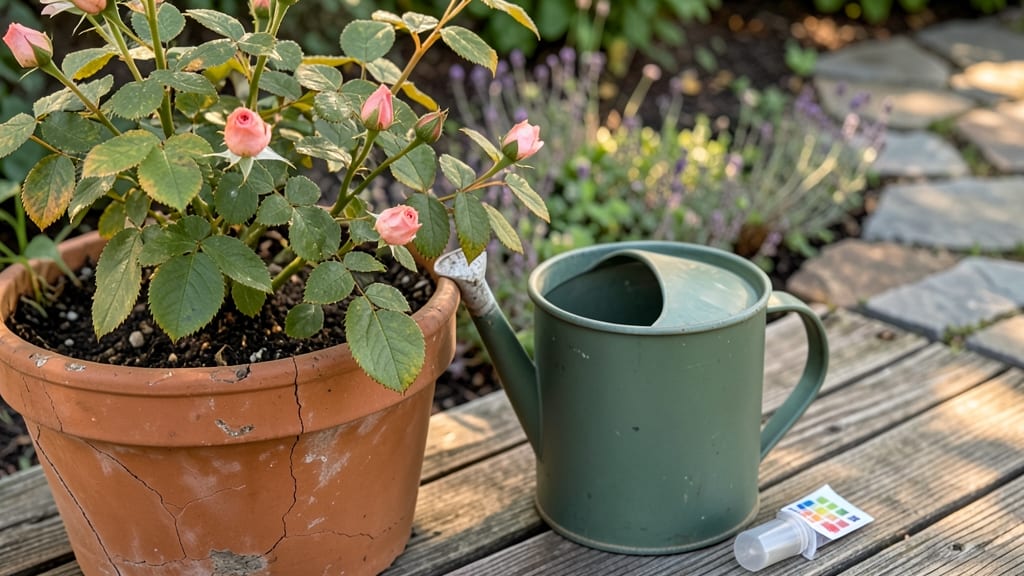
Treating yellow leaves on roses in pots starts with understanding the root cause—because that's where the real problem lives. 🌱 I've seen this happen more than I'd like to admit, and the fix isn't always what you'd expect.
Overwatering, poor drainage, or nutrient deficiencies often masquerade as simple "old age" in potted roses, but they're actually silent killers waiting to turn your prized blooms into sad, yellowing relics.
Here's the thing—potted roses need drainage holes, well-draining soil, and a watering schedule that mimics their natural habitat. Most people drown them without realizing it. I learned this the hard way after losing three potted roses last summer to root rot.
The fix? Let the top 2 inches of soil dry out before watering again, and always use a pot with drainage. If your soil stays soggy for more than a day, you're overwatering.
Once you've nailed the watering routine, the next step is nutrient balance. Yellow leaves often signal a deficiency—usually nitrogen or magnesium. A balanced rose fertilizer applied every 4-6 weeks works wonders, but if the yellowing is between the veins, it's likely magnesium.
Mix in 1 tablespoon of Epsom salt per gallon of water and apply it as a foliar spray. You'll see the difference within 2-3 weeks—healthier green leaves and stronger stems.
For roses that just won't bounce back, check for pests like spider mites or aphids hiding on the undersides of leaves. A strong spray of water or neem oil solution can turn things around quickly.
The key is acting fast—yellow leaves are your plant's way of screaming for help before it's too late. With these three steps, your potted roses will be back to their vibrant best in no time.
Root Causes of Yellowing Rose Leaves
Yellow leaves on potted roses aren’t just a cosmetic issue—they’re a cry for help from your plant. Understanding the why behind the discoloration is the first step to restoring your roses’ health.
Below, we break down the most common culprits, backed by science, so you can diagnose the problem like a pro. 🌱🔍
Roses in pots are particularly vulnerable to root rot, a fungal infection triggered by soggy soil. When roots sit in waterlogged conditions, they suffocate, starving the plant of oxygen and nutrients. This disrupts the plant’s ability to transport chlorophyll—a pigment essential for photosynthesis—leading to yellowing leaves.
Here’s the science:
- Anaerobic conditions: Without oxygen, roots switch to fermentation, producing toxic byproducts like ethanol and lactic acid, which damage cell membranes.
- Fungal invasion: Waterlogged soil creates the perfect breeding ground for Phytophthora and Pythium, fungi that clog root xylem vessels, blocking water and nutrient flow.
- Nutrient leaching: Excess water flushes out essential minerals (like nitrogen and iron), further weakening the plant.
Actionable clue: Check the soil—if it smells sour or the pot feels heavy with moisture, overwatering is likely the culprit. Yellowing often starts on lower leaves first, as waterlogged roots can’t support the entire plant.
Yellow leaves can signal a mineral deficiency, particularly if the yellowing is paired with other symptoms like stunted growth or purple stems. Roses are heavy feeders, and potted plants deplete nutrients faster than those in the ground. The most common deficiencies affecting chlorophyll production include:
| Nutrient | Deficiency Signs | Why It Happens |
|---|---|---|
| Nitrogen (N) | Uniform yellowing starting on older leaves (chlorosis), with stunted growth. | Nitrogen is a building block of chlorophyll. Without it, the plant can’t produce enough of the pigment. Potted roses often lack nitrogen because it leaches quickly in watering. |
| Iron (Fe) | Yellowing between leaf veins (interveinal chlorosis), often on new growth. Leaves may appear pale green or white. | Iron is crucial for chlorophyll synthesis, but its uptake is pH-sensitive. Alkaline soil (pH >7.0) locks iron out of the plant’s reach, even if it’s present in the soil. |
| Magnesium (Mg) | Yellowing starts on older leaves and spreads toward the edges, with brown spots developing later. | Magnesium is the center of the chlorophyll molecule. Deficiencies occur when soil is overly acidic or when potassium levels are high, competing for uptake. |
Actionable clue: If yellowing is uniform and affects older leaves first, nitrogen is likely the issue. If it’s interveinal (yellow between veins) on new growth, iron deficiency is probable. Test your soil’s pH—aim for 6.0–6.5 for roses.
While overwatering gets more attention, drought stress is another silent killer of potted roses. When soil dries out completely, roots shrink and rupture, disrupting their ability to absorb water and nutrients. This triggers a survival response: the plant sheds leaves to conserve moisture, often turning them yellow in the process.
Here’s how it plays out:
- Osmotic stress: Dry soil creates a high solute concentration around roots, making it harder for the plant to absorb water through osmosis.
- Transpiration imbalance: The plant loses water through leaves faster than roots can replenish it, causing wilting and chlorosis.
- Root death: Prolonged dryness kills fine root hairs, reducing the plant’s surface area for nutrient uptake.
Actionable clue: Yellowing often appears on edges of leaves first (called "scorching") and may be paired with crispy leaf margins. Stick your finger 2 inches into the soil—if it’s bone-dry, underwatering is the issue.
Hidden invaders like spider mites, aphids, or rose slugs can drain sap from leaves, causing them to yellow and drop prematurely. Even worse, fungal diseases like black spot (Diplocarpon rosae) or powdery mildew (Podosphaera pannosa) attack leaves directly, disrupting photosynthesis.
How pests and diseases trigger yellowing:
- Sap-sucking pests: Insects like aphids insert their mouthparts into leaf tissue, disrupting nutrient flow and injecting toxins that cause chlorosis.
- Fungal infections: Pathogens like black spot destroy leaf tissue, reducing the surface area available for sunlight absorption. Infected leaves often yellow before developing dark spots.
- Root-feeding pests: Grubs or nematodes attack roots, severing the plant’s connection to water and nutrients, leading to systemic yellowing.
Actionable clue: Look for sticky residue (honeydew), tiny webs, or dark spots on leaves. Yellowing paired with these signs points to pests or disease.
Potted roses are exposed to rapid temperature shifts, harsh winds, and intense sunlight—all of which can stress the plant and trigger yellowing. Here’s how:
- Heat stress: Temperatures above 90°F (32°C) can cause sun scorch, where leaves lose moisture faster than roots can replace it, leading to yellowing and browning.
- Cold damage: Frozen roots or leaves can’t absorb or produce chlorophyll efficiently, causing yellowing, especially in early spring or late fall.
- Windburn: Strong winds dry out leaves, creating desiccation and chlorosis on exposed surfaces.
- Salt buildup: Over-fertilizing or using tap water high in salts (like chlorine or sodium) can burn roots, preventing nutrient uptake.
Actionable clue: Yellowing on one side of the plant (often the side facing direct sun or wind) is a red flag for environmental stress. Check for crispy leaf edges or white crusts on soil (salt buildup).
Fix Yellow Leaves Fast
Now that you’ve pinpointed the cause of those yellowing rose leaves, it’s time to take action! Here’s a clear, step-by-step guide to restoring your potted roses to their vibrant best—plus tips to keep them thriving long-term.
Symptoms: Yellowing leaves, soggy soil, wilting despite watering, or roots smelling foul.
How to Fix It:
- 🔥 Stop Watering Immediately Let the soil dry out completely before watering again. Stick your finger 1–2 inches into the soil—if it’s damp, wait.
- 🍳 Check the Drainage - Repot if needed: If your pot lacks drainage holes, transfer your rose to a container with holes at the bottom.
Use a pot 1–2 inches larger than the current one. - Add perlite or sand: Mix in 20% perlite, coarse sand, or pumice to improve aeration and prevent compaction.
- 👨🍳 Refresh the Soil Remove the top 2–3 inches of soggy soil and replace it with fresh, well-draining potting mix. Avoid garden soil—it compacts and holds too much moisture.
- ⏰ Adjust Your Watering Routine
- Water deeply but infrequently: Soak the soil until water runs out the drainage holes, then wait until the top inch is dry before watering again.
- Morning watering is best: This allows excess moisture to evaporate during the day.
💡 Pro Tip: Use a moisture meter to track soil dampness, or try the "knuckle test"—if your knuckles feel cool after pressing into the soil, it’s still too wet.
Symptoms: Yellowing leaves with crispy edges, wilting in afternoon heat, or leaves bleaching in direct sun.
How to Fix It:
- 🌿 Find the Sweet Spot
- Move your pot to a location with morning sun and afternoon shade, especially in hot climates.
- If outdoors, place it under a light shade cloth (30–50%) during peak sun hours (10 AM–4 PM).
- 💦 Boost Hydration
- Water more frequently in extreme heat, but ensure the soil drains well.
- Mulch the surface with 1–2 inches of organic mulch (like bark or straw) to retain moisture and cool roots.
- 🌡️ Protect from Windburn
- If your roses are in a windy area, use a small windbreak (like a lattice or mesh screen) to reduce stress.
🔥 Quick Fix: Mist leaves lightly in the morning to combat heat stress, but avoid evening misting (can encourage fungal issues).
Symptoms: Yellowing leaves with green veins (chlorosis), stunted growth, or pale new leaves.
How to Fix It:
- 📊 Test Your Soil Use a soil test kit (available at garden centers) to check pH and nutrient levels. Roses prefer slightly acidic soil (6.0–6.5 pH).
- 💪 Fertilize Correctly
- For iron deficiency (yellow between veins): Apply an iron chelate supplement (follow package instructions).
- For general nutrients: Use a balanced rose fertilizer (10-10-10 or 20-20-20) every 4–6 weeks during growing season (spring–fall).
- For organic options: Mix in compost, worm castings, or fish emulsion for slow-release nutrients.
- 🍎 Avoid Over-Fertilizing Too much fertilizer can burn roots. Always water before and after applying fertilizer to dilute it.
✨ Pro Tip: Yellow leaves from deficiency often start on older leaves first. If new leaves are yellow, it may signal over-fertilization—flush the soil with water to rinse excess salts.
Symptoms: Yellowing leaves with holes, sticky residue (aphids), black spots (fungus), or webs (spider mites).
How to Fix It:
- 🔪 Identify the Culprit
- Pests: Check undersides of leaves for aphids, spider mites, or scale insects.
- Disease: Look for black spots (fungal), powdery white coating (powdery mildew), or oily stains (bacterial leaf spot).
- 🧼 Clean Up
- Remove infected leaves immediately and dispose of them in the trash (not compost).
- Wipe leaves with a damp cloth dipped in neem oil or soapy water (1 tsp mild soap per quart of water).
- 🌿 Treat Naturally or Chemically
- For pests:
- Neem oil spray (mix 1 tbsp neem oil + 1 tsp mild soap + 1 quart water; spray every 5–7 days).
- Insecticidal soap for soft-bodied pests like aphids.
- For fungal diseases:
- Baking soda spray (1 tsp baking soda + 1 quart water + few drops of soap; spray weekly).
- Copper fungicide for severe cases (follow label instructions).
- For pests:
- 🌡️ Improve Airflow
- Space pots 3–4 inches apart to reduce humidity and prevent fungal spread.
- Prune overcrowded branches to allow better air circulation.
💡 Pro Tip: Prevent future infestations by inspecting new plants before bringing them home and avoiding overhead watering (water at the base instead).
Once your roses are back in shape, keep them thriving with these long-term care habits:
- ⏰ Water consistently—stick to a schedule (e.g., every 2–3 days in summer, less in winter).
- 🌿 Rotate pots every few weeks to ensure even sun exposure.
- 🔄 Repot every 2–3 years to refresh soil and prevent root-bound stress.
- 🍃 Prune regularly to remove dead or yellowing leaves and encourage new growth.
- 🌡️ Monitor weather shifts—adjust shade or watering during heatwaves or cold snaps.
By tackling the root cause (literally!) and following these steps, your potted roses will bounce back with lush green leaves and vibrant blooms in no time. 🌹✨
Frequently asked questions
Why do my rose leaves turn yellow only on the bottom?
Bottom leaves yellowing first usually signals overwatering or root rot. When roots suffocate from soggy soil, they can't support the entire plant, causing older leaves (furthest from fresh nutrients) to yellow first. Check if the soil stays wet for more than 24 hours—this confirms waterlogged conditions.
Can I save my rose if all the leaves are yellow?
Not always—but act fast! If roots are still white and firm (not mushy), prune all yellow leaves and adjust care immediately. For severe cases, repot with fresh well-draining mix and reduce watering. If roots smell foul or are brown, the plant may be beyond saving. Prevention is key: never let pots sit in saucers of water!
How often should I fertilize potted roses to prevent yellow leaves?
Feed every 4-6 weeks during growing season (spring-fall) with a balanced rose fertilizer (10-10-10). For organic options, use compost or fish emulsion. Avoid fertilizing in winter when growth slows. Yellow leaves from deficiency often appear on older leaves first—if new leaves are yellow, you're overdoing it!
Is it safe to use Epsom salt for yellow leaves?
Yes! For magnesium deficiency (yellowing with green veins), mix 1 tablespoon Epsom salt per gallon of water and apply as a foliar spray or soil drench every 2 weeks. Stop if leaves develop brown edges—this signals overapplication. Test soil pH first (ideal: 6.0-6.5) as alkaline soil blocks magnesium uptake.
What's the best pot size for roses to prevent yellow leaves?
Start with a pot 1-2 inches larger than the root ball, but no more than 12-14 inches wide for most varieties. Larger pots hold excess moisture, causing root rot. Ensure pots have drainage holes and use lightweight potting mix. Repot every 2-3 years to refresh nutrients and prevent root-bound stress.