
Watering
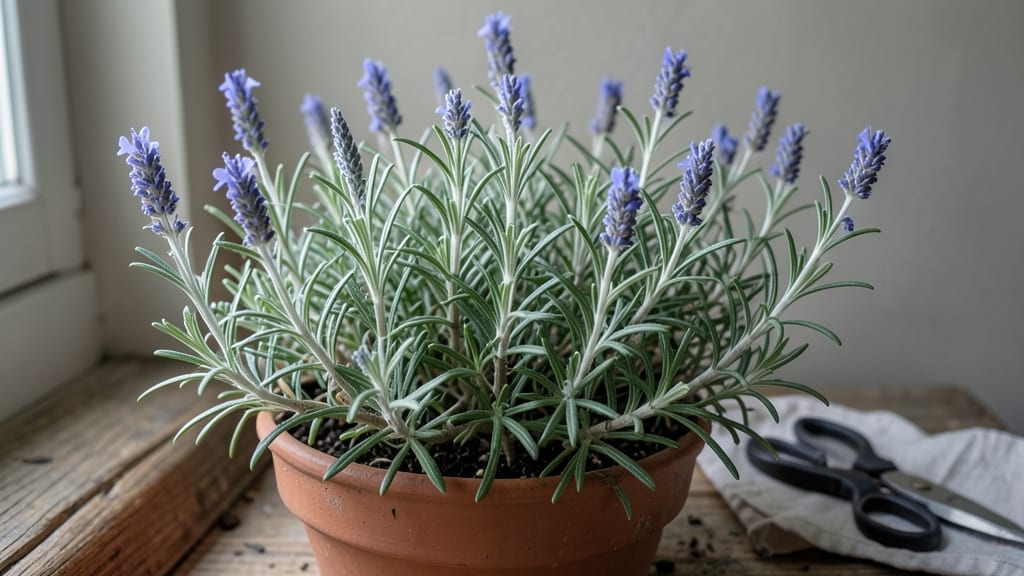
Yes, rosemary is highly drought tolerant once established, thriving with minimal watering after its initial growth phase. It prefers dry conditions and can survive weeks without water, though prolonged drought may reduce flowering and growth vigor.
Rosemary's natural resilience comes from its Mediterranean heritage, where it evolved to conserve moisture. 🌿 The plant's needle-like leaves and waxy coating minimize water loss, while its deep root system taps into underground moisture sources.
Unlike many herbs, rosemary actually struggles when overwatered—soil that stays too damp can lead to root rot. I've found that established rosemary plants often bounce back quickly after dry spells, though they may drop some leaves or produce fewer flowers during extreme conditions.
For best results, water new rosemary plants regularly until they establish roots, then gradually reduce frequency. A simple soil test—poking your finger an inch into the soil—tells you when it's truly dry enough.
Mulching with gravel or straw helps retain moisture while preventing soil compaction, which is especially helpful in hot, dry climates. Even in drought conditions, rosemary's hardiness makes it one of the easiest herbs to grow with minimal care.
💡 In This Article
- Why Rosemary Thrives in Dry Conditions
- Watering Rosemary: Best Practices for Drought Survival
Why rosemary thrives in dry conditions
Rosemary's drought tolerance stems from its Mediterranean origins, where it evolved to survive in arid, rocky soils. The plant's needle-like leaves are covered in a thick, waxy cuticle that acts like a natural raincoat, reducing water evaporation by up to 40% compared to smoother-leaved plants.
This adaptation is similar to how cacti conserve moisture in deserts—except rosemary achieves it through its leaf structure rather than spines. The silver-gray hue you see on rosemary leaves isn't just for show; it reflects sunlight, preventing heat buildup that would otherwise accelerate moisture loss. 💫
Beneath the surface, rosemary's root system is its secret weapon. While the top few inches of soil dry out quickly, rosemary develops deep, fibrous roots that can reach 3-4 feet underground, accessing water stored in lower soil layers.
This vertical growth pattern allows it to outcompete shallow-rooted weeds while maintaining hydration during dry spells. In contrast, many ornamental plants with surface roots struggle in drought conditions because they can't tap into deeper moisture reserves.
The plant's ability to close its stomata (pores) during daylight hours further conserves water, a trait shared with other drought-resistant species like lavender and thyme.
What's fascinating is how rosemary's biology reacts to water stress. When deprived of moisture, the plant produces more abscisic acid—a natural hormone that signals cells to enter a semi-dormant state. This slows metabolic processes, reducing water consumption while maintaining essential functions. The result?
A plant that can survive 4-6 weeks without significant water loss, though prolonged drought will eventually cause leaf drop as the plant prioritizes root survival over foliage. This survival mechanism explains why rosemary often recovers quickly after dry periods, unlike many herbs that wither permanently when underwatered. 🔥
The flip side of this adaptation is rosemary's sensitivity to overwatering. Unlike drought, which triggers protective responses, excess moisture creates anaerobic conditions in the soil that suffocate roots.
The plant's thick cuticle becomes a liability when waterlogged—it prevents gas exchange, leading to root rot within 7-10 days of consistently soggy soil. This is why rosemary thrives in well-draining soils like sandy loam or gravel mixes, where excess water drains away quickly.
The contrast between drought tolerance and water sensitivity highlights rosemary's precise needs: just enough moisture to survive, but never enough to drown.
Consider this comparison: In a 3-month drought**, a well-established rosemary plant might lose 30-50% of its leaves but recover fully when watered, while a similarly aged basil plant would likely die from dehydration within 2-3 weeks.
The difference lies in rosemary's evolutionary adaptations—its ability to shut down non-essential functions while maintaining root viability. This biological strategy makes rosemary one of the most resilient herbs for dry climates, where water conservation is often more critical than frequent irrigation. ✨
For gardeners in drought-prone areas, understanding these adaptations means rosemary can be planted with minimal supplemental water once established. In my own experience growing rosemary in Zone 7b,* I've found that mature plants require watering only every 3-4 weeks during summer, compared to weekly watering for most vegetables.
The key is replicating its natural Mediterranean environment—hot, dry days with cool nights and excellent drainage. This balance allows rosemary to focus its energy on survival rather than constant moisture regulation. 🌟