
Flowers
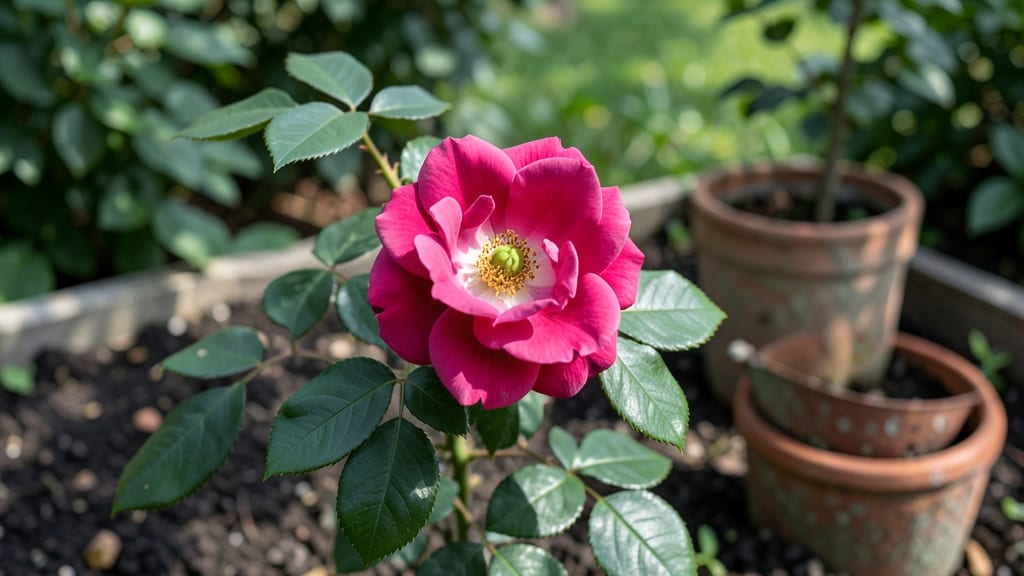
The parts of a rose flower include five essential components: petals, sepals, receptacle, stamens, and pistil, each playing a crucial role in the plant's growth and reproduction cycle.
Understanding these components transforms your gardening approach.
The petals aren't just for beauty—they attract pollinators with vibrant colors and sweet fragrances, while the sepals act as protective shields for the developing bud. 🌸 The receptacle supports the entire structure, housing the reproductive organs: the stamens (male) produce pollen, and the pistil (female) contains the ovary where seeds form.
This intricate system explains why roses thrive when you respect their natural processes—like deadheading spent blooms to encourage new growth.
For hands-on identification, start by examining the outermost green structures (sepals) before moving inward to the delicate petals. Use a magnifying glass to spot the tiny stamens clustered around the central pistil—this is where fertilization happens.
Many gardeners overlook the receptacle, but it's the foundation that holds everything together. Pro tip: Prune roses in early spring to reveal fresh growth and make these parts easier to study.
💡 In This Article
- Functional Roles of Each Rose Flower Part
- How to Identify Rose Flower Parts in Your Garden
Functional roles of each rose flower part
The petals are the showstoppers of a rose, designed to lure pollinators like bees and butterflies with their vibrant colors and sweet fragrances. These delicate structures contain pigments called anthocyanins that range from deep reds to soft pinks, absorbing sunlight to power photosynthesis in the surrounding leaves.
A single rose petal has a waxy surface that repels water, keeping the flower's internal structures dry during rain. 🌸 The petals also play a subtle role in temperature regulation—darker colors absorb more heat, creating a slightly warmer microenvironment that speeds up scent molecule release.
Beneath the petals lie the sepals, which form the protective outer layer of the bud before blooming. These green, leaf-like structures shield the developing flower from physical damage, pests, and excessive sunlight that could scorch delicate tissues.
Sepals often curve backward slightly to allow light to reach the petals while maintaining their protective function. In some rose varieties, sepals remain green even after the petals fall, providing a secondary layer of defense for the fruit that develops from the pistil.
Their tougher texture compared to petals makes them more resistant to tearing during wind or rain.
The receptacle is the swollen tip of the rose's stem where all other parts converge—it's essentially the flower's foundation. This fleshy structure contains vascular bundles that transport water, nutrients, and sugars between the stem and the flower.
The receptacle's size varies by rose type: hybrid teas have elongated receptacles, while old garden roses often feature shorter, broader ones.
What's fascinating is how the receptacle transforms after pollination—it swells further to develop into the rose hip, a fruit containing seeds and rich in vitamin C. 🍇 This dual function as both support structure and future fruit highlights its critical role in the plant's lifecycle.
At the center of the flower, the stamens (male reproductive organs) and pistil (female reproductive organ) work together in a delicate dance. Each stamen consists of a pollen-producing anther atop a slender filament, while the pistil contains the ovary at its base, topped by a stigma that captures pollen.
Roses often have hundreds of stamens clustered around a single pistil, creating a dense center that ensures maximum pollen transfer. The pollen grains contain proteins that trigger the stigma's surface to swell when they land, forming pollen tubes that grow down to the ovary for fertilization.
This process explains why roses produce so much pollen—some varieties release up to 10,000 grains per flower!
What many gardeners overlook is how these parts interact in real-time. When a bee lands on a rose, its body brushes against the anthers, collecting pollen that gets transferred to the stigma of the next flower visited. This cross-pollination creates genetic diversity in rose offspring.
The receptacle's position elevates the reproductive organs just enough to prevent self-pollination, encouraging bees to move between different plants. 🐝 Understanding this system helps explain why roses bloom more prolifically when planted in groups—each flower benefits from the pollinators attracted by its neighbors.
Temperature plays a surprising role in this process too. Roses typically bloom when daytime temperatures reach 70-85°F, with cooler nights triggering the opening of buds. This temperature range optimizes both pollen viability and pollinator activity.
The petals' waxy coating also helps maintain this delicate balance by reflecting excess heat during sunny days while retaining warmth at night. These botanical adaptations explain why roses thrive in temperate climates—nature has fine-tuned every part to work together under specific environmental conditions.