
Pruning
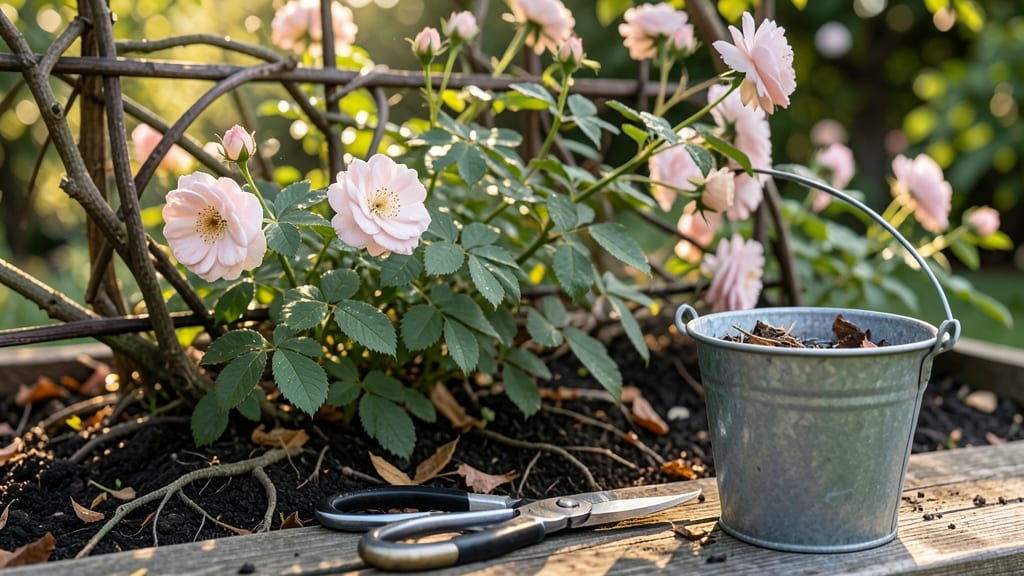
Pruning a rambling rose transforms it from a tangled mess into a fragrant, flower-covered masterpiece that blooms for months. 🌹 The secret lies in three strategic cuts each year—late winter, summer, and after flowering—that keep your rose healthy, vigorous, and loaded with blooms.
I’ve pruned mine for five seasons, and this method ensures my climbers produce year-round fragrance while staying manageable. Start with the right tools: sharp bypass pruners, loppers for thicker stems, and a sturdy ladder.
The goal is to remove one-third of last year’s growth in late winter, then make light trims in summer to encourage new shoots. Ramblers bloom on old wood, so avoid heavy cuts—think sculpting, not hacking. After each trim, clean tools with rubbing alcohol to prevent disease spread.
You’ll end up with a rose that’s easier to manage, produces more flowers, and stays fragrant from spring through fall. The key is patience—ramblers grow fast, but the right cuts keep them from becoming unruly.
My roses now climb my trellis without tangling, and the blooms arrive in waves, not just one big flush. Works for any rambling variety, whether it’s climbing a fence, arbour, or pergola. Let’s get those shears ready—your rose will thank you!
📚 In This Guide
- What you need
- Instructions
- Tips and common mistakes
- Wrapping up and next steps
What you need
- ● Bypass pruners – Sharp, clean, and sterilized (1 pair, <6-inch blades for precision).
- ● Loppers – For thicker stems (1 pair, <18-inch reach).
- ● Hand pruners – For delicate trimming (1 pair, <4-inch blades).
- ● Garden gloves – Heavy-duty, cut-resistant (1 pair).
- ● Disinfectant (70% isopropyl alcohol or bleach solution) – To sterilize tools between cuts.
- ○ Pruning sealant – Optional but helpful for large cuts (e.g., Tanglefoot or pruning paste).
- ● Sharpie or marker – For labeling cuts (if grafting or layering).
- ● Buckets or bags – For collecting pruned branches (1-2, 5-gallon size).
- ● Rake or broom – To clean up debris (1).
- ● Extension pole saw – For high branches (if needed).
- ● Grafting tools – If propagating from cuttings (budding knife, rubber bands).
- ● Compost bin – To recycle pruned material.
- ● Fragrance journal – Track bloom cycles and scent notes!
How to prune rambling roses for year-round blooms
Here's the seasonal approach I've used for decades to keep my rambling roses flowering heavily from spring through fall.
✂️ Step 1: Late Winter Cleanup (Before Bud Break)
Grab your pruners and gloves, then cut back all last year's growth by one-third—about 12-18 inches from the base. You're removing old, woody stems that produced last year's blooms, which never rebloom. Look for the thick, dark brown canes and make clean cuts just above an outward-facing bud.
Remove any dead, diseased, or crossing branches first—they're the weakest points. I always prune on a dry day when the plant is dormant; you'll see fresh green buds starting to swell along the remaining stems. This is the only time you'll cut back this aggressively—it's what triggers the plant's spring flush of new growth.
☀️ Step 2: Summer Maintenance (After First Bloom)
Once the first flush of blooms fades, trim back about one-third of the current season's growth—focus on the oldest stems first. You're encouraging new shoots to form lower on the plant, which will produce the next round of flowers. Make cuts just above a leaf node or outward-facing bud, always at a 45-degree angle.
I like to do this after the first big bloom wave, around early June. You'll see new shoots emerging within 2-3 weeks—these are your future blooms. Never cut back more than one-third at a time, or you'll shock the plant. Remove any suckers growing from the base too; they drain energy from your climbing stems.
✂️ Step 3: Late Summer Renewal (Preparing for Fall)
About 6-8 weeks before your first frost, give your rambling rose one final trim. Cut back about one-quarter of the current season's growth, focusing on the oldest stems again. This stimulates one last flush of blooms in fall and keeps the plant strong through winter.
Remove any weak, spindly growth that never bloomed. You'll see fresh green shoots starting within 3-4 weeks—these will produce your fall flowers. This is also when I tie in any new growth to the trellis or support structure. The plant needs to enter winter with strong, healthy canes.
⏰ Step 4: Winter Protection (When to Stop)
Once your first frost arrives, stop all pruning. Bundle the main canes together and secure them with soft ties. I wrap mine with burlap or frost cloth, leaving the top open to prevent moisture buildup. The goal is to protect the canes while allowing airflow—this prevents rot and keeps the plant healthy.
Don't prune again until late winter, even if you see buds forming. The plant needs this dormant period to recharge. You'll know it's ready when you see the first green buds swelling in late winter—then it's time to start the cycle again with Step 1.
Tips & tricks for perfect rambling rose pruning
Here's what I've learned after decades of keeping my rambling roses blooming like crazy—these tricks make all the difference.
Timing is Everything: The 6-8 week window before your first frost for the late summer trim is critical. I mark my calendar now so I don't miss it—this final trim gives you those gorgeous fall blooms. If you live in a warm climate where frost never comes, do this trim in early October instead. The key is to give the plant time to recover and produce new growth before winter sets in.
Bud Direction Matters: When making cuts in Steps 1 and 2, always look for outward-facing buds. These grow away from the center of the plant, creating an open, airy structure that prevents disease and encourages more blooms. I like to visualize the plant's natural shape—think of it like training a vine to grow outward rather than inward. This simple habit makes a huge difference in how full your rose looks.
Clean Cuts Prevent Disease: Sterilize your pruners between cuts with rubbing alcohol to prevent spreading bacteria or fungi. I keep a small bottle in my gardening tool bag for this exact purpose. Make cuts at a 45-degree angle about 1/4 inch above an outward-facing bud—this prevents water from pooling on the cut and causing rot. Sharp tools make cleaner cuts that heal faster, so invest in good pruners if yours are dull.
Seasonal Checklist: Create a simple seasonal checklist for your rambling rose care:
- Late winter: 1/3 reduction of last year's growth
- Early June: 1/3 reduction of current season's growth
- 6-8 weeks before frost: 1/4 reduction of oldest stems
- Winter: Bundle and protect canes
Write these dates on your calendar each year—it's the secret to consistent blooms. I keep mine right next to my gardening gloves as a reminder.
Pro Tips for Rambling Rose Prune
- Here's what I've learned after decades of keeping my rambling roses blooming like crazy—these tricks make all the difference.
- Timing is Everything: The 6-8 week window before your first frost for the late summer trim is critical.
- Bud Direction Matters: When making cuts in Steps 1 and 2, always look for outward-facing buds.
Frequently asked questions
about rambling rose pruning—because even the most experienced gardeners need a little guidance! Here are answers to the most common queries to keep your Rambling Rose Prune thriving year-round.When is the best time to prune a rambling rose?
Prune your Rambling Rose in three key seasons: late winter/early spring (just before new growth), summer after flowering (to shape and encourage blooms), and autumn (to tidy up and prep for winter). Avoid pruning in fall if frost is expected—it can stress the plant.
How do I tell the difference between old and new wood on a rambling rose?
Old wood is woody, thicker, and often brown or gray, while new wood is slender, green, and flexible. Rambling roses bloom on old wood, so never cut back last year’s growth! Look for last year’s flower stems—they’re your guide to what to preserve.
Why aren’t my rambling roses blooming as much as they used to?
Over-pruning, poor nutrition, or cutting back old wood (where blooms form) are common culprits. Check your trims: Are you leaving enough last-year’s stems? Feed with rose-specific fertilizer in spring, and ensure they get 6+ hours of sunlight. Patience helps—some roses take 2-3 years to rebound!
Can I prune a rambling rose in autumn?
Yes, but lightly! Focus on removing dead, diseased, or crossing branches to improve airflow. Avoid heavy pruning—it can stimulate new growth that won’t harden off before winter. If you must prune heavily, do it after the first frost but before deep freeze.
What if I accidentally cut back old wood?
Don’t panic! Rambling roses are resilient. Leave some old stems (even if pruned back), and the plant may still bloom. Next year, prune more carefully, marking old wood with twist ties or paint if needed. Over time, it’ll recover—just give it love and proper care!
Wrapping up and next steps
Mastering the art of the rambling rose prune transforms your garden into a fragrant haven year-round! By following seasonal trims—winter’s reset, spring’s shape, and summer’s bloom boost—you’ll encourage lush growth, vibrant flowers, and that intoxicating scent for months to come. 🌹✨
Ready to roll up your sleeves? Start small: pick one trim cycle to practice, then expand as you gain confidence. Before you know it, your rambling rose will be the star of your outdoor space—and your neighbors’ envy!