
Pruning
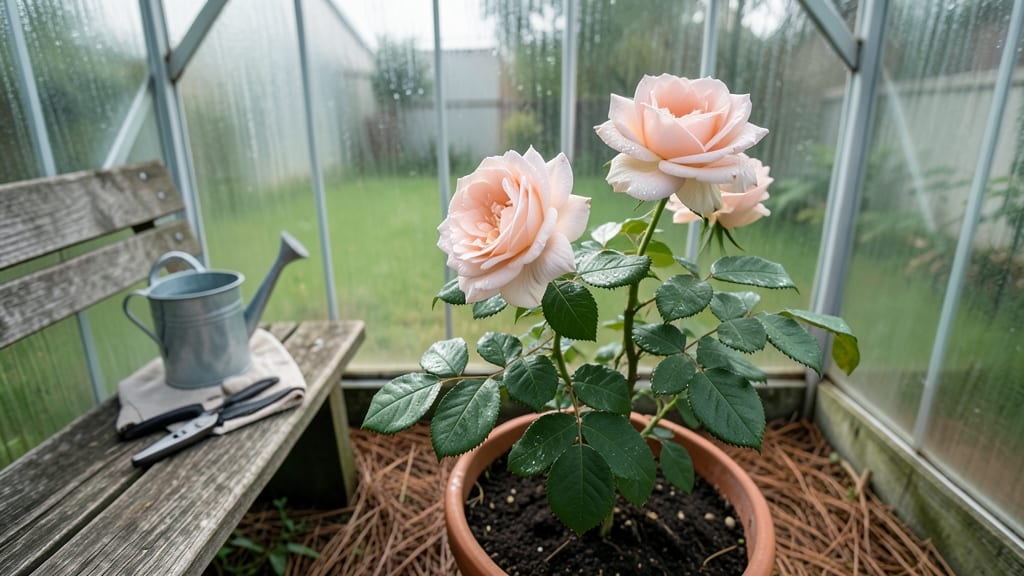
That morning dew on your greenhouse roses isn't just pretty—it's a warning sign your plants are suffocating. 🌿 High humidity in a greenhouse traps moisture, creating the perfect conditions for powdery mildew and stunted growth, no matter how carefully you prune.
The key isn't fighting the dew but controlling the environment that causes it.
I learned this the hard way when my prized roses developed white dusting on their leaves after just two weeks of heavy morning dew. The fix? Better airflow, strategic spacing, and a fan running for 10 minutes every hour during peak humidity.
Even a small dehumidifier makes a difference—my greenhouse now stays at a crisp 60-70% humidity instead of the 90%+ it hit before.
With proper ventilation, your roses will reward you with healthier blooms and that signature fragrance year-round. The pruning itself becomes easier when plants aren't struggling—cut back dead growth in early spring, then do light maintenance pruning every 6-8 weeks to keep airflow moving.
That morning dew will still appear, but it won't stick around long enough to cause damage.
This method works for any greenhouse size, from small hobby setups to commercial operations. The secret is consistency—check humidity daily, adjust ventilation as seasons change, and always prune with airflow in mind. Your roses will thank you with stronger stems and more abundant fragrance than ever before.
📚 In This Guide
- What you need
- Instructions
- Tips and common mistakes
- Wrapping up and next steps
What you need
- ● Pruning shears: Bypass pruners (sharp, clean, and sterilized with rubbing alcohol). Quantity: 1 pair (or 2 for larger plants).
- ● Hand pruners: For smaller stems (e.g., Dew on the Roses buds). Quantity: 1 pair.
- ○ Loppers: For thicker branches (if your greenhouse has mature roses). Quantity: 1 pair (optional but handy).
- ● Gardening gloves: Heavy-duty, cut-resistant (e.g., rose thorns are no joke!). Quantity: 1 pair.
- ● Disinfectant: 70% isopropyl alcohol or bleach solution (1 part bleach to 9 parts water) for sterilizing tools.
- ● Sharpie or plant marker: For labeling cuts (e.g., "deadhead here" or "new growth").
- ○ Pruning sealant: Optional but recommended for larger cuts (e.g., tree wound pruning paste).
- ● Trash bag or compost bin: For clippings (keep it tidy!).
- ● Humidity tray: A shallow tray with water to maintain moisture (especially useful in dry greenhouses).
- ○ Grow lights (optional): LED or fluorescent lights to supplement natural light during winter pruning.
- ● Thermometer/hygrometer: To monitor greenhouse conditions (ideal: 60–75°F and 40–60% humidity).
- ● Rose fertilizer: Balanced formula (e.g., 10-10-10) for post-pruning recovery.
- ● ✨ Sterilize first: Wipe tools with alcohol before and after pruning to prevent disease spread.
- ● 🌡️ Timing matters: Prune Dew on the Roses in early spring (before new growth) or late winter for best fragrance results.
- ● 🎯 Sharp is safe: Dull shears crush stems—always test your tools on a scrap branch first!
Step-by-step guide to pruning roses in a greenhouse for year-round fragrance
Here's how I transform my greenhouse roses into a perpetual fragrant display using precise, seasonal pruning techniques.
✂️ Step 1: Assess Growth Habits and Prune for Structure in Late Winter
Start when the greenhouse temperature hovers around 40-50°F—typically late January to early February. Examine each rose bush and identify the strongest canes from last season. These are the ones that will form the backbone of your plant, so keep 3-5 main branches per bush, cutting just above an outward-facing bud.
Remove any dead, diseased, or crossing branches first—they compete for energy and invite pests. I always make cuts at a 45-degree angle, about ¼ inch above a bud, to prevent water from pooling on the wound. This angle also promotes faster healing. Watch for buds that point in the direction you want new growth to go—this ensures your roses grow outward, not inward.
☀️ Step 2: Encourage Blooming with Spring Renewal Pruning
Once new growth appears in early spring and reaches 4-6 inches tall, it's time for the second pruning. This is where you shape the bush for maximum fragrance and airflow. Cut back the remaining canes by one-third, focusing on removing any weak or spindly growth. The goal is to leave 5-7 buds on each cane—this balance encourages strong blooms without overcrowding.
Real talk: I used to cut too aggressively, thinking more pruning meant more flowers. But roses reward restraint—too much pruning delays blooming. After pruning, spray the cuts with a copper fungicide to prevent infections, especially in the humid greenhouse environment. This step is non-negotiable if you want roses that last.
🌿 Step 3: Maintain Airflow and Remove Spent Blooms Throughout the Season
As flowers open, deadhead them immediately by cutting just above the first set of five leaves below the bloom. This encourages continuous flowering and prevents the plant from wasting energy on seed production. I do this every 2-3 days during peak bloom, which for my greenhouse roses means year-round with proper lighting.
Also, keep an eye out for suckers—those unwanted shoots growing from the base of the plant or along the main canes. Remove them as soon as they appear, or they'll drain nutrients from your prized blooms. Thin out crowded canes to improve airflow, which reduces humidity-related diseases like black spot. You'll know you're doing it right when sunlight reaches the center of the bush.
⏰ Step 4: Prepare for Winter Dormancy with Light Pruning in Fall
When daytime temperatures drop below 65°F in late summer, reduce watering and start prepping for winter. Give your roses a final light pruning to remove any deadheading growth and any canes that are past their prime. Cut back by about 10-15%, focusing on shaping rather than drastic reduction. This keeps the plant energized enough to handle the cooler months ahead.
After pruning, apply a 2-3 inch layer of mulch around the base of the plant to insulate roots. I use straw because it breaks down slowly and adds organic matter to the soil. This layer helps maintain consistent soil temperatures, which is critical in a greenhouse where conditions can fluctuate. Don't skip this—consistent root temperatures mean healthier blooms come spring.
Tips & tricks for perfect greenhouse rose pruning
Transforming your greenhouse into a fragrant oasis takes more than just timing—it's about understanding the subtle cues your roses give you. Here's what I've learned after years of trial and error with my own collection.
Seasonal Temperature Cues: The 40-50°F guideline for late winter pruning isn't just arbitrary—it's when roses naturally enter their dormant phase. If your greenhouse runs warmer, delay pruning until nighttime temps drop below 50°F. I've found that waiting until mornings show frost on the glass is a foolproof indicator your roses are ready. This timing ensures you're not cutting into new growth that's just starting to form.
Pruning Angle Precision: That 45-degree angle above the bud isn't just for looks—it's about directing water flow. When you make clean cuts at this angle, rainwater runs off rather than pooling at the cut, which dramatically reduces the risk of fungal infections. I always test my pruners first by making a few practice cuts on a spare cane to ensure my angle is consistent before tackling the main branches.
Spring Growth Monitoring: Waiting for new growth to reach 4-6 inches tall before your second pruning ensures you're not cutting into tender, vulnerable tissue. I mark my strongest canes with a dab of non-toxic paint in early spring so I can easily identify which ones to preserve during the renewal pruning. This visual cue system has saved me from accidentally trimming the wrong branches during the shaping process.
Year-Round Maintenance Strategy: The 2-3 day deadheading schedule might seem frequent, but it's what transforms occasional blooms into continuous fragrance. I set a phone reminder labeled "Deadhead Roses" that syncs with my watering schedule—this dual reminder system ensures I never miss a cycle. For greenhouse roses, this frequent attention is what creates that magical "dew on the roses" effect all year long.
Pro Tips for Dew On The Roses Greenhouse
- Transforming your greenhouse into a fragrant oasis takes more than just timing—it's about understanding the subtle cues your roses give you.
- Seasonal Temperature Cues: The 40-50°F guideline for late winter pruning isn't just arbitrary—it's when roses naturally enter their dormant phase.
- Pruning Angle Precision: That 45-degree angle above the bud isn't just for looks—it's about directing water flow.
Frequently asked questions
When is the best time to prune roses in a greenhouse for maximum fragrance?
The ideal time to prune roses in a greenhouse is late winter or early spring (just before new growth begins). However, light pruning can be done year-round to remove dead or overcrowded stems. Since greenhouses provide controlled conditions, you can extend pruning into fall—just avoid heavy cuts when frost is possible.
Will pruning my greenhouse roses reduce their fragrance?
Not at all! Pruning actually enhances fragrance by improving airflow and sunlight exposure. Removing crowded or crossing branches redirects energy toward producing healthier, more fragrant blooms. Just avoid over-pruning—aim to keep 3-5 strong canes per plant for optimal results.
Can I use the same pruning techniques for all rose varieties in a greenhouse?
Most greenhouse roses (like hybrid teas, floribundas, or climbers) follow similar pruning principles, but timing and intensity vary. For example:
- Hybrid teas: Prune aggressively in spring (back to 3-5 buds).
- Climbing roses: Light pruning to shape; avoid heavy cuts.
- Shrub roses: Prune lightly in late winter to maintain shape.
What should I do if my greenhouse roses develop black spots after pruning?
Black spots (fungal disease) often appear due to poor airflow or wet foliage. After pruning, sterilize tools with rubbing alcohol, remove infected leaves immediately, and ensure your greenhouse has 10+ hours of ventilation daily. Apply a copper fungicide as a preventive measure and avoid overhead watering.
Are there alternatives to pruning if I’m not confident in my skills?
If pruning feels overwhelming, try these low-effort alternatives:
- Deadheading: Snip spent blooms to encourage reblooming (use clean scissors!).
- Thinning: Remove only the most crowded or leggy stems without reshaping.
- Hire a pro: Local nurseries or rose societies often offer pruning services.
Wrapping up and next steps
Pruning your Dew on the Roses greenhouse isn’t just about keeping plants tidy—it’s your secret to a year-round symphony of fragrance and lush blooms. By mastering seasonal cuts, you’ve unlocked the potential for healthier growth, stronger stems, and those coveted roses that smell like a sunlit morning. 🌸
Now that you’re armed with the right tools and techniques, there’s no better time to roll up your sleeves and give your greenhouse some love.
Start with a single plant—maybe even the one that’s been begging for attention—and watch how a little precision transforms its future. Your garden’s next masterpiece is just a pair of shears away!
Next step: Grab your pruners, pick a sunny afternoon, and revisit our step-by-step guide to turn theory into action. Happy pruning!