
Planting
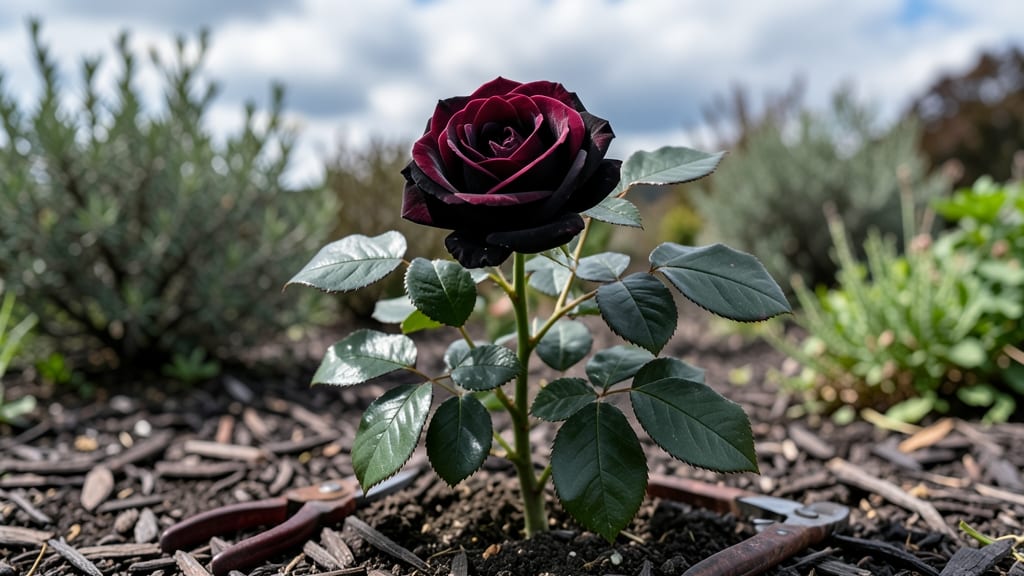
A real black rose plant isn't just a garden statement—it's a velvety masterpiece that turns heads every season. 🌹 The deep, almost indigo petals aren't dyed; they're nature's own dramatic shade, created through careful breeding of dark red roses.
What makes them special is how they age—starting rich purple-black and fading to a mysterious mauve, like twilight in petal form. These roses thrive in full sun to partial shade and demand well-draining, slightly acidic soil (think compost-rich loam).
Water them deeply but let the top inch dry between sessions—overwatering turns their roots sluggish. Prune in early spring to encourage bushier growth, and deadhead spent blooms to coax more of those striking flowers. By midsummer, your garden will hum with visitors asking about your "secret."
The blooms last longer than most roses, and their fragrance—deep, spicy, and slightly floral—lingers in the evening air. Even experienced gardeners pause when they see one in person. They're not fussy about hardiness zones (5-9), but colder climates need winter mulch protection. The key to success?
Patience—these roses reward careful nurturing with months of drama that no other plant delivers.
📚 In This Guide
- What you need
- Instructions
- Tips and common mistakes
- Wrapping up and next steps
What you need
- ● Black Rose Plant (Rosa 'Black Baccara' or 'Black Magic') – 1 healthy, disease-free plant (bare-root or potted).
- ● Well-draining potting mix or garden soil – 3-5 gallons (for containers) or amended garden bed soil (for in-ground planting). Pro tip: Mix in compost or organic matter (1 part compost to 3 parts soil) for nutrient-rich growth!
- ● Organic fertilizer – A balanced 10-10-10 or rose-specific fertilizer (e.g., Miracle-Gro Rose Food). 💡 Use half-strength at first to avoid burning roots.
- ○ Mulch (optional but recommended) – 2-3 inches of wood chips, straw, or shredded bark to retain moisture and suppress weeds.
- ● Garden trowel or shovel – For digging planting holes (12-18 inches deep and wide).
- ● Pruning shears – Sharp, clean pair to trim dead or overgrown stems.
- ● Watering can or hose with a gentle spray nozzle – Black roses hate soggy roots; water deeply but infrequently.
- ● Garden gloves – Protect your hands from thorns and soil.
- ○ Support structure (optional) – A rose trellis, cage, or stakes to train climbing varieties (e.g., 'Black Ice').
- ● Sunlight – 6+ hours of full sun daily (black roses thrive in bright, direct light).
- ● Climate zone – Hardy in USDA Zones 5-10. In colder zones, plant in spring after the last frost.
- ● Drainage – No standing water! Ensure pots have drainage holes or plant in a sloped garden bed.
- ● Patience – Black roses may take 1-2 years to bloom fully, but the wait is worth it! ⏳
How to grow a real black rose plant with year-round drama
This isn't your grandmother's rose—black roses demand bold care but reward with stunning, velvety blooms.
🌱 Step 1: Choose the Right Variety and Planting Location
Black roses aren't a single species—they're deep red or burgundy varieties like 'Black Baccara' or 'Black Magic' that appear black in low light. Select a spot with full sun (6-8 hours daily) and shelter from strong winds. I always test the soil first—black roses thrive in slightly acidic soil (pH 6.0-6.5) with excellent drainage.
If your soil is heavy clay, amend it with 2-3 inches of compost mixed into the top 12 inches. Dig a hole twice as wide as the root ball but only as deep—planting too deep suffocates the roots. Here's the thing: black roses need room to spread, so space plants 3-4 feet apart.
☀️ Step 2: Plant at the Right Time and Provide Optimal Care
Spring planting after the last frost date gives roots time to establish before summer heat. Water deeply right after planting to settle the soil, then maintain 1 inch of water weekly (more in extreme heat). I mulch with 2-3 inches of organic mulch around the base to retain moisture and regulate soil temperature.
Black roses are heavy feeders—apply a balanced rose fertilizer (10-10-10) every 4-6 weeks during growing season. Watch for new growth: when you see 3-4 inches of new cane growth, it's time for the next feeding. Too much fertilizer causes weak, floppy canes that break easily.
✂️ Step 3: Prune for Dramatic Blooms and Season-Long Color
Prune in early spring before new growth begins. Cut back one-third of the oldest canes to the ground—this encourages fresh, vigorous growth. Remove any dead, diseased, or crossing branches first. I always sterilize my pruners with rubbing alcohol between cuts to prevent spreading disease.
Deadhead spent blooms regularly to encourage continuous flowering. For black roses, I prune back to the nearest outward-facing bud. This isn't just about looks—proper pruning prevents overcrowding and improves air circulation, which is critical for disease prevention. You'll see the difference within weeks: fuller plants with more dramatic blooms.
💧 Step 4: Protect Against Common Problems
Black roses are susceptible to black spot and powdery mildew due to their dense foliage. I spray preventatively with a neem oil solution (1 tbsp per gallon of water) every 2 weeks during humid months. Water at the base in the morning to keep foliage dry—this simple habit drastically reduces fungal issues.
Watch for aphids on new growth—they love tender black rose buds. A strong spray of water usually knocks them off, but for persistent infestations, I use insecticidal soap. The key is early intervention: if you see sticky residue on leaves, act immediately before the pests spread.
⏰ Step 5: Prepare for Winter and Year-Round Beauty
Black roses are semi-hardy but need winter protection in colder climates. After the first hard frost, cut back canes to 18-24 inches and mound 12 inches of mulch around the base. I wrap the canes with burlap for extra insulation in zones below zone 6.
Even in winter, black roses add drama. Their dark foliage contrasts beautifully with snow, and with proper care, they'll burst into bloom again in spring. Here's what I do: in late winter, remove the winter wrap and mulch, then prune lightly to shape the plant before new growth begins.
Tips & tricks for growing stunning black roses
Black roses aren't just plants—they're dramatic statements in your garden, and these pro tips will help you keep them thriving all year.
Soil Preparation is Everything: Before planting, I always do a soil test to confirm the pH is between 6.0-6.5. If your soil is too alkaline, mix in 2-3 inches of peat moss into the top 12 inches of soil—this creates the perfect acidic environment black roses crave. The difference in plant health after just one season is remarkable.
Watering Wisdom: The 1 inch weekly watering guideline works for most climates, but I've learned to adjust based on weather. During heatwaves, increase to 1.5 inches and water in the early morning to prevent evaporation. Never water the leaves—always direct the hose at the base to keep foliage dry and reduce disease risk.
Fertilizer Timing Matters: When you see those 3-4 inches of new cane growth, that's your cue to feed. I use a 10-10-10 balanced fertilizer but cut back to half-strength in late summer to prevent tender new growth before winter. Too much fertilizer late in the season can actually harm your plant's winter hardiness.
Winter Protection Secrets: For zones below 6, I don't just mound mulch—I also wrap the canes with burlap and secure it with twine. This creates an insulating blanket that protects against temperature swings. In late winter, I remove the wrap and mulch gradually over 2-3 weeks to prevent shock from sudden temperature changes.
Pro Tips for Real Black Rose Plant
- Black roses aren't just plants—they're dramatic statements in your garden, and these pro tips will help you keep them thriving all year.
- Soil Preparation is Everything: Before planting, I always do a soil test to confirm the pH is between 6.0-6.5.
- Watering Wisdom: The 1 inch weekly watering guideline works for most climates, but I've learned to adjust based on weather.
Frequently asked questions
Got questions about growing a real black rose plant? You’re not alone!
Here are some of the most common queries—and straightforward answers—to help you cultivate these dramatic blooms with confidence.
Can I grow a real black rose indoors?
A real black rose thrives outdoors in full sun and well-draining soil, but you can try growing it in a large container indoors near a south-facing window. Use a grow light for 6+ hours daily, and ensure high humidity (like a pebble tray) to mimic outdoor conditions. Just expect smaller blooms and slower growth compared to outdoor plants.
How long does it take for a black rose bush to bloom?
Patience is key! A healthy real black rose plant typically takes 1–2 years to establish roots and produce its first blooms. Prune regularly to encourage bushier growth, and provide consistent water (but avoid soggy soil). With proper care, you’ll see those deep, velvety blooms by late spring or early summer.
What’s the best alternative if I can’t find a real black rose?
If Rosa ‘Black Baccara’ or other true black roses are hard to find, consider these stunning alternatives:
- ‘Don Juan’: Deep maroon-black blooms with a velvety texture.
- ‘Black Charm’: Nearly black flowers with a romantic, old-world feel.
- ‘The Fairy’: A smaller, dark pink rose that mimics black in low light.
Why are my black rose leaves turning yellow or dropping?
Yellow leaves or leaf drop usually signal overwatering, underwatering, or pests. Check the soil—it should stay moist but not soggy. Look for aphids or spider mites on the undersides of leaves (spray with neem oil if needed). Also, ensure your rose gets 6+ hours of sunlight daily—shady spots weaken plants.
Do black roses need winter protection?
Yes! While real black roses are hardy in USDA zones 5–9, they benefit from winter protection in colder climates. Mound 4–6 inches of mulch around the base after the first frost, and wrap the canes loosely in burlap or frost cloth. Prune back dead foliage in early spring to encourage new growth.
Wrapping up and next steps
Growing a real black rose plant isn’t just about adding a striking visual to your garden—it’s about embracing drama, patience, and a touch of magic. 🌹✨ These rare beauties reward your care with velvety blooms that steal the show, proving that even the darkest corners of your yard can shine.
Whether you’re a seasoned gardener or a curious beginner, the key is consistency—soil, sunlight, and love—and soon, you’ll be the envy of the neighborhood with your lush, mysterious roses.
Ready to take the next step? Start small: pick a spot, gather your supplies, and plant that first cutting. Before you know it, your garden will be alive with year-round boldness—and maybe even a few compliments (or jealous glances) from passersby. Happy planting!