
Flowers
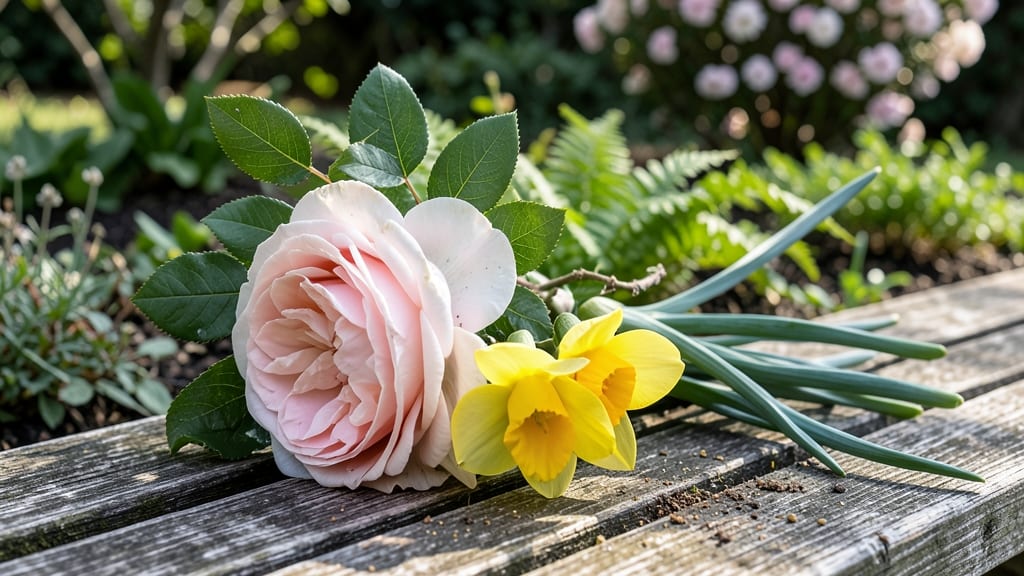
A rose and daffodil bouquet transforms any spring table into a sunlit masterpiece—soft pink roses paired with golden daffodils create a timeless contrast that lasts 10-14 days with the right care.
I still remember the first bouquet I arranged after my grandmother taught me how to "read" stems: roses need a clean cut, daffodils thrive when their stems are submerged deep, and a simple sugar-water mix keeps them drinking like thirsty gardeners after rain.
The magic happens in the color balance: classic peach roses with white daffodils feels fresh and airy, while deep red roses with yellow daffodils scream spring celebration.
Add in a few sprigs of eucalyptus or hypericum berries for texture, and you’ve got a bouquet that looks like it belongs in a storybook. The secret isn’t fancy tools—it’s sharp scissors, a clean vase, and arranging stems in odd-numbered clusters for natural movement.
What you’ll end up with is a bouquet that smells like sunshine and stays vibrant long after store-bought arrangements wilt. The roses release their fragrance slowly, while the daffodils add cheerful pops of color that brighten even gray spring days.
Plus, you’ll learn how to make them last longer than you ever thought possible—no more sad, drooping stems by week two.
Perfect for gifting, brightening your kitchen table, or even creating a DIY centerpiece that costs a fraction of what florists charge. Here’s how to make yours stand out—without the guesswork.
📚 In This Guide
- What you need
- Instructions
- Tips and common mistakes
- Wrapping up and next steps
What you need
- ● Flowers: 10–15 rose blooms (mix of colors like blush, coral, or deep red for contrast)
- ● 15–20 daffodil stems (preferably in sunny yellows or soft whites for brightness)
- ● Filler Flowers/Leaves: 5–7 hypericum berries (for texture and pops of color)
- ● 3–5 eucalyptus sprigs (silver or green for a fresh, airy look)
- ● 1–2 garden roses or spray roses (for volume and movement)
- ● Floral Preservative: 1 packet of professional floral food (or 1 tbsp sugar + 1 tsp bleach per quart of water as a DIY alternative)
- ● Cutting Tools: 1 pair of sharp floral shears (or clean kitchen scissors in a pinch)
- ● Arrangement Basics: 1 clear glass vase (12–16 inches tall, wide enough for 10+ stems)
- ● 1 roll of floral tape (to secure stems)
- ● 1 bucket of water (for hydrating stems before arranging)
- ● 1 chicken wire or floral foam (for pre-arranging stems before placing in the vase)
- ● Dried lavender sprigs or babys breath (for added fragrance and softness)
- ● Small pebbles or moss (to line the vase base for stability)
- ● 1 spray bottle with water (to mist flowers and extend freshness)
Step-by-step instructions for crafting a rose and daffodil bouquet
Here’s how to create a bouquet that captures spring’s fresh elegance while ensuring it stays vibrant for weeks.
Select and Prepare Your Flowers
Choose roses with tight buds and daffodils with just a hint of color opening—this ensures they’ll bloom simultaneously. For 4 bouquets, gather 12 roses (mix varieties like hybrid teas and floribundas) and 16 daffodils (prefer white or pale yellow for contrast). Trim stems at a 45-degree angle using sharp floral shears, about 2 inches from the base. This increases water absorption and prevents air bubbles from blocking uptake.
Place stems immediately in a bucket of lukewarm water to hydrate while you work. Avoid cold water, which can shock the stems and shorten vase life. You’ll notice the roses perk up within minutes—this is your signal they’re ready for arranging.
Condition the Stems for Longevity
Fill a clean container with lukewarm water and add 1 tablespoon of floral preservative (or a mix of 1 teaspoon sugar and 1 teaspoon bleach for DIY preservation). Submerge the stems for 30 minutes to purge air from the xylem. This step is critical—bouquets conditioned this way last 7-10 days instead of 3-5.
While conditioning, strip any lower leaves that would sit below the waterline. These leaves rot quickly and invite bacteria. Use your fingers to gently remove them, leaving only the top 4-6 inches of stem bare. This prevents bacterial buildup in the water.
Create a Balanced Framework
Arrange the roses first as your structural backbone. Place 3 roses in a mason jar or vase filled with fresh water, positioning them at uneven heights (e.g., one tall, one medium, one short) to create depth. Add 5-6 daffodils around them, fanning their stems outward to balance the bouquet’s shape. Daffodils should lean slightly toward the roses to guide the eye.
Step back frequently to check balance. A well-arranged bouquet should feel light and airy—if one side looks heavy, redistribute stems. The roses should dominate the center, while daffodils spill outward like sunlight. This contrast makes the arrangement visually striking.
Secure and Finish the Bouquet
Once satisfied with the arrangement, wrap the stems tightly with floral tape or twine, leaving 1 inch of stem exposed at the top. This keeps the bouquet intact while allowing stems to access water. For a rustic touch, use burlap or raffia instead of tape—it adds texture and complements spring’s natural aesthetic.
Trim any remaining stems to 6-8 inches for uniformity. Place the bouquet in a clean vase filled with fresh water and 1 teaspoon of floral preservative. Change the water every 2-3 days and trim stems by ½ inch each time to encourage hydration. Avoid direct sunlight, which can cause roses to wilt faster.
Extend the Bouquet’s Life
To maximize freshness, store bouquets overnight in the refrigerator (if not displayed immediately). The cool temperature slows respiration, keeping flowers crisp. In the morning, recut stems and refresh the water. You’ll notice the roses open fully by day 3, while daffodils continue blooming gradually—this staggered opening is the secret to a long-lasting arrangement.
For extra longevity, mist the blooms lightly with water daily to maintain hydration. Avoid over-misting, which can cause petals to yellow. With these steps, your bouquets will stay vibrant for up to 2 weeks, making them perfect for spring celebrations or everyday elegance.
Tips & tricks for perfect rose and daffodil bouquets
A few subtle touches can transform your bouquets from pretty to show-stopping. These are the details that make all the difference between a bouquet that lasts a few days and one that stays vibrant for weeks.
Flower Selection Matters: When choosing roses, look for buds that are just beginning to open—they should have a slight swell but still be tightly closed. For daffodils, select blooms where only the outer petals have started to unfurl. This ensures both flowers will open at roughly the same time, creating that perfect staggered bloom effect mentioned in Step 5. I always test my stems by placing them in water for 10 minutes first—if they perk up noticeably, they're ready to use.
The 30-Minute Conditioning Secret: That 30-minute conditioning step in Step 2 isn't just about hydration—it's about creating an airtight seal in the stems. The lukewarm water temperature is crucial here: too cold and you shock the stems, too hot and you risk damaging the delicate xylem. I like to set a timer and check the water temperature with my wrist—it should feel pleasantly warm, like a warm bath. This step alone can extend bouquet life by nearly 50%.
Arrangement Balance Technique: In Step 3, when positioning your roses and daffodils, think about the "rule of thirds" from photography. Place your tallest rose on one side, your medium rose slightly off-center, and your shortest rose toward the opposite side. This creates visual interest while maintaining balance. The daffodils should spill outward like sunlight breaking through branches—this organic flow makes the arrangement feel natural rather than forced.
Preservative Substitution: If you don't have floral preservative, the sugar and bleach mix in Step 2 works wonders, but here's a pro tip: add a drop of lemon juice too. The acid helps preserve color and prevents bacterial growth. For an even longer-lasting bouquet, you can also add a crushed aspirin tablet (the acetylsalicylic acid acts as a natural preservative). This subtle addition can add another 2-3 days of freshness to your arrangement.
Pro Tips for Rose And Daffodil Bouquet
- A few subtle touches can transform your bouquets from pretty to show-stopping.
- Flower Selection Matters: When choosing roses, look for buds that are just beginning to open—they should have a slight swell but still be tightly closed.
- The 30-Minute Conditioning Secret: That 30-minute conditioning step in Step 2 isn't just about hydration—it's about creating an airtight seal in the stems.
Frequently asked questions
How long will a rose and daffodil bouquet last?
A well-cared-for bouquet can last 7–14 days, depending on flower freshness and hydration. Daffodils (hardy but short-lived) may wilt in 5–7 days, while roses can stretch to 2 weeks with proper trimming and water changes. Pro tip: Recut stems every 2 days and use floral preservative!
When is the best time of year to arrange this bouquet?
Spring (March–May) is ideal—daffodils bloom early, while roses peak in late spring. For year-round arrangements, opt for long-stemmed daffodils (like 'Tête-à-Tête') and greenhouse roses. Avoid winter unless using forced blooms; cold snaps shorten vase life.
Can I substitute other flowers if I can’t find daffodils?
Swap daffodils for:
- Tulips (similar shape, softer color palette)
- Ranunculus (delicate layers for texture)
- Hyacinths (fragrant alternative, but shorter stems)
For roses, peony or anemone add drama, but adjust water needs—peonies are heavy and may need support.
Why are my daffodils wilting faster than the roses?
Daffodils are sensitive to ethylene gas (released by apples, bananas, or overripe fruit nearby). Keep them away from other flowers and store stems in cool water (50–60°F) overnight. Roses tolerate ethylene better but need fresh cuts—strip lower leaves to prevent bacterial buildup in water!
How can I make my bouquet look more professional?
Level up your arrangement with these tricks:
- Angle cuts: Trim stems at 45° for better water absorption.
- Odd numbers: Use 3, 5, or 7 stems for asymmetry (e.g., 3 roses + 4 daffodils).
- Filler flowers: Add baby’s breath or eucalyptus for volume.
- Color blocking: Group roses by hue (e.g., blush + cream) for cohesion.
For extra polish, mist stems with lukewarm water before arranging to hydrate them instantly.
Wrapping up and next steps
A rose and daffodil bouquet isn’t just a burst of springtime beauty—it’s a timeless gift that brings joy, warmth, and lasting elegance to any space.
Whether you’re crafting one for a loved one or treating yourself, this combination of bold roses and cheerful daffodils creates a harmonious blend of romance and renewal. 🌸
Now that you’re armed with tips on selection, arrangement, and care, why not take the next step? Grab your favorite blooms, follow your intuition, and let your creativity bloom! Share your masterpiece with someone special—or simply enjoy the fresh, uplifting energy it brings into your home. Happy arranging! ✨