
Pests and Diseases
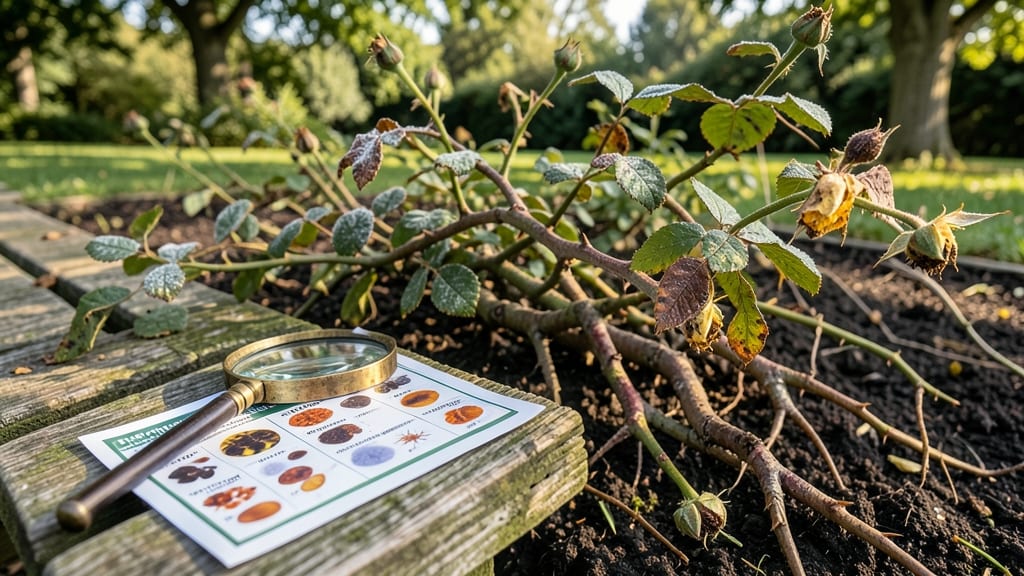
Mastering rose disease identification starts with spotting black spots or fuzzy white patches on your roses. Fast diagnosis saves your garden. 🌹 I’ve spent years tracking rose diseases—from black spot’s telltale dark circles to powdery mildew’s chalky coating—and the key is acting before the fungus spreads.
A single leaf with symptoms can mean the difference between a quick fix and losing a prized bush.
The worst part? Many diseases thrive in the same conditions: damp leaves, poor airflow, or overcrowded plants. Black spot loves humidity, while rust prefers warm, wet springs.
But here’s the good news: once you recognize the patterns—like yellowing leaves with orange pustules for rust—you can treat it organically before it worsens. Prevention is easier than cleanup.
With the right approach, you’ll stop diseases in their tracks. Prune infected leaves immediately, space plants for airflow, and apply neem oil or baking soda sprays at the first sign of trouble.
Your roses will bounce back stronger, and you’ll catch issues before they become a full-blown crisis. Let’s get your bushes back to their best.
This works for all rose types—hybrids, climbers, even heirlooms—and adapts to your climate. No more guessing what’s wrong or waiting too long to act. The faster you diagnose, the faster you fix it.
Root Causes of Rose Ailments
Roses are stunning, fragrant, and resilient—but they’re not immune to stress. When diseases strike, they’re usually the result of a perfect storm of environmental conditions, biological invaders, or poor cultural practices.
Understanding these root causes helps you act fast and prevent future outbreaks. Let’s break down the science behind why roses get sick.
Fungal diseases like black spot (Diplocarpon rosae), powdery mildew (Sphaerotheca pannosa), and rose rust (Phragmidium mucronatum) thrive when humidity and temperature align like a match made in pathogen heaven.
- Excessive Moisture: Fungi need water to spread—whether from overhead watering, poor drainage, or morning dew lingering on leaves. Black spot, for example, germinates in just 4–6 hours of leaf wetness. 💦
- Warm, Stagnant Air: Temperatures between 60–80°F (15–27°C) supercharge fungal growth. Powdery mildew, in particular, loves the upper leaf surfaces where airflow is restricted (think dense bushes or crowded gardens).
- Organic Debris: Leaves, mulch, or old rose hips provide a cozy home for fungal spores. If you’re not cleaning up fallen foliage, you’re basically inviting a fungal buffet. 🍄
Actionable Fix: Water at the base of the plant in the morning, space roses for airflow, and remove infected leaves immediately (don’t compost them—toss in the trash!).
Bacterial diseases such as bacterial blight (Pseudomonas syringae) and canker (Pseudomonas mors-prunorum) exploit open wounds or stressed plants. Unlike fungi, bacteria spread quickly through water splashes or contaminated tools.
- Pruning Wounds: Dirty pruners can introduce bacteria into fresh cuts. If the wound isn’t sealed properly, bacteria move in like squatters. ⚔️
- Storm or Hail Damage: Torn leaves or stems create entry points. Bacterial blight often appears as water-soaked spots that ooze when wet.
- Overcrowding & Stress: Roses under stress (drought, poor soil, or nutrient deficiency) have weaker defenses. Bacteria seize the opportunity.
Actionable Fix:
- Sterilize pruners with rubbing alcohol or a 10% bleach solution between cuts.
- Prune in dry weather to minimize bacterial spread.
- Remove infected canes completely—don’t leave stubs.
Some pests don’t just eat roses—they spread diseases like thieves in the night. Aphids, Japanese beetles, and mites can transmit viruses (like rose rosette virus) or create wounds that invite secondary infections.
- Aphids & Leafhoppers: These sap-suckers excrete honeydew, a sticky residue that fosters sooty mold—a fungal hitchhiker. Plus, they spread X-disease (a bacterial infection). 🐜
- Japanese Beetles: Their feeding weakens leaves, making roses susceptible to powdery mildew or botrytis blight.
- Spider Mites: Their needle-like mouthparts puncture cells, creating entry points for fungal spores.
Actionable Fix:
- Monitor for pests weekly during growing season.
- Use neem oil or insecticidal soap to control populations before they spread disease.
- Introduce beneficial insects (like ladybugs) to keep pests in check.
A rose that’s starving or drowning in poor soil is a sitting duck for disease. Issues like root rot (Phytophthora) or nutrient deficiencies weaken the plant’s immune system.
| Problem | Cause | Disease Risk |
|---|---|---|
| Compacted or Waterlogged Soil | Poor drainage, heavy clay, or over-mulching | Root rot (fungal), crown rot |
| Nitrogen Deficiency | Over-pruning, poor soil testing, or excessive flowering | Weak growth → more susceptible to mildew/rust |
| High Soil pH (Alkaline) | Chalky or limestone-heavy soil | Iron/chlorosis → stress → disease entry |
Actionable Fix:
- Test soil annually and amend with compost or sulfur (for pH adjustment).
- Ensure 1–2 inches of mulch (but keep it away from the stem to prevent rot).
- Fertilize with a balanced rose food (e.g., 10-10-10) in early spring.
💡 Pro Tip: Most rose diseases are preventable with proactive care. The key? Monitor, clean, and act fast. If you catch a problem early, you can often save your rose before it becomes a full-blown crisis.
Quick Fixes for Common Rose Ailments
Reviving your roses starts with the right treatment—each disease demands a tailored approach. Below, we break down practical solutions for the most common rose diseases, from fungal infections to pesky pests, plus prevention tips to keep your garden thriving.
Fungal infections like black spot and powdery mildew thrive in damp, shaded conditions. Act fast to stop their spread!
🔥 Black Spot Treatment
- Remove infected leaves immediately—drop them in a sealed bag (not compost).
- Apply fungicide (copper-based or neem oil) every 7–10 days until symptoms vanish.
- Improve airflow by spacing plants 3–4 feet apart and pruning dense growth.
🌡️ Powdery Mildew Fix
- Wipe leaves with a damp cloth to remove white residue.
- Spray with baking soda solution (1 tsp baking soda + 1 quart water + a drop of dish soap) weekly.
- Water at the base (never overhead) to keep foliage dry.
✨ Prevention Tip: Mulch with gravel or straw (not wood chips) to reduce humidity near the soil.
Aphids, spider mites, and Japanese beetles can devastate roses in weeks. Combat them with these effective (and eco-friendly) methods.
🍳 Aphid Eradication
- Blast them off with a strong jet of water from a hose.
- Introduce ladybugs—these natural predators love aphids!
- Use insecticidal soap (mix 2 tbsp castile soap + 1 quart water) for stubborn infestations.
🕷️ Spider Mite Defense
- Spray with neem oil (1 tbsp neem oil + 1 quart water + a drop of dish soap).
- Increase humidity by misting plants daily (mites hate moisture).
- Remove heavily infested leaves to break their life cycle.
💡 Pro Tip: Early morning is the best time to spray—pests are sluggish and easier to target!
Diseases like canker and root rot require deeper fixes—focus on soil health and structural support.
🔪 Canker Removal & Repair
- Cut out infected stems 6 inches below the lesion with sterilized pruners (wipe with rubbing alcohol).
- Paint the wound with pruning sealant to prevent reinfection.
- Avoid overhead watering—keep stems dry to discourage fungal growth.
💧 Root Rot Recovery
- Improve drainage by amending soil with perlite or sand (never let water pool).
- Repot affected plants in fresh, sterile potting mix if root rot is severe.
- Reduce watering—only water when the top 1–2 inches of soil are dry.
🎯 Prevention Tip: Test your soil’s pH—roses prefer 6.0–6.5; adjust with lime (to raise) or sulfur (to lower).
The best defense? A strong, resilient plant. Follow these year-round habits to minimize future outbreaks:
- ✂️ Prune regularly (remove dead/diseased wood in late winter or early spring).
- 🌞 Provide 6+ hours of sunlight (fungi love shade).
- 🍂 Clean up debris in fall (raking up leaves prevents overwintering pests).
- 🌱 Fertilize wisely—use balanced, organic fertilizer (too much nitrogen = weaker plants).
Final Note: When in doubt, act fast—most rose diseases spread quickly. A little prevention now saves hours of cleanup later! 🌹💪
Frequently asked questions
How can I tell if my rose has black spot vs. rust?
Black spot shows as dark purple or black circular spots with yellow halos on leaves, while rust appears as orange-yellow pustules on the undersides of leaves. Black spot thrives in wet conditions and causes leaves to drop quickly, while rust often appears in warm, humid weather and may not kill leaves as fast.
Can I save a rose bush that's already heavily infected?
It depends on the disease! For fungal issues like black spot, prune out all infected leaves and apply fungicide immediately. If it's bacterial canker, you may need to remove the entire cane. Severe cases might require removing the plant entirely to prevent spread—don't compost infected material.
Why does my rose keep getting powdery mildew even after treatment?
Powdery mildew often returns when humidity stays high or airflow is poor. Check your spacing—roses need 3-4 feet between plants for proper airflow. Also, avoid watering leaves (water at the base) and consider using reflective mulch to reduce humidity near the soil.
Is it safe to use store-bought fungicides on roses?
Yes, but choose copper-based or neem oil fungicides for organic gardens. Always follow label instructions and alternate with homemade remedies like baking soda spray (1 tsp baking soda + 1 quart water) for resistance prevention. Test any new product on a small area first.
How do I know if my rose's problems are from disease or pests?
Check for tiny moving insects (mites, aphids) or their damage (sticky honeydew, chewed leaves) for pests. Disease symptoms include spots, powdery coatings, or discoloration without visible bugs. If you see both, treat pests first—they often spread diseases.