
Diseases
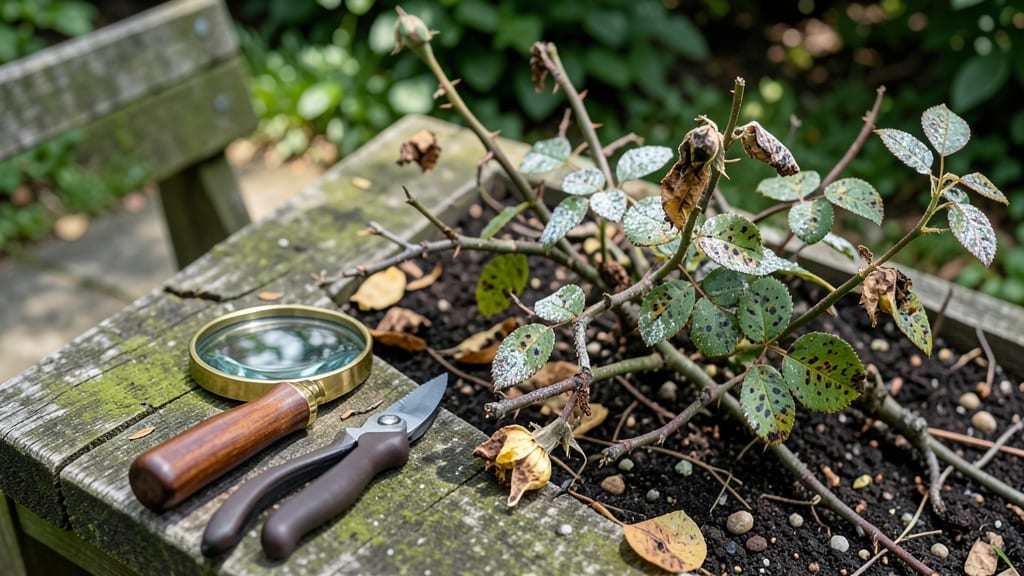
Identifying rose diseases early could save your blooms—those telltale leaf whispers reveal black spot, rust, and powdery mildew before they weaken your plants. 🌹 your bushes before they struggle to bloom.
I’ve spotted these diseases on my own roses, and the key is learning their telltale patterns: dark spots with yellow rings, orange pustules, or white dust that looks like flour on leaves.
Black spot starts with tiny black dots that grow into larger, greasy-looking splotches with yellow halos—often on the top leaves first. Rust shows up as bright orange or brown spots that puff up like little blisters, usually on the undersides.
Powdery mildew coats leaves in a white, chalky film that spreads quickly in humid weather. The sooner you spot these, the easier it is to treat them before they take over.
Prevention is simpler than you think: water at the base (not overhead), space plants for airflow, and prune for sunlight. If you see these signs, grab some fungicide or make a baking soda spray—it works like a charm for early stages.
But if the disease spreads fast or won’t quit, it’s time to call in a pro to diagnose deeper issues.
Every rose gardener faces this at some point—don’t let fear of disease stop you from growing. With these tricks, you’ll spot problems before they spiral and keep your roses thriving all season. The payoff? More blooms and fewer headaches.
Root Causes Of Rose Ailments
Rose diseases don’t just appear out of nowhere—they’re often the result of a perfect storm of environmental factors, poor gardening habits, or even the roses themselves. Understanding why these issues pop up helps you prevent them before they take hold.
Let’s break down the key culprits behind black spots, rust, powdery mildew, and other common rose afflictions.
Roses thrive in fresh air, but when humidity lingers—especially above 70%—it creates the ideal breeding ground for fungal diseases like black spot (Diplocarpon rosae) and powdery mildew (Sphaerotheca pannosa).
- Why it happens: Fungal spores float in moist air and land on rose leaves, where they germinate and spread rapidly. Poor airflow traps spores near the plant, accelerating infection.
- Actionable fix:
- Space roses 3–4 feet apart to improve circulation.
- Prune for an open canopy—remove crowded or crossing branches.
- Use a fan on low near susceptible varieties (like hybrid teas) during humid days.
Watering roses too much or at the wrong time keeps leaves damp for extended periods, signaling fungal pathogens to party like it’s 2024. Wet foliage is a red flag for:
- Black spot – Thrives in 24+ hours of leaf wetness.
- Downy mildew (Peronospora sparsa) – Needs cool, wet conditions to spread.
- Botrytis blight – Loves moist, shaded areas.
Pro tip: 💡 Water at the base of the plant in the early morning (before 10 AM) to allow leaves to dry by nightfall. Avoid overhead sprinklers—they’re like a fungal buffet.
Fungal spores are everywhere—they hitch rides on wind, rain, and even your gardening tools. Once they land on a rose leaf, they germinate if conditions are right (think: warm, wet, and shady).
- Why it happens:
- Spores from last year’s infected leaves (even fallen ones!) can survive winter and reinfect in spring.
- Nearby infected plants (like raspberries or peaches) can cross-contaminate.
- Old mulch or compost with dormant fungal spores can wake up when conditions improve.
- Actionable fix:
- Clean up fallen leaves and debris in autumn—burn or compost them separately (not in garden beds!).
- Space roses away from susceptible host plants.
- Sterilize pruners with 70% isopropyl alcohol between cuts.
A stressed rose is like an open invitation for diseases. When roses are nutrient-deficient, overcrowded, or pests-ridden, their defenses drop, making them easy targets.
| Stress Factor | Disease Risk | How to Fix It |
|---|---|---|
| Nitrogen deficiency (yellow leaves) | Powdery mildew, black spot | Apply balanced fertilizer (10-10-10) in early spring. |
| Overcrowding (shady, humid microclimate) | Botrytis blight, rust (Phragmidium mucronatum) | Prune for sunlight penetration and thin out plants. |
| Pest damage (aphids, spider mites) | Secondary fungal/bacterial infections | Spray with neem oil or introduce ladybugs. |
Pro tip: 🌡️ Monitor soil moisture with a moisture meter—roses prefer consistently moist (not soggy) soil. Drought stress weakens roots, making them more vulnerable to canker diseases.
Sudden temperature swings—like hot days followed by cold, wet nights—disrupt a rose’s natural defenses. This creates the perfect conditions for:
- Rust – Loves cool (60–75°F) and wet conditions.
- Anthracnose – Thrives in warm, humid weather after rain.
Actionable fix:
- Mulch with 2–3 inches of organic matter (straw or wood chips) to buffer temperature swings.
- Choose disease-resistant varieties (e.g., ‘Knock Out’ roses for mildew resistance).
- Use row covers in early spring to protect from late frosts.
How to Treat Rose Ailments
Once you’ve identified the culprit behind your roses’ woes, it’s time to roll up your sleeves and restore their health! Below are practical, step-by-step solutions tailored to the most common rose diseases—plus prevention tips to keep your garden thriving.
Think of this as your emergency care guide for roses, with a focus on quick fixes and long-term resilience.
Cause: Diplocarpon rosae (that pesky fungus loves damp, shady conditions). Fix:
- 🔥 Prune the Problem Areas
- Snip off infected leaves (they’re contagious!) using sterilized pruners (wipe with rubbing alcohol between cuts). Dispose of them in the trash—not the compost bin—to prevent reinfection.
- Remove severely damaged branches to improve airflow.
- 🍳 Apply Fungicide (Organic or Chemical)
- Neem oil spray (1 tbsp per quart of water + a drop of dish soap as an emulsifier): Spray every 7–10 days until new growth appears. Why? Neem disrupts fungal spores without harming bees.
- Baking soda solution (1 tsp baking soda + 1 tbsp oil + 1 quart water): A budget-friendly alternative for mild cases.
- Chemical fungicides (e.g., chlorothalonil or copper-based sprays): Use these if the infection is severe, but rotate with organic options to avoid resistance.
- 👨🍳 Boost Rose Health
- Water at the base (not overhead) to keep foliage dry.
- Space plants 3–4 feet apart for better airflow—fungi hate dry conditions.
- Feed with compost or balanced fertilizer (10-10-10) in early spring to strengthen roots.
💡 Pro Tip: After pruning, sterilize tools and disinfect surfaces (like trellises) with a 10% bleach solution to stop spores from lingering.
Cause: Phragmidium mucronatum (those orange pustules? Fungal spores waiting to spread). Fix:
- 🔪 Remove Infested Leaves Immediately
- Rust spores spread via wind and water. Bag and trash heavily infected leaves—do not compost them.
- 🌡️ Use Copper Fungicide
- Copper sulfate or copper hydroxide sprays (like Bonide Copper Fungicide) are highly effective against rust. Apply every 10–14 days during the growing season.
- Caution: Copper can harm plants in high doses—follow label instructions!
- ✨ Improve Garden Conditions
- Avoid overhead watering (water in the morning so leaves dry quickly).
- Plant rust-resistant varieties like ‘Knock Out’ roses or ‘Dr. Huey’ if rust is recurrent.
- Apply mulch (2–3 inches) to reduce soil splashes that spread spores.
💡 Pro Tip: Prune in dry weather to minimize spore dispersal. If rust appears yearly, consider removing heavily infected bushes and replacing them with resistant types.
Cause: Erysiphe necator (that white, powdery film? A fungus thriving in humidity). Fix:
- 🍳 DIY Baking Soda Spray
- Mix 1 tsp baking soda + 1 tbsp horticultural oil + 1 quart water. Spray both sides of leaves every 7–10 days until mildew disappears.
- Why it works: Baking soda raises the leaf pH, making it inhospitable for fungi.
- 🔥 Prune for Airflow
- Thin out crowded branches and remove nearby weeds that trap moisture.
- Stake tall roses to prevent leaves from touching (fungi spread via contact).
- 🌿 Preventative Care
- Water deeply but infrequently (early morning is best).
- Space roses 3–5 feet apart—this reduces humidity around foliage.
- Apply potassium-rich fertilizer (like 0-10-10) to boost disease resistance.
💡 Pro Tip: Reflective mulch (like white gravel) under roses can reduce humidity near the soil, deterring mildew.
- 🌡️ Monitor humidity: Use a hygrometer—keep levels below 60%.
- 🍂 Fall cleanup: Remove all plant debris by late autumn to eliminate overwintering spores.
- 🌱 Soil health: Amend soil with compost and mycorrhizal fungi to strengthen roots.
- 🌿 Companion planting: Grow garlic, chives, or marigolds near roses—they repel fungi naturally.
Final Thought: Roses are tough, but they need your proactive care to bounce back from disease. Start with one treatment method, monitor progress, and adjust as needed. With these fixes, your roses will be back to blooming beautifully in no time! 🌹💪
Frequently asked questions
How can I tell if my rose has black spot vs. rust?
Black spot shows as dark brown/black spots with yellow rings on top leaves, while rust appears as orange pustules (often on undersides). Black spot spots grow larger and may have white fuzzy edges, while rust looks like little blisters that burst open. Check both leaf surfaces for accuracy.
Will rain spread rose diseases between plants?
Yes! Rain splashes fungal spores onto healthy leaves, accelerating spread. To prevent this, water at the base of plants in the morning and space roses 3-4 feet apart for airflow. Remove infected leaves immediately after rain to reduce spore dispersal.
Can I still use my roses if they have powdery mildew?
Yes, but treat it first! Powdery mildew weakens plants but won't kill them immediately. Prune infected areas, spray with baking soda solution (1 tsp baking soda + 1 quart water + drop of soap), and improve airflow. Avoid cutting flowers from heavily infected bushes until treated.
How often should I check my roses for diseases?
Inspect your roses weekly during growing season (spring-fall), focusing on new growth. Check both leaf surfaces and stems, especially after rain. Early detection gives you the best chance to treat before diseases spread. Keep a garden journal to track symptoms over time.
What's the fastest way to stop rose diseases from spreading?
Remove infected leaves immediately (don't compost them!) and sterilize pruners with rubbing alcohol. Space plants for airflow, water at the base, and apply neem oil or copper fungicide. The key is acting fast—don't wait until symptoms appear on multiple plants.