
Pests and Diseases
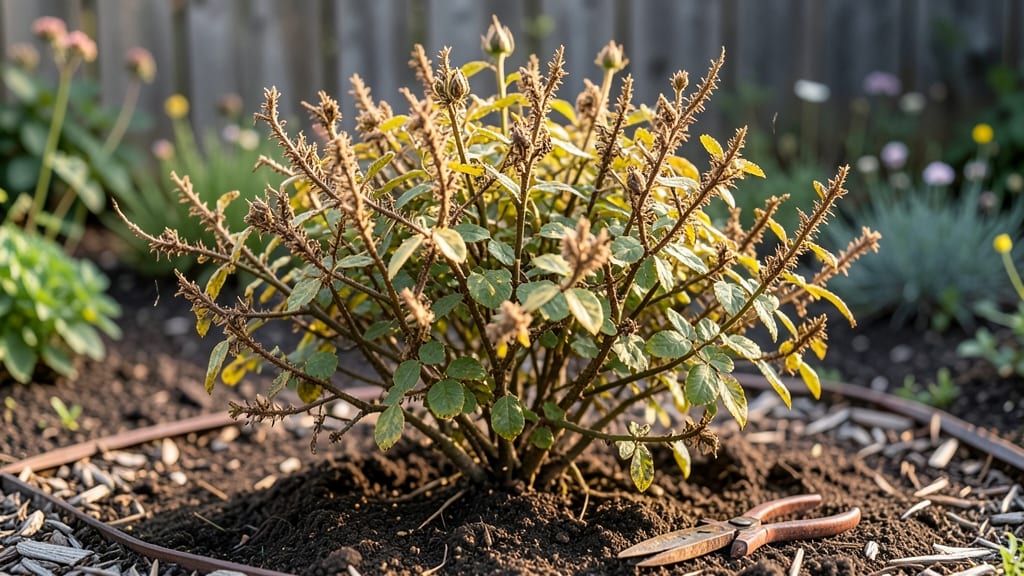
That twisted, tangled mess on your roses isn’t just odd growth—it’s likely the rose disease witches’ broom, a fungal infection that turns your blooms into a gnarled nightmare, and here’s how to fight back. 🌹 I’ve seen this gnarled mess take over bushes, and the good news is—once you spot it, you can stop it in its tracks with the right moves.
This disease thrives in damp, shaded spots where airflow gets trapped, turning your rose’s graceful canes into chaotic tangles. The key to curing it starts with pruning out infected stems (wear gloves—this stuff is stubborn) and improving air circulation around your plants.
With consistent care, your roses will bounce back with fresh, healthy growth. The secret? Catching it early and keeping your bushes happy with proper spacing and sunlight. Let’s get those roses back to their best!
First, grab your pruners and snip off any distorted, bushy growth—it’s the disease’s signature look. Dispose of those stems in the trash (not your compost), because fungal spores can linger.
Then, spray the bush with a copper fungicide or neem oil mix to smother any remaining spores hiding in the leaves. Prevention is easier than cleanup: space your roses so they get good airflow, water at the base (not overhead), and avoid overcrowding.
A little elbow grease now keeps your bushes blooming beautifully all season long.
If you catch witches broom early, your roses can fully recover in just a few weeks. The worst-case scenario? A bush that needs a hard reset—but even then, fresh canes grow back strong with the right care.
Think of this as a wake-up call to give your roses the attention they deserve. For tough cases, repeat the fungicide treatment every 10-14 days until new growth looks normal. And here’s the bonus: healthy roses resist other diseases too, so this fix pays off in more ways than one.
Root Causes Of Twisted Growth
Witches broom on roses isn’t just a quirky name for a strange-looking plant—it’s a symptom of infection, often caused by fungi, bacteria, or even tiny insects. Understanding the root causes helps you spot the problem early and take action before your roses spiral out of control.
Here’s what’s really going on in your garden:
Most cases of witches broom in roses are triggered by fungal pathogens, particularly Marssonina rosae (a leaf spot fungus) or Diplocarpon rosae (black spot). These fungi thrive in moist, humid conditions and exploit weak points in your roses’ defenses.
- How it spreads:
- Spores hitchhike on wind, rain, or even garden tools.
- Infected leaves or debris left on the ground release spores that reinfect healthy plants.
- Overcrowded roses with poor airflow create the perfect fungal buffet.
- Why it twists growth:
- The fungus disrupts hormone production in stems, causing abnormal, bushy clusters (witches broom) instead of normal blooms.
- It also clogs vascular tissues, starving parts of the plant of nutrients and water.
- Red flags:
- Dark, velvety spots on leaves (black spot).
- Stunted, twisted new growth with a witchy appearance.
- Yellowing or premature leaf drop.
Pro tip: 💡 Fungal spores love dampness—water roses at the base (not overhead) and space plants for airflow to dry leaves faster.
Some witches broom cases are caused by viruses, like the Rose Rosette Virus (RRV), which is spread by rose leafhoppers. Unlike fungi, viruses cannot be cured—they’re permanent passengers in your plant’s system. Here’s how they take over:
- How it spreads:
- Leafhoppers feed on infected plants, then fly to healthy ones, injecting the virus like a microscopic needle.
- Infected plant debris (e.g., pruned stems) can also transmit the virus if tools aren’t sterilized.
- Why it twists growth:
- RRV hijacks the plant’s growth hormones, triggering uncontrolled cell division in stems and leaves.
- It weakens the rose’s immune system, making it susceptible to secondary infections.
- Red flags:
- Bright red, witchy new growth (especially in fall/winter).
- Thick, gnarled canes with no thorns (a key RRV trait).
- Dieback of entire branches.
Pro tip: 🔥 If you suspect RRV, remove and destroy infected plants immediately—don’t compost them!—and monitor for leafhoppers with yellow sticky traps.
Bacteria like Pseudomonas syringae or Xanthomonas can also trigger witches broom by clogging plant tissues and disrupting nutrient flow. These bacteria are often introduced through:
- How it spreads:
- Contaminated pruning tools, rain splashing from infected soil, or even insects carrying bacteria on their bodies.
- Wounds (e.g., from hail or improper pruning) act as entry points.
- Why it twists growth:
- Bacteria produce toxic compounds that disrupt cell division, leading to malformed, bushy growth.
- They can also cause oozing cankers on stems, further weakening the plant.
- Red flags:
- Water-soaked or greasy spots on leaves/stems.
- Foul-smelling ooze from cankers.
- Wilting despite adequate water.
Pro tip: 🌡️ Bacterial infections thrive in warm, wet conditions—avoid overhead watering and sterilize tools with 70% isopropyl alcohol between cuts.
Now that you know the culprits, your next step is identification—because treating a fungal infection like a virus (or vice versa) will only make things worse. Stay tuned for our diagnostic guide to tell these apart!
How to Treat and Prevent Witches Broom
Witches broom on roses is unsightly but manageable—especially if you act fast. The key is identifying the cause (fungal, bacterial, or viral) and applying the right treatment while reinforcing prevention.
Below, we break down practical solutions tailored to each root cause, plus proactive steps to keep your roses healthy and broom-free.
Fungal witches broom (often caused by Marssonina or Diplocarpon species) thrives in damp, humid conditions. Here’s how to tackle it:
Step 1: Prune Infected Growths 🔪
- When: Early morning or late afternoon (avoid cutting when fungus spores are most active).
- How:
- Use sterilized pruners (wipe with rubbing alcohol between cuts).
- Cut 6–12 inches below the broom to remove hidden spores.
- Dispose of clippings in the trash (not compost)—fungus can survive in soil.
Step 2: Apply Fungicide 🧴
- Best options:
- Copper fungicide (e.g., Bonide Copper Fungicide) – effective against fungal spores.
- Neem oil (1 tsp per quart of water + a drop of dish soap) – natural and preventive.
- Baking soda spray (1 tbsp baking soda + 1 tsp oil + 1 gallon water) – for mild cases.
- Frequency: Spray every 7–10 days during wet seasons or after pruning.
Step 3: Improve Airflow and Drainage 🌬️
- Space plants 3–4 feet apart to reduce humidity.
- Mulch with gravel or bark (not organic mulch) to prevent soil-borne fungi.
- Water at the base (avoid wetting foliage) and prune lower branches to enhance airflow.
Bacterial witches broom (often Pseudomonas syringae) spreads rapidly. Since bacteria are harder to eradicate, focus on containment and prevention:
Step 1: Remove All Infected Parts Immediately ⚡
- Burn or bag infected canes—do not compost.
- Sterilize tools between cuts (bleach solution: 1 part bleach to 9 parts water).
Step 2: Use Copper-Based Bactericides 🛡️
- Copper fungicide/bactericide (e.g., Copper Soap) is the only reliable treatment.
- Spray every 5–7 days during outbreaks, especially after rain.
Step 3: Boost Plant Resistance 🌱
- Avoid overhead watering (use drip irrigation).
- Remove nearby weeds (they harbor bacteria).
- Apply compost tea (rich in beneficial microbes) to strengthen rose health.
Viral witches broom (e.g., Rose Rosette Virus) has no cure. If confirmed, remove the plant entirely to prevent spread:
Step 1: Destroy the Infected Rose 🚮
- Bag and trash the entire plant (including roots).
- Do not compost—viruses can persist in soil for years.
Step 2: Sterilize the Area 🧼
- Remove and replace soil in the infected spot (viruses can linger).
- Disinfect tools with bleach or alcohol.
- Plant a non-rose species (e.g., lavender or catmint) in the same spot to break the virus cycle.
Step 3: Prevent Future Spread 🛑
- Buy virus-tested roses (look for labels like "RRV-free").
- Inspect new plants for symptoms before planting.
- Keep pests (like leafhoppers) under control—they transmit viruses!
Even after treatment, proactive care is your best defense:
💡 Cultural Practices
- Prune regularly to remove weak growth (reduces fungal/bacterial entry points).
- Space roses properly (3–4 feet apart) for airflow.
- Avoid wounding plants (rough pruning or thorns can invite infections).
🌡️ Environmental Controls
- Water deeply but infrequently (early morning is best).
- Use a fan in greenhouses to reduce humidity.
- Plant in full sun (roses need 6+ hours of sunlight to stay resilient).
✨ Natural Boosts
- Compost tea or fish emulsion (every 4–6 weeks) for nutrient-rich growth.
- Beneficial nematodes (e.g., Steinernema feltiae) to combat soil-borne pathogens.
- Plant companion flowers like marigolds or garlic to deter pests.
- Fungal/bacterial: Improvement in 2–4 weeks with consistent treatment.
- Viral: No recovery—prevention is the only option.
- Prevention: 3–6 months of diligent care to see long-term resistance.
Remember: Early action is everything! The sooner you prune, treat, and adjust care, the better your roses will bounce back. 🌹✨
Frequently asked questions
How do I tell if my rose has witches broom from a fungus vs. a virus?
Check the growth color and season: fungal witches broom appears as dark, tangled growth with black spots on leaves (especially in wet weather). Viral cases show bright red, thornless canes that often appear in fall/winter. Fungal infections respond to fungicides, while viruses require complete removal of the plant.
Can I save my rose bush if it has witches broom?
It depends! For fungal/bacterial cases, prune infected stems and apply copper fungicide—most bushes recover in 2-4 weeks with consistent care. If it’s viral (RRV), there’s no cure: remove and destroy the entire plant immediately to stop spread. Always sterilize tools between cuts!
Why does my rose keep getting witches broom even after treatment?
This usually means fungal spores are lingering in your garden. Improve airflow by spacing plants 3-4 feet apart, water at the base (not overhead), and sterilize tools between cuts. Organic mulch can harbor spores—try gravel or bark instead. Repeat fungicide treatments every 7-10 days during wet seasons.
Will my other roses catch witches broom if one plant is infected?
Yes! Fungal spores and viruses spread quickly. Isolate infected plants immediately, sterilize tools, and avoid overhead watering. For fungal cases, clean up fallen leaves/debris. For viral cases, remove the plant entirely and don’t compost it—viruses can survive in soil for years. Monitor nearby roses closely for new symptoms.
What’s the best natural remedy for witches broom on roses?
Try a neem oil spray (1 tsp per quart of water + dish soap) or baking soda mix (1 tbsp baking soda + 1 tsp oil + gallon of water). For prevention, boost plant health with compost tea and beneficial nematodes. While natural remedies help, severe cases need copper fungicide for full control. Always prune infected growth first!