
Shrubs
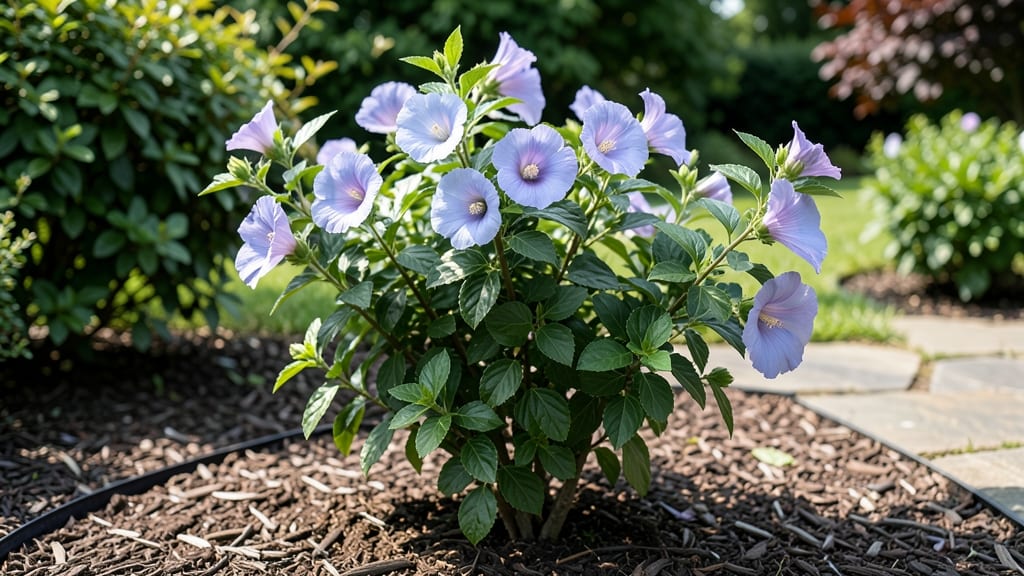
My Rose of Sharon's velvety foliage transforms my yard from ordinary to showstopping—year after year. 🌿 This hardy shrub thrives with minimal fuss, but the secret to that lush green canopy lies in understanding its leaves: when to prune, how to spot trouble early, and what seasonal shifts mean for its health.
The foliage starts as deep green, glossy leaves in spring, then thickens into a dense, almost tropical-looking canopy by summer. Pruning after blooms (late summer) encourages new growth, while winter dormancy reveals the shrub's sturdy framework.
Healthy leaves feel firm and smell faintly sweet when crushed—anything mushy or yellow signals trouble.
With the right care, your Rose of Sharon will reward you with shockingly lush foliage that stays vibrant through heatwaves and light frosts. The key is timing: prune at the right moment, water deeply but not excessively, and watch for pests like spider mites hiding on the undersides of leaves.
This shrub adapts beautifully to different climates—whether you're in a hot southern zone or a cooler northern region. The foliage even turns a subtle bronze in fall before dropping, making it a year-round performer. Let's get those leaves thriving!
📚 In This Guide
- What you need
- Instructions
- Tips and common mistakes
- Wrapping up and next steps
What you need
- ● Rose of Sharon plant: 1 healthy nursery-grown shrub (bare-root or potted, 1–3 years old)
- ● Pro tip: Look for plants with disease-free, deep green leaves and sturdy stems!
- ● Planting site: Full sun to partial shade (6+ hours of sunlight daily)
- ● Well-draining soil (amend with compost if needed)
- ● Tools: 1 garden trowel or shovel
- ● 1 pruning shears (sterilized)
- ● 1 watering can or hose with a gentle spray nozzle
- ○ 1 pair of gardening gloves (optional but recommended)
- ● Soil amendments (if needed): 2–3 gallons of organic compost or aged manure
- ● 1 cup of balanced fertilizer (10-10-10 or similar)
- ● Mulch (2–3 inches of shredded bark or pine straw)
- ● Slow-release fertilizer tablets for long-term growth
- ● Plant support (stakes or cages for young shrubs)
- ● Soil pH tester (ideal range: 6.0–7.0)
- ● Post-planting care kit (e.g., fungicide for prevention)
How to cultivate a thriving Rose of Sharon foliage display
Here's how to coax that lush, all-season green canopy you've been dreaming of.
🌱 Step 1: Select the Right Location and Soil
Rose of Sharon (Hibiscus syriacus) thrives in full sun—at least 6 hours daily—but tolerates partial shade in hot climates. I always plant mine where they'll get morning sun and afternoon shade if temperatures regularly exceed 90°F. The soil should be well-draining—amend heavy clay with 2-3 inches of compost or sand before planting.
Dig a hole twice as wide as the root ball but only as deep. The top of the root ball should sit 1 inch above ground level—this prevents waterlogging. Loosen the roots gently if they're circling, then place the plant in the hole. Backfill with native soil mixed with compost, firming lightly as you go.
💧 Step 2: Water Deeply and Establish a Routine
Water deeply once a week during the first growing season, soaking the soil to 12 inches deep. You'll know it's enough when water runs out the drainage holes if planted in containers, or when the top 6 inches of soil feel moist. Overwatering is the fastest way to kill these plants—yellowing leaves signal you're drowning the roots.
After the first year, Rose of Sharon becomes drought-tolerant. Let the soil dry out between waterings, but never to the point of wilting. Mulch with 2-3 inches of organic mulch (like shredded bark) to retain moisture and regulate soil temperature. Watch for brown leaf edges—this means you're underwatering.
☀️ Step 3: Prune for Airflow and Shape
Prune in late winter or early spring before new growth begins. Remove dead, diseased, or crossing branches first—this opens the center for airflow. Then shape the plant by cutting back 1/3 of the oldest stems to encourage new growth. I always use clean, sharp pruners and make cuts just above a bud or leaf node at a 45-degree angle.
Never prune in fall—you'll encourage tender new growth that won't survive winter. If your plant gets too leggy, you can also do a light pruning in midsummer after flowering to maintain shape. Just avoid heavy cuts this time of year.
✂️ Step 4: Fertilize for Vibrant Foliage
Feed with a balanced, slow-release fertilizer (10-10-10) in early spring when you see new buds forming. Spread ½ cup per plant around the base, then water deeply to activate it. Avoid high-nitrogen fertilizers—they promote leafy growth at the expense of flowers. If your plant looks pale or sparse, a second feeding in midsummer with a low-nitrogen, high-phosphorus fertilizer (like 5-10-10) helps.
I swear by organic options like compost tea or fish emulsion for a gentle boost. Apply these every 4-6 weeks during the growing season. Stop fertilizing by mid-summer to let the plant harden off for winter.
🌿 Step 5: Protect and Maintain Through Seasons
Rose of Sharon is hardy to USDA Zone 5, but young plants need winter protection. After the first hard frost, mulch heavily (4-6 inches) with straw or leaves to insulate roots. In extreme cold (<10°F), wrap the trunk with burlap to prevent sunscald. Prune away any dead branches in early spring—they'll signal where winter damage occurred.
Watch for aphids or spider mites on new growth. Spray with neem oil if you spot sticky residue (honeydew) or fine webbing. Healthy foliage should be deep green, glossy, and free of spots. If leaves yellow between veins, it's likely iron chlorosis—fix with chelated iron and ensure the soil pH is 6.0-7.0.
Tips & tricks for perfect Rose of Sharon foliage
These simple tricks will help you keep your Rose of Sharon looking vibrant and healthy all year round.
Sunlight Strategy: If you're planting in a hot climate where temperatures regularly exceed 90°F, consider using a light shade cloth during the hottest afternoon hours. This protects the leaves from scorching while still allowing plenty of sunlight. I've seen plants in full sun wither quickly when summer hits—this small adjustment makes all the difference.
Soil Test Tip: Before planting, test your soil pH—Rose of Sharon prefers a neutral range of 6.0-7.0. If your soil is too acidic (common in many regions), mix in some crushed limestone when amending with compost. The 2-3 inches of compost mentioned in Step 1 will help, but for clay-heavy soils, adding sand creates that perfect well-draining environment these plants love.
Watering Watch: The deep watering routine in Step 2 is crucial, but here's what I've learned: use a moisture meter to check soil depth. When the top 6 inches feel dry, it's time to water again. I've ruined plants by assuming my watering schedule was perfect—always verify with your fingers or a meter. For container plants, let water run out the drainage holes completely before stopping.
Pruning Precision: When shaping your plant in Step 3, make those 45-degree cuts just above a bud or leaf node—this encourages new growth in the right direction. I always sanitize my pruners with rubbing alcohol between cuts to prevent spreading disease. And remember, the 1/3 reduction of oldest stems isn't just about shape—it's about rejuvenating your plant for years of lush foliage.
Pro Tips for Rose Of Sharon Foliage
- These simple tricks will help you keep your Rose of Sharon looking vibrant and healthy all year round.
- Sunlight Strategy: If you're planting in a hot climate where temperatures regularly exceed 90°F, consider using a light shade cloth during the hottest afternoon hours.
- Soil Test Tip: Before planting, test your soil pH—Rose of Sharon prefers a neutral range of 6.0-7.0.
Frequently asked questions
Got questions about keeping your Rose of Sharon foliage vibrant and healthy?
Here are answers to the most common queries—from pruning tips to pest concerns.
When is the best time to prune Rose of Sharon foliage for maximum blooms?
Prune your Rose of Sharon in late winter or early spring (before new growth starts) to encourage lush foliage and abundant summer blooms. Avoid heavy pruning in fall, as it can stimulate tender growth vulnerable to frost. Pro tip: Cut back 1/3 of the plant’s height to shape it and remove dead or crossing branches.
Does Rose of Sharon foliage survive winter, or will I need to protect it?
This hardy shrub (USDA Zones 5–9) typically survives winter without extra protection, but young plants or harsh climates may benefit from a thick layer of mulch (3–4 inches). If your area gets below 10°F, wrap the base in burlap for added insulation. Pro tip: Prune lightly in early spring to check for winter damage before heavy pruning.
What pests or diseases commonly attack Rose of Sharon foliage, and how do I treat them?
Watch for Japanese beetles, spider mites, or powdery mildew—signs include chewed leaves, webbing, or white powdery spots. Treat beetles with neem oil or pyrethrin sprays, mites with horticultural soap, and mildew by pruning affected branches and improving airflow. Pro tip: Water at the base (not overhead) to reduce mildew risk.
Can I grow Rose of Sharon foliage in containers, or is it better planted in the ground?
While Rose of Sharon thrives in the ground, it can grow in large containers (15+ gallons) with well-draining soil. Use a fast-draining potting mix and repot every 2–3 years to refresh nutrients. Note: Container plants may need more frequent watering and winter protection in cold zones. Pro tip: Choose dwarf varieties like ‘Avalanche’ for smaller spaces.
How can I encourage darker green or variegated Rose of Sharon foliage?
For richer green foliage, ensure your plant gets 6+ hours of sunlight daily and balanced fertilizer (10-10-10) in spring. Variegated varieties (like ‘White Profusion’) need partial shade to prevent leaf burn. Pro tip: Avoid over-fertilizing with nitrogen—it can reduce blooms while boosting leafy growth.
Wrapping up and next steps
Transforming your garden with Rose of Sharon foliage is a rewarding journey—its vibrant green leaves and seasonal blooms bring year-round beauty with minimal fuss. Whether you’re a seasoned gardener or just starting, this hardy shrub proves that stunning landscapes don’t require complicated care.
Ready to elevate your outdoor space? Start by selecting the perfect spot, gathering your tools, and planting with confidence! 🌿✨