
Pests
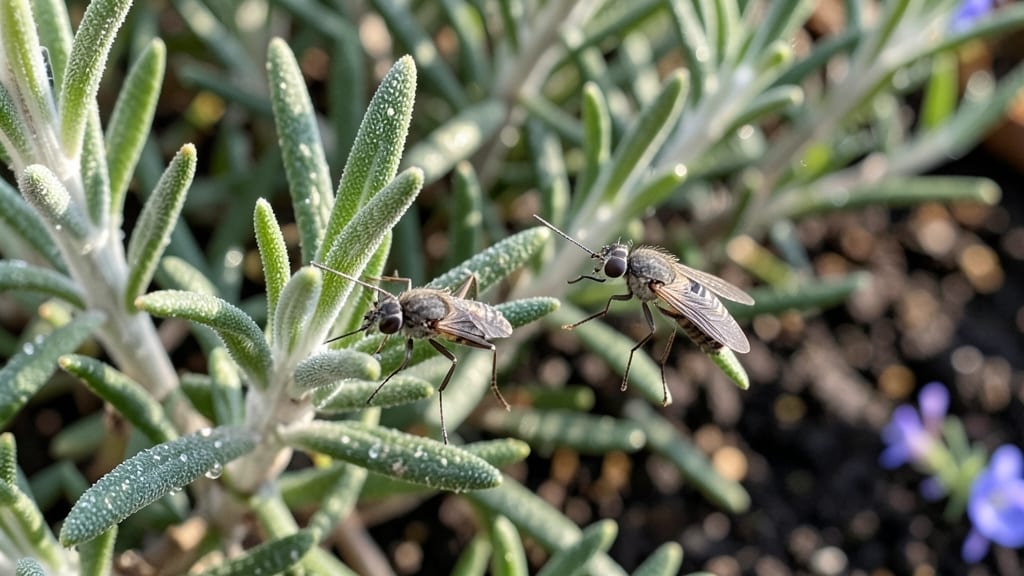
Rosemary plants can help repel mosquitoes through their potent scent, though they won’t match the effectiveness of commercial sprays. For best results, plant them near outdoor seating, crush fresh leaves occasionally, or use rosemary-infused oils in diffusers—just remember consistency is everything for lasting protection.
Rosemary’s natural oils—like camphor and eucalyptol—disrupt mosquitoes’ ability to detect carbon dioxide, making it harder for them to find you. 🌿 While this method works better in calm outdoor spaces (think patios or gardens), it won’t hold up in windy areas or against aggressive species like Aedes aegypti.
I’ve found that combining rosemary with other herbs like lavender or basil creates a stronger barrier—just refresh the scent every few days to keep those pests away.
For maximum impact, plant rosemary in pots near seating areas or tuck it into flower beds where you’ll spend time. Crushing a few leaves releases more of the repellent compounds, and you can even steep rosemary sprigs in hot water for a DIY spray. ✨ The key is regular maintenance: prune your plants to encourage new growth, and harvest leaves before they flower for the strongest aroma.
💡 In This Article
- How Rosemary’s Natural Compounds Fight Mosquitoes
- Best Ways to Use Rosemary for Mosquito Control in Gardens
How rosemary’s natural compounds fight mosquitoes
Rosemary’s mosquito-repelling power comes from its complex blend of aromatic compounds, primarily camphor, eucalyptol (1,8-cineole), and pinene. These volatile oils interfere with mosquitoes’ olfactory system by masking human scents—especially carbon dioxide and lactic acid, which they use to locate hosts.
Studies show eucalyptol alone can reduce mosquito landing rates by up to 30-40% in controlled environments, though effectiveness varies by species. 🔥 The camphor content (up to 20% in rosemary oil) creates a sharp, medicinal aroma that many mosquitoes find overwhelming, similar to how citronella disrupts their navigation.
Unlike commercial repellents containing DEET (which can last 6-8 hours), rosemary’s effects are more subtle and short-lived—typically 2-4 hours in still air. The compounds work best in enclosed spaces (like patios or screened porches) where scent concentration remains high.
For comparison, citronella grass contains geraniol and citronellol, which repel mosquitoes by mimicking plant odors they avoid, but rosemary’s broader compound profile makes it more effective against multiple species, including Aedes (dengue carriers) and Culex (West Nile vectors).
What most people overlook is how rosemary’s repellent action changes with plant maturity. Fresh, green leaves contain the highest concentrations of eucalyptol and pinene, but once flowers appear, the oil composition shifts toward borneol and camphene, which are less effective.
That’s why harvesting leaves just before flowering—when the plant is 6-12 inches tall—maximizes repellent potency. 🌿 The key is regular pruning to stimulate new growth, as older stems produce weaker aromas. For best results, pair rosemary with lavender or basil, whose combined scents create a stronger olfactory barrier.
Scientific studies reveal another critical factor: temperature. Rosemary’s repellent compounds volatilize more quickly at 75-85°F, which is why summer evenings see the strongest effects. In cooler conditions (60°F or below), the oils bind more tightly to plant surfaces, reducing their airborne concentration.
This explains why rosemary works better in Mediterranean climates (where it’s native) than in humid tropical regions, where higher moisture levels dilute the scent. For indoor use, a few drops of rosemary essential oil in a diffuser can create a 10-foot protection radius, though it requires frequent refreshing.
One common misconception is that rosemary can replace chemical repellents entirely. While it’s a natural and safer alternative, its effectiveness drops dramatically in windy conditions (scents disperse too quickly) or against mosquitoes adapted to urban environments, which may have developed resistance to plant-based compounds.
For outdoor use, combine rosemary with physical barriers like fine mesh screens or mosquito-repelling plants like lemongrass to create a multi-layered defense system. 💫
The science behind rosemary’s repellency also explains why crushing leaves works better than whole sprigs. The act of bruising releases 3-5 times more volatile oils per square inch, creating a more concentrated scent cloud.
This is why gardeners often recommend placing rosemary pots near seating areas and gently crushing a few leaves every 2-3 hours during peak mosquito activity (dawn and dusk).
For a longer-lasting solution, infuse rosemary in carrier oils like coconut or jojoba—the resulting oil can be applied to skin or used in candles, though patch-testing is advised for sensitive skin.