
Shrubs
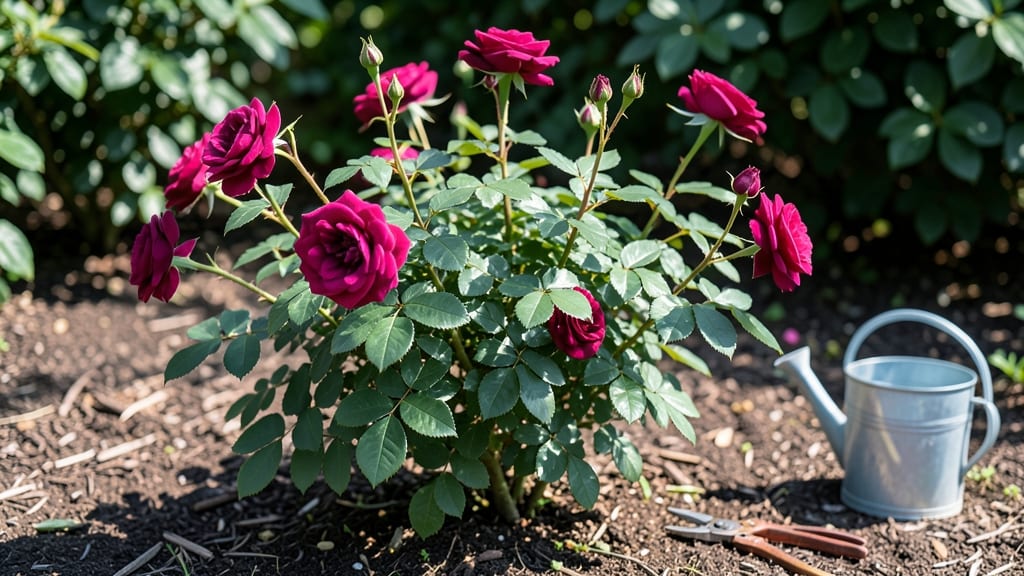
The Viking Queen rose brings drama to small spaces with its deep burgundy blooms and velvety petals—perfect for containers where it thrives like a queen in her throne. 🌹 I fell for this variety after struggling with floppy climbers; its compact growth habit (6-8 feet) and disease resistance make it the easiest climbing rose I've grown.
The scent? Rich, spicy, and intoxicating—like a forest after rain. This rose loves full sun (6+ hours daily) and well-draining soil, but it’s forgiving about the rest. Plant it in a 10-15 gallon container with a trellis or let it sprawl over a balcony railing.
The key is consistent moisture—water deeply when the top inch of soil dries, and mulch to keep roots cool. Prune in early spring to shape it and remove dead wood, but otherwise, it’s low-maintenance.
By midsummer, you’ll be rewarded with nonstop blooms from June until frost, their dark petals contrasting beautifully against green foliage. The hips that follow add winter interest, and birds will flock to snack on them.
It’s the rose that works as hard as you do—just plant it, water it, and watch it shine. Container growing means you can move it to protect from harsh winds or late frosts, and its compact size makes it ideal for patios, decks, or even large pots on city balconies.
Here’s how to make it thrive in your space!
📚 In This Guide
- What you need
- Instructions
- Tips and common mistakes
- Wrapping up and next steps
What you need
- ● Viking Queen Rose Bush: 1 healthy, bare-root or potted plant (5-gallon size recommended for containers). Look for disease-resistant varieties!
- ● Container: 1 large, sturdy pot (at least 18–24 inches in diameter and 18 inches deep) with drainage holes. Terracotta or fiberglass pots work best for heat retention.
- ● Potting Soil: 1 bag of high-quality well-draining rose-specific mix (or a blend of 50% garden soil, 30% compost, and 20% perlite/sand). Avoid heavy clay soil!
- ● Gravel or Pebbles: 1–2 inches (for drainage layer at the bottom of the container).
- ● Slow-Release Fertilizer: 1 cup of balanced, organic rose fertilizer (e.g., 10-10-10 or rose-specific granules).
- ● Mulch: 2–3 inches of organic mulch (e.g., shredded bark or straw) to retain moisture and regulate temperature.
- ● Garden Gloves: 1 pair (to protect your hands from thorns and soil).
- ● Trowel or Spade: 1 medium-sized tool for planting and soil adjustments.
- ● Watering Can or Hose: With a gentle spray nozzle for hydration.
- ● Pruning Shears: Sharp, sterilized shears (for trimming dead blooms or shaping).
- ○ pH Testing Kit (Optional): To ensure soil pH is 6.0–6.5 (roses love slightly acidic soil!).
- ● Sunlight: A spot with full sun (6+ hours of direct light daily). Viking Queen Roses are sun-worshippers!
- ● Watering Schedule: Commit to consistent watering (containers dry out faster than ground soil).
- ● Patience: Roses thrive with time—expect 3–4 months for initial blooms and 1–2 years for full vigor.
How to grow a thriving Viking Queen rose in containers
This stunning climbing rose loves containers—here's how to give it the perfect home.
🪴 Step 1: Choose the Right Container and Location
Pick a container at least 18 inches deep and 20 inches wide—Viking Queen roses need room for strong roots. I use terra cotta pots because they breathe and prevent root rot, but any container with drainage holes works. Place it where it gets full sun (6+ hours daily) and shelter from harsh afternoon winds.
If your patio gets afternoon shade, position the pot where it catches morning sun and late evening light. Viking Queen roses bloom best with 6-8 hours of direct sun, so don't skimp on placement. I always check the sun patterns for a week first—trust me, you'll avoid moving the pot later.
🌱 Step 2: Prepare Soil and Plant the Rose
Fill the container with a mix of 50% premium potting soil and 50% compost—this gives the roots both nutrients and drainage. I avoid garden soil because it compacts in containers and suffocates roots. Add a slow-release rose fertilizer (follow package rates) to the bottom third of the pot before adding soil.
Dig a hole twice as wide as the root ball but no deeper. Gently remove the rose from its nursery pot and loosen the roots if they're circling. Place it in the hole so the graft union (the bump near the base) sits 2 inches above soil level. This prevents rot and encourages strong growth. Backfill with soil, pressing lightly to remove air pockets.
💧 Step 3: Water Deeply and Mulch
Water the newly planted rose deeply until water runs out the drainage holes—this settles the soil and removes air pockets. For the first 2 weeks, keep the soil evenly moist (check by sticking your finger 1 inch deep—it should feel damp but not soggy). Viking Queen roses hate drying out, but they also hate sitting in water.
Spread 2 inches of mulch (like bark chips) over the soil surface to retain moisture and regulate temperature. Keep the mulch 2 inches away from the stem to prevent rot. Real talk: Overwatering is the #1 killer of container roses—let the top inch dry between waterings after the initial setup.
☀️ Step 4: Prune and Train for Climbing
In early spring, prune back one-third of the plant to encourage bushier growth. Cut just above an outward-facing bud (this ensures new growth angles away from the center). Remove any dead, crossing, or weak branches—this keeps airflow strong and prevents disease. Viking Queen roses bloom on new wood, so don't fear pruning.
Train the canes to climb by tying them to a strong trellis or obelisk with soft plant ties. Space ties 6-8 inches apart to support the weight of blooms. Here's the thing—Viking Queen roses grow 4-6 feet tall in containers, so install your trellis before planting. You'll thank me when the first blooms appear in late spring.
✂️ Step 5: Feed and Maintain Through the Season
Every 4-6 weeks, feed with a balanced rose fertilizer (like 10-10-10) mixed at half-strength. I fertilize in spring, summer, and early fall—stop by mid-October to let the plant harden off for winter. Deadhead spent blooms by cutting just above a set of healthy leaves to encourage more flowers.
Watch for aphids or black spot—common rose pests. Spray with neem oil at the first sign of trouble. In fall, reduce watering but keep the soil slightly moist. If your winters drop below 10°F, move the pot to a protected spot or wrap it in burlap to shield from freezing winds. Viking Queen roses are hardy, but containers freeze faster than in-ground plants.
Tips & tricks for perfect Viking Queen rose care in containers
These simple strategies will help your Viking Queen rose thrive in its container home—and avoid the common pitfalls that turn beautiful roses into sad, struggling plants.
Container Size Matters: The 18-inch depth and 20-inch width requirements aren't just suggestions—they're non-negotiable for this vigorous climber. I've seen Viking Queen roses in smaller pots struggle with root binding by midsummer. If you're using a larger container, fill the extra space with more of that 50/50 potting soil/compost mix to prevent compaction. The key is giving roots room to establish while maintaining good drainage.
Sunlight Strategy: That 6-8 hour daily sunlight requirement is critical, but here's what nobody tells you—the quality matters just as much as quantity. Morning sun (especially east-facing) provides gentle warmth, while afternoon sun (west-facing) can scorch leaves. If your space only gets 4-5 hours of direct sun, position the pot to catch reflected light from nearby walls or light-colored surfaces. Viking Queen roses will still bloom, but with slightly smaller, more delicate flowers.
Watering Wisdom: The first 2 weeks are the most critical for watering—your finger test at 1 inch deep is perfect, but here's the secret: water when the top inch feels dry, but don't wait until it's bone-dry. Container roses dry out faster than in-ground plants, and Viking Queen's thick canes need consistent moisture to support their weight. I use a moisture meter in my containers because my thumb isn't always reliable. Also, water in the morning so any excess can evaporate during the day rather than sitting against the roots.
Pruning Payoff: When you prune back one-third of the plant in early spring, don't just hack away randomly. Look for canes that grew toward the center of the plant last year—they'll produce weak, leggy growth. Cut just above an outward-facing bud that's about the size of a pencil eraser. This creates stronger, more productive canes. And here's a bonus: those pruned canes make excellent cut flowers that last up to a week in water!
Pro Tips for Viking Queen Rose
- These simple strategies will help your Viking Queen rose thrive in its container home—and avoid the common pitfalls that turn beautiful roses into sad, struggling plants.
- Container Size Matters: The 18-inch depth and 20-inch width requirements aren't just suggestions—they're non-negotiable for this vigorous climber.
- Sunlight Strategy: That 6-8 hour daily sunlight requirement is critical, but here's what nobody tells you—the quality matters just as much as quantity.
Frequently asked questions
Got questions about the Viking Queen Rose? You’re not alone!
Whether you're a first-time container gardener or a seasoned rose enthusiast, here are some of the most common queries—and their answers—to help you grow this stunning climber with confidence.
Is the Viking Queen Rose really suitable for containers?
The Viking Queen Rose is a fantastic choice for containers! Its compact growth habit (typically 6–8 feet tall) and disease-resistant nature make it ideal for pots, especially when paired with well-draining soil and regular pruning. Just ensure your container is at least 15–20 gallons and has drainage holes to prevent root rot.
How long does it take for Viking Queen Roses to bloom?
With proper care, you can expect Viking Queen Roses to produce their first blooms within 6–12 months of planting. In containers, they may bloom slightly later due to limited root space, but they’ll reward you with continuous flowers from early summer through fall once established. Patience pays off!
How often should I water my container-grown Viking Queen Rose?
Container roses like Viking Queen dry out much faster than in-ground plants. Water deeply every 2–3 days in hot weather and adjust based on soil moisture—never let it stay soggy. Mulch the top of the soil to retain moisture, and always water at the base (not the leaves) to prevent fungal issues.
When and how should I prune my Viking Queen Rose?
Prune your Viking Queen in early spring (before new growth) and after each major bloom cycle to encourage more flowers. Remove dead, crossing, or weak canes, then cut back remaining stems by 1/3 to maintain shape. In containers, pruning also helps control size—just avoid heavy cuts in late summer, as it may delay fall blooms.
What pests or diseases should I watch for in container-grown Viking Queen Roses?
The Viking Queen is highly resistant to black spot and powdery mildew, but watch for aphids, spider mites, or rose slugs (especially in containers). Neem oil or insecticidal soap works well for pests, and ensuring good airflow (via proper spacing and pruning) reduces disease risk. Always inspect leaves regularly!
Wrapping up and next steps
The Viking Queen rose isn’t just a shrub—it’s a bold statement of beauty and resilience, perfect for adding drama to your containers. With its striking burgundy blooms, disease resistance, and adaptability, it’s the ideal choice for gardeners who crave wow without the fuss.
Whether you’re a seasoned gardener or just starting, this rose proves that stunning results don’t require a sprawling yard.
Ready to bring this Viking Queen magic to your space? Start by gathering your supplies, then dive into planting with confidence—your garden (and neighbors!) will thank you. 🌿✨