
Pests and Diseases
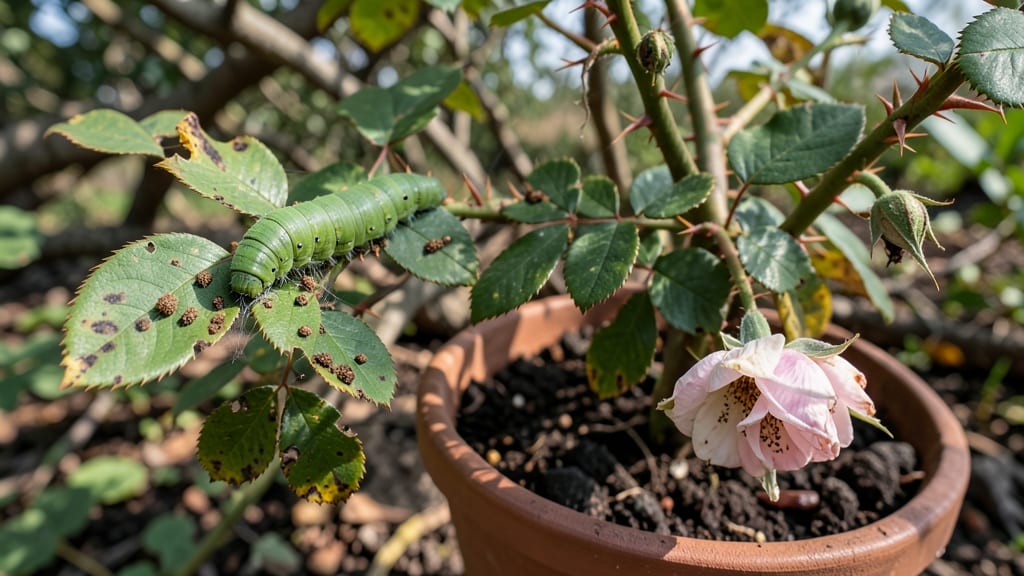
What causes holes in rose leaves? Japanese beetles and slugs are the usual suspects—though fungal infections can sometimes play a role too. 🌿 I’ve battled all three in my own garden, and the key to fixing it starts with identifying exactly what’s chewing (or rotting) your plants.
The damage looks different depending on the culprit, so let’s break down the telltale signs and solutions that actually work.
The most common offenders are Japanese beetles, which leave behind irregular, jagged holes along leaf edges, while slugs create smooth, slime-lined gaps that often look like they’ve been cut with scissors. Fungal issues, like black spot, might cause tiny brown spots that eventually turn into larger holes as leaves weaken.
The good news? Once you know what’s attacking your roses, you can target the fix—whether it’s organic sprays, physical barriers, or better garden hygiene.
You’ll feel relief the first time you see the damage slow down after applying the right treatment. For beetles, neem oil or milky spore works; for slugs, beer traps or copper tape keep them away.
Fungal problems? Prune infected leaves and improve airflow. The goal is to protect your roses without harming pollinators or the soil—because a healthy plant is the best defense against future attacks.
This isn’t just about fixing the holes—it’s about preventing them from coming back. With the right approach, your roses will bounce back stronger, and you’ll spot the early signs of trouble before they become a full-blown problem. Let’s get your garden back in fighting shape.
Root Causes Of Leaf Damage
Holes in rose leaves aren’t just random—each type of damage has a specific trigger, whether it’s a hungry pest, a fungal infection, or environmental stress. Understanding the why behind these holes is the first step to saving your roses.
Below, we break down the most common culprits, their behaviors, and how they wreak havoc on your plants.
Some pests are so obvious, you’ll spot them mid-crime. These insects physically bite or chew through leaf tissue, leaving behind jagged edges, skeletonized patterns, or even entire holes. Here’s who’s likely responsible:
#### 🐞 Japanese Beetles: The Leaf SkeletonsThese iridescent green-and-copper beetles are voracious feeders, targeting roses, grapes, and other soft-leaved plants. They don’t just poke holes—they strip leaves to the veins, creating a lacy, skeletonized effect. Adult beetles chew in broad daylight, while their grubs (white, C-shaped larvae) munch on grass roots in early summer.
- Damage telltale: Small, irregular holes + scalloped edges (like someone took a cookie cutter to the leaf).
- Active season: June–August (peak in late July).
- Pro tip: 🌡️ Handpick beetles into soapy water—especially in the morning when they’re sluggish.
Don’t let the name fool you—these aren’t slugs at all. They’re pale green, spiny larvae that defoliate roses overnight. Unlike beetles, they don’t leave behind skeletonized leaves; instead, they consume entire leaf surfaces, leaving only the midrib. They also excrete a sticky honeydew, attracting sooty mold.
- Damage telltale: Holes + frass (black fecal pellets) on the soil below. Leaves may look shredded like confetti.
- Active season: May–July (worst in early morning or after rain).
- Pro tip: 🔥 Shake plants over a bucket of soapy water—larvae will drop off.
From tomato hornworms to rose sawfly caterpillars, these fuzzy or smooth-bodied larvae are nocturnal chewers. They often hide under leaves during the day, emerging at night to munch on tender foliage. Some, like the rose slug, are rose-specific, while others (like hornworms) are opportunistic.
- Damage telltale: Large, irregular holes with silk webbing or frass. Some caterpillars leave only the leaf veins.
- Active season: Spring–fall (varies by species).
- Pro tip: 🌙 Inspect plants at dusk with a flashlight—caterpillars are easier to spot when active.
Not all holes are caused by chewing. Some fungi infect leaf tissue, causing it to die and drop out, leaving behind punched-out holes. These issues thrive in humid, poorly ventilated conditions—common in dense rose bushes or after heavy rain.
#### 🍄 Powdery Mildew: The White Web of DoomWhile powdery mildew typically appears as a white, powdery coating, severe infections can kill leaf tissue, causing it to turn brown and fall out, leaving holes. The fungus clogs stomata (leaf pores), preventing gas exchange and leading to necrosis (cell death).
- Damage telltale: White powder on leaves + small, irregular holes in advanced stages.
- Conditions: High humidity + poor airflow (e.g., overcrowded bushes).
- Pro tip: ✨ Space plants for airflow and water at the base (not overhead) to keep leaves dry.
Diplocarpon rosae, the fungus behind black spot, creates dark, circular lesions with yellow halos. As the infection spreads, the center of the lesion dies and drops out, leaving behind a perfectly round hole. Unlike chewing pests, black spot holes are often surrounded by a yellow ring.
- Damage telltale: Black, circular spots → holes with yellow borders.
- Conditions: Wet foliage + warm temps (60–80°F).
- Pro tip: 💡 Prune infected leaves immediately and sterilize pruners with rubbing alcohol.
Sometimes, holes aren’t caused by living organisms at all. Extreme weather, nutrient deficiencies, or physical trauma can weaken leaves, making them vulnerable to tearing or developing abnormal growth patterns.
#### 🌪️ Wind or Hail Damage: Nature’s ScissorsStrong winds or hail can physically tear rose leaves, creating irregular, jagged holes. Unlike pest damage, these holes lack frass (insect droppings) or chew marks and often affect multiple leaves at once.
- Damage telltale: Random, uneven holes with no frass or webbing.
- Solution: Protect roses with windbreaks or row covers during storms.
When roses sit in waterlogged soil, roots suffocate, leading to nutrient uptake issues. This stress causes leaf tissue to weaken, making it prone to tearing or developing holes from minor abrasions (like rubbing against branches).
- Damage telltale: Yellowing leaves + holes + mushy, black roots when checked.
- Solution: 🌡️ Improve drainage with sand or compost and water only when topsoil is dry.
If your roses are near lawns or gardens treated with broadleaf herbicides (like 2,4-D), drift can burn leaves, causing brown, hole-like lesions.
Fixing Hole-Riddled Rose Leaves Naturally
Now that you’ve identified the culprit behind those pesky holes in your rose leaves, it’s time to take action! Whether it’s hungry insects, fungal infections, or environmental stressors, each problem has a targeted solution.
Below, we’ll walk you through practical, chemical-free fixes tailored to the most common causes—plus prevention tips to keep your roses thriving.
---
If tiny chewers or sap-suckers are to blame, here’s how to evict them without harsh chemicals.
#### 🔥 Slugs & Snails: The Slimey Invaders Fix: - 🍳 Set up beer traps – Bury a shallow dish filled with beer near the base of your roses.
The slugs will crawl in and drown overnight. Pro tip: 🌡️ Refresh the beer every 2–3 days for maximum effectiveness. - 👨🍳 Create barriers – Surround plants with copper tape (available at garden centers) or crushed eggshells.
Slugs hate crawling over these! - 🥘 Handpick at dawn – Slugs are most active after rain or at night. Shake them into a bucket of soapy water before the sun rises.
Prevention: ✨ Remove hiding spots – Clear debris, mulch, and dense foliage where slugs love to nest. ✨ Water in the morning – Wet leaves at night attract slugs, so keep them dry after dark.
---
#### 🐛 Japanese Beetles & Leafhoppers: The Leaf Skewers Fix: - 🔪 Handpick & drop them – Fill a bucket with soapy water and pluck beetles off leaves in the early morning when they’re sluggish. - 🌿 Neem oil spray – Mix 1 tbsp neem oil + 1 tsp mild soap + 1 quart water, then spray directly on pests. Reapply every 5–7 days. 💡 Test on a few leaves first—neem can burn sensitive roses! - 🎯 Attract predators – Plant marigolds, catnip, or tansy nearby to lure beneficial insects like ladybugs and parasitic wasps.
Prevention: 🔥 Use row covers – Lightweight fabric barriers can block beetles from reaching your roses. 🔥 Prune & dispose – Remove heavily infested leaves and compost them away from your garden to stop the cycle.
---
#### 🕷️ Spider Mites: The Tiny Web Weavers Fix: - 💦 Blast them off – Use a strong spray of water (from a hose nozzle) to knock mites off leaves.
Do this every 2–3 days until they’re gone. - 🌿 Introduce predator mites – Purchase Phytoseiulus persimilis (a natural mite enemy) from garden stores. - 🥘 Diatomaceous earth (DE) – Sprinkle food-grade DE lightly on leaves and soil. It’s harmless to roses but deadly to mites. Reapply after rain.
Prevention: ✨ Keep leaves dry – Mites thrive in dry, dusty conditions. Mist roses lightly in hot weather. ✨ Encourage airflow – Space plants properly to reduce humidity where mites love to hide.
---
If holes are a sign of black spot, powdery mildew, or botrytis, act quickly to save your roses.
#### 🔥 Black Spot & Powdery Mildew: The Fungal Foes Fix: - 🍳 Baking soda spray – Mix 1 tsp baking soda + 1 quart water + a few drops of soap.
Spray both sides of leaves every 7–10 days. Safe for roses and pets! - 🌿 Copper fungicide – For severe cases, use an organic copper fungicide (like Bordeaux mixture) as directed. - 🥘 Prune & sterilize – Cut off infected leaves with clean pruners, then sterilize tools with rubbing alcohol to prevent spreading.
Prevention: 💡 Water at the base – Avoid wetting leaves, especially in the evening. 💡 Space plants for airflow – Crowded roses stay damp and invite fungi.
---
#### 🍄 Botrytis Blight: The Gray Mold Menace Fix: - 🔪 Remove infected parts – Snip off blackened, mushy leaves immediately and dispose of them in the trash (not compost). - 🌿 Hydrogen peroxide spray – Mix 1 tbsp 3% hydrogen peroxide + 1 quart water and spray every 5 days to prevent spores. - 🥘 Improve airflow – Thin out dense growth and avoid overhead watering.
Prevention: ✨ Avoid late-season fertilizing – Too much nitrogen encourages soft, susceptible growth. ✨ Mulch properly – Use straw or pine needles (not thick organic mulch) to keep stems dry.
---
If holes are from wind, hail, or sunscald, your roses need a little extra TLC.
#### 🔥 Wind & Hail Damage: The Physical Attack Fix: - 🍳 Shield young roses – Use burlap screens or straw wraps to protect tender leaves from wind. - 🌿 Mulch heavily – A 3-inch layer of mulch helps roots stay stable and recovers faster. - 🥘 Prune carefully – Trim only damaged leaves—healthy tissue will regrow!
Prevention: 💡 Plant in sheltered spots – Avoid exposed areas where wind or hail frequently strike. 💡 Choose resilient varieties – Some roses (like ‘Knock Out’ or ‘Dr. Huey’) handle rough weather better.
---
#### 🔥 Sunscald & Heat Stress: The Hidden Burn Fix: - 💦 Increase shade – Use light shade cloth (30–50%) during peak sun hours (10 AM–4 PM). - 🌿 Mulch & water deeply – Keep soil moist but not soggy to reduce stress. - 🥘 Apply anti-transpirant spray – Products like Wilt-Pruf create a protective film on leaves.
Prevention: ✨ Gradual acclimation – If moving roses, harden them off over 2 weeks to adjust to sun. ✨ Morning watering – Water before 10 AM so leaves dry quickly and avoid sunburn.
---
To keep your roses hole-free and happy, follow these golden rules: - 💪 Feed right – Use a balanced organic fertilizer (like 10-10-10) in spring and summer. - 🌿 Prune regularly – Remove dead or crowded branches to improve airflow. - 🔍 Inspect weekly – Catch pests and diseases early before they take over. - 🌱 Rotate plants – If one spot gets hit hard, move roses next year to break disease cycles.
--- Remember: Patience is key! Some fixes (like neem oil or baking soda sprays) take 1–2 weeks to show results. Stick with it, and your roses will bounce back stronger than ever. 🌹✨
Frequently asked questions
Why do rose leaves get holes overnight?
Rose slugs (sawfly larvae) and caterpillars are the most likely culprits! These pests hide during the day and munch on leaves at night, leaving behind shredded or skeletonized leaves. Check for black fecal pellets (frass) on the soil below—this confirms chewing pests are active.
Are holes in rose leaves always from pests?
No—fungal diseases like black spot or powdery mildew can also cause holes. Look for yellow halos around black spots (black spot) or white powder (mildew) before tissue dies and falls out. Environmental stress (wind, hail, or overwatering) can also weaken leaves, making them tear easily.
How do I tell if Japanese beetles are the problem?
Japanese beetles leave irregular, jagged holes along leaf edges, often creating a skeletonized appearance. You’ll also spot their iridescent green-and-copper bodies chewing in broad daylight. Check for scalloped edges—like someone used a cookie cutter—and handpick beetles into soapy water for instant relief.
Will neem oil work for all types of holes in rose leaves?
Neem oil is great for chewing pests (beetles, caterpillars, slugs) but won’t treat fungal issues. For black spot or powdery mildew, use a baking soda spray (1 tsp baking soda + 1 quart water) instead. Always test sprays on a small leaf first—some roses are sensitive!
Can I save a rose bush with severe leaf holes?
Yes! Prune back heavily damaged leaves to redirect energy to new growth. Focus on removing infected or chewed foliage and improving care (better watering, airflow, or pest control). Healthy roses regrow quickly—just be patient and consistent with treatments!