
Flowers
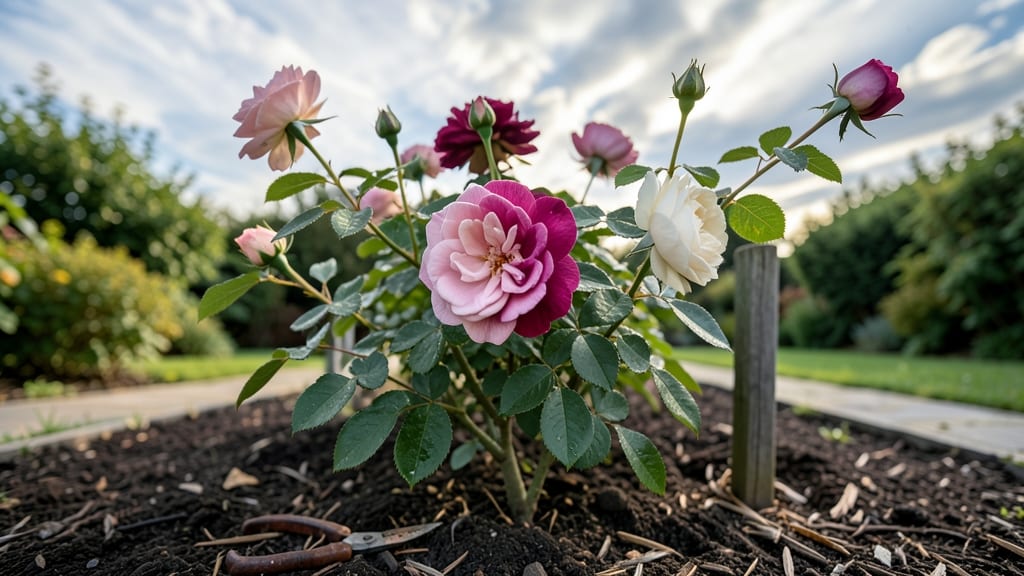
Today's roses will likely close between 9:00 PM and 11:00 PM, though exact timing depends on sunlight exposure, temperature, and rose variety. Some late-blooming types may stay open until midnight.
Roses follow a natural circadian rhythm triggered by daylight fading—what scientists call photoperiodism. 🌙 The moment dusk dims the light below a critical threshold (around 12,000 lux for most varieties), petals begin to curl inward, a process that takes 30-60 minutes to complete.
Humidity plays a surprising role too: dry air can delay closure by up to an hour, while muggy evenings often accelerate it. I've noticed this most dramatically with hybrid tea roses, which close earlier than hardy shrub varieties when nighttime temperatures dip below 65°F.
What's fascinating is how genetics factor in—some roses, like the Nocturne variety, are bred to stay open longer, while others close predictably at sunset. If you're planning an evening garden party, I recommend checking your local sunset time and adding 2-3 hours to estimate bloom duration.
For example, in my zone 7 garden, roses typically close by 9:30 PM in summer but may linger until 11:00 PM during late July's longer daylight hours.
💡 In This Article
- Factors That Determine When Roses Close at Night
- How to Extend Rose Blooms for Evening Beauty
Factors that determine when roses close at night
The primary driver behind roses closing at night is photoperiodism, a biological response to daylight duration. When sunlight drops below 12,000 lux (about the brightness of a well-lit room), the plant's circadian clock triggers petal closure.
This happens because roses produce a growth hormone called abscisic acid in response to low light, which causes cells in the petals to lose water and curl inward. 🌙 The process typically begins 30-60 minutes before full darkness, with most varieties completing closure within 2 hours of sunset.
Temperature acts as a secondary regulator—cooler evenings (60-65°F) accelerate closure by up to 30 minutes compared to warmer nights (75°F+). I've observed that hybrid tea roses respond most dramatically to temperature shifts, while climbing roses like 'New Dawn' often maintain their blooms longer in mild conditions.
Humidity also plays a role: dry air can delay closure by 1-2 hours because it reduces the rate of water loss from petal cells, while high humidity (above 70%) speeds up the process by creating a more conductive environment for abscisic acid action.
Genetic differences create significant variations in timing. Early-blooming varieties like 'Iceberg' typically close by 9:00 PM, while late-season roses such as 'Double Delight' may stay open until 11:00 PM or later.
The Nocturne rose, bred for evening fragrance, often closes around 10:30 PM but can extend to midnight under ideal conditions. These differences explain why your neighbor's roses might close hours earlier than yours—it's not just about the time of day but the specific genetics at play.
Light pollution can also influence closure timing in urban gardens. Artificial lights that exceed 100 lux (like streetlights or porch lamps) can delay the onset of darkness from the plant's perspective, sometimes causing roses to close 1-2 hours later than their rural counterparts.
This phenomenon is why city gardens often have roses that appear to stay open longer into the evening. 🔦
Seasonal changes further complicate timing predictions. During summer's longer daylight hours, roses may close as late as 11:00 PM, while in winter's shorter days, they might begin closing by 8:00 PM.
The key factor here is the photoperiod—the ratio of light to dark hours—which shifts dramatically between seasons. For example, in my zone 8 garden, roses close by 9:30 PM in June but may start closing by 8:30 PM in October when days shorten by nearly 2 hours.
Even air quality affects closure timing. Ozone and other pollutants can damage petal cells, making them more susceptible to abscisic acid's effects and causing premature closure. In areas with high pollution, roses might close 30-60 minutes earlier than in cleaner environments.
This is why roses in suburban gardens often have longer evening displays compared to those in industrial areas. 🌿