
Pruning
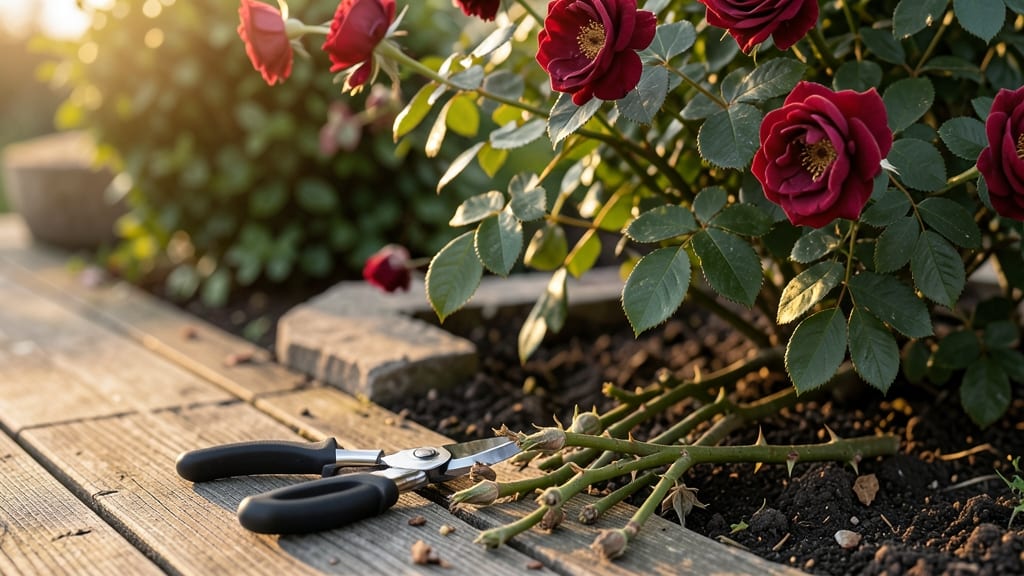
Cutting back roses at the right time and by the right amount transforms weak stems into strong, blooming powerhouses — and doing it wrong can leave you with sparse, leggy plants.
If your roses look tired after winter or produce fewer blooms than expected, the issue might be timing. Pruning too early exposes tender canes to frost, while waiting too long robs them of their natural energy reserves.
The late-winter window is your best bet, but the exact moment depends on your climate zone and rose type.
In this guide, I’ll walk you through the 1/3 rule for pruning depth, how to spot the perfect time based on dormancy cues, and why some roses (like hybrid teas) need a heavier cut than others.
You’ll also learn how to avoid the three biggest pruning mistakes that stunt growth — and how to fix them if you’ve already made them.
Whether you’re a first-time gardener or a seasoned rose enthusiast, mastering this skill will give you roses that bloom bigger, longer, and with less effort than ever before.
Optimal late-winter rose pruning timeline: month-by-month guide
Pruning roses at the right time is like giving them a fresh start—it removes dead wood, shapes growth, and encourages vibrant blooms all season. But timing matters more than you think. Prune too early, and you risk frost damage to fresh cuts.
Prune too late, and you delay spring growth. The key? Watch for dormancy signs and adjust for your USDA climate zone.
Most gardeners prune in late winter or early spring, but the exact timing depends on where you live. In colder zones (USDA 3-6), wait until after the last frost when soil temperatures rise above 40°F (4°C).
In milder zones (USDA 7-10), you can prune as early as January or February when days start lengthening. The goal? Prune when roses are fully dormant but before new growth begins.
Here’s how to match your climate zone and rose type to the perfect pruning window:
For hybrid teas and floribundas, aim to prune when 50% of buds have swollen but not yet opened. These roses bloom on new wood, so aggressive pruning now sets up bigger blooms later.
In contrast, climbing roses and old garden roses bloom on older wood, so prune them more lightly—just enough to shape and remove dead canes.
If you’re in USDA Zone 3 or 4, wait until April or early May when frost risk has passed. Check your local last frost date and prune 2-3 weeks after to give roses time to heal before new growth spurts.
Pro tip: Use a sharp bypass pruner to make clean cuts at a 45-degree angle just above an outward-facing bud eye.
One common mistake? Pruning too early in cold climates. If you cut back in January or February and a late frost hits, your fresh cuts can freeze and die, leaving your rose vulnerable to disease.
Always wait until the ground thaws and daytime temps stay above freezing for at least a week.
What if you missed the window? Don’t panic. Light pruning can still be done in early spring to remove dead wood, but avoid heavy cuts. For late pruners, focus on shaping and cleaning up—just don’t expect the same spring bloom boost as a well-timed late-winter prune.
After pruning, give your roses a layer of mulch (2-3 inches) to protect roots and retain moisture. Then, fertilize with a balanced rose food (like 10-10-10) when new shoots emerge—usually in late spring.
This feeding jumpstarts growth and ensures your roses reward you with lush, healthy blooms all season.
Remember: The best time to prune roses isn’t just about the calendar—it’s about the plant’s readiness. Watch for bud swell, leaf drop, and soil temperature cues, and adjust accordingly.
With the right timing, your roses will thank you with bigger blooms and stronger canes all summer long. 🌹
How much to cut back roses: the 1/3 rule and type-specific pruning depths
Pruning roses correctly is like giving them a fresh start—cut too little, and they’ll get leggy; cut too much, and you’ll stunt their blooms.
The 1/3 rule is your golden guideline: remove one-third of the plant’s height and one-third of the oldest canes to encourage vigorous new growth while maintaining the rose’s natural shape.
But not all roses are created equal. Hybrid teas and grandifloras need aggressive pruning—cut back to 18-24 inches—while old garden roses and climbers thrive with lighter cuts. The key is to look for outward-facing buds (they’ll grow into stronger branches) and avoid leaving stubs longer than 1/4 inch.
Pruning Depths by Rose Type
| Rose Type | Prune to Height | Cane Thickness | Bud Eyes to Keep |
|---|---|---|---|
| Hybrid Teas | 18-24" | Pencil-thin (new growth) | 3-5 outward-facing |
| Floribundas | 24-36" | Pencil to thumb-sized | 5-7 outward-facing |
| Old Garden Roses | 30-48" | Thick, woody canes | 7-10 outward-facing |
| Climbers/Ramblers | Minimal (just dead wood) | Thick, flexible canes | 2-3 per cane (light prune) |
For hybrid teas, aim to leave 3-5 strong canes per plant, cutting back to a healthy outward-facing bud. These roses bloom on new wood, so aggressive pruning in late winter sets the stage for longer, showier stems in summer.
Use sharp, clean shears to make smooth cuts—ragged edges invite disease.
Old garden roses and shrub roses, like David Austins, are more forgiving. Prune them lightly—just remove dead, crossing, or weak canes—to preserve their romantic, layered look.
These roses bloom on old wood, so avoid heavy cuts that remove next year’s flowers. Focus on opening the center for airflow and sunlight.
Climbing roses deserve special care. Never prune more than 20% of their length—these beauties need their canes to reach trellises or walls. Instead, trim back last year’s blooms and any weak, tangled growth to encourage long, flexible stems.
Tie new growth to supports as it grows to avoid flopping.
After pruning, disinfect your tools with rubbing alcohol to prevent spreading black spot or powdery mildew. Apply a balanced fertilizer (like 10-10-10) and mulch around the base to retain moisture and protect roots. Within weeks, you’ll see new shoots bursting with potential for season-long blooms.