
Pests
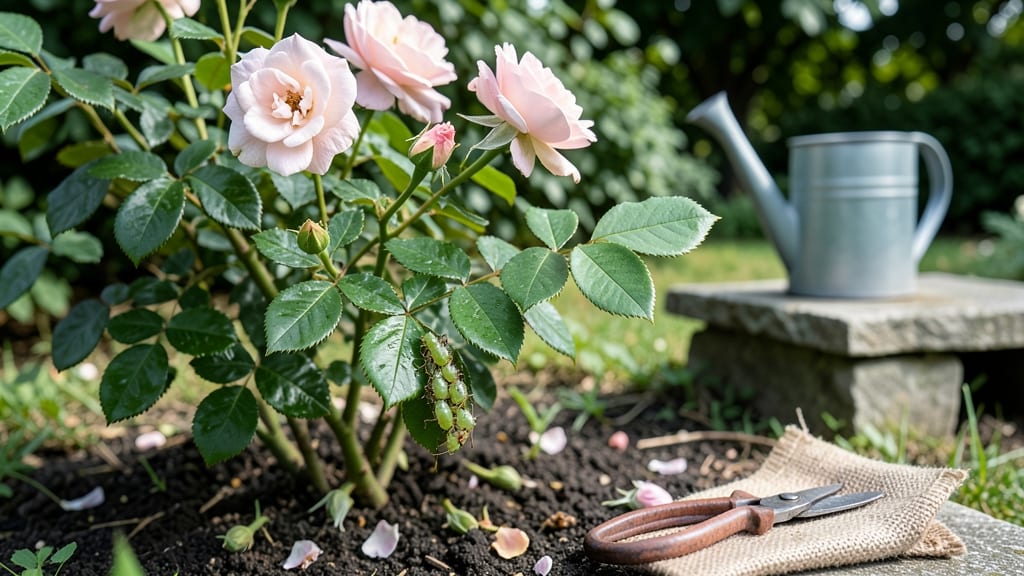
Your roses are under siege, and the damage tells the story—skeletonized leaves, sticky sap, or entire buds stripped away. 🌿 What's eating my roses isn't just a question; it's a mystery that needs solving fast, before this season's blooms become next year's memories.
The culprits are often right under your nose: Japanese beetles chew in swarms, aphids leave behind curled leaves and honeydew, while slugs create ragged holes overnight.
I've seen deer browse entire bushes down to the stems in a single night, leaving behind jagged, uneven bites that look like a chainsaw went through them. The good news?
You can turn the tide with targeted solutions—neem oil for aphids, beer traps for slugs, or handpicking beetles into soapy water. I've saved entire bushes in under a week using these methods, and the key is acting before the pests gain a foothold.
We'll cover the most common offenders, how to spot their damage, and the fastest ways to stop them—so you can get back to enjoying roses that thrive, not survive.
Root Causes Behind Rose Damage
When your roses start looking like an all-you-can-eat buffet for hungry critters, it’s usually because they’ve become a prime target for pests. Understanding why these pests are drawn to your roses—and how their behavior escalates into damage—is the first step toward reclaiming your garden.
Below, we break down the science and circumstances that turn your prized roses into a pest paradise.
Roses thrive on balance—too much shade, poor soil, or overwatering weakens their natural defenses. When plants are stressed, they emit volatile organic compounds (VOCs), chemical signals that attract pests like aphids, Japanese beetles, and spider mites. These pests are drawn to:
- Thin canopies: Roses with sparse foliage (from pruning mistakes or disease) expose tender new growth, which pests love to munch on.
- Nutrient deficiencies: Lack of nitrogen or phosphorus makes roses less resilient, while excess moisture creates the perfect damp environment for fungal pests (like slugs) and their eggs.
- Root competition: Overcrowded roots or invasive weeds (e.g., bindweed) starve roses of nutrients, making them easier targets for borers and beetles.
💡 Pro Tip: Space roses 3–4 feet apart for airflow, and mulch with compost (not fresh wood chips) to retain moisture without suffocating roots.
Roses produce pheromones and nectar that act like neon signs for pests. For example:
- Aphids: These sap-suckers are lured by the high sugar content in new rose shoots. They also leave behind a honeydew trail, which attracts ants (their bodyguards) and sooty mold.
- Japanese beetles: Their antennae detect rose oxide, a compound in rose petals, from up to 3 miles away. Once they land, they strip leaves in minutes.
- Caterpillars (e.g., rose slug): They’re drawn to the soft, fuzzy undersides of leaves, where they camouflage and feed undetected.
🌡️ Science Note: Pests are most active in warm (70–85°F) and humid conditions. Early morning is prime time for spotting beetles or mites before they retreat to shaded areas.
Pests don’t attack randomly—they follow life cycle stages tied to rose growth. Here’s the timeline:
| Season | Pest Activity | Why It Happens |
|---|---|---|
| Spring | Japanese beetles emerge, aphids multiply | Roses flush with new, tender growth—high in water and nutrients, making them irresistible. |
| Summer | Spider mites thrive, rose chafers lay eggs | Drought stress forces roses to overproduce sugars in leaves, attracting mites. Chafers prefer wilting petals. |
| Fall | Caterpillars (e.g., rose sawfly) hatch | Cooler temps slow rose growth, but pests accelerate to feed before winter. |
⏰ Actionable Insight: Monitor roses weekly in spring (when beetles arrive) and biweekly in summer (mite peak). Use a hand lens to spot eggs on leaf undersides.
Even well-meaning gardeners unintentionally create pest magnets. Common mistakes include:
- Ignoring fallen petals/debris: Rose cankers (from fungal pests) or beetle grubs hide in mulch. Remove all plant waste within 24 hours.
- Over-fertilizing with nitrogen: This boosts leafy growth, which pests like aphids adore. Use a balanced 10-10-10 fertilizer instead.
- Skipping pruning hygiene: Tools contaminated with rose rosette virus (spread by mites) can infect healthy plants. Sterilize pruners with rubbing alcohol between cuts.
🎯 Prevention Hack: Plant repellent companions like garlic, chives, or marigolds near roses. Their strong scents mask rose pheromones and deter beetles.
Quick Fixes for Rose Munchers
Now that you’ve identified the culprit behind your ravaged roses, it’s time to take action! Below are practical, step-by-step solutions tailored to the most common pests, along with prevention tips to keep your roses thriving.
Whether it’s chewing caterpillars, sucking aphids, or burrowing grubs, these fixes will help you reclaim your garden—fast!
Japanese beetles are voracious leaf and flower strippers, and they multiply quickly. Here’s how to stop them:
🔥 Step 1: Handpick & Drop in Soapy Water
- When? Early morning (beetles are sluggish).
- How? Fill a bucket with soapy water (1 tbsp dish soap per gallon) and drown them on contact.
- Pro Tip: 💡 Use a glove or towel to scoop them up—no need for gloves if you’re brave!
🍳 Step 2: Set Up Traps (Carefully!)
- Why? Commercial traps attract more beetles if placed near roses.
- How? If you must use traps, place them far from your garden (at least 30 feet away).
- DIY Trap: Fill a jar with stale beer or milk—beetles are drawn to the scent and drown.
👨🍳 Step 3: Apply Neem Oil or Pyrethrin Spray
- Neem Oil: Spray early morning or evening (avoid direct sun). Mix 1 tbsp neem oil + 1 tsp mild soap per quart of water.
- Pyrethrin Spray: A fast-acting organic insecticide (derived from chrysanthemums). Reapply after rain.
- ⏰ Frequency: Every 5–7 days until beetles disappear.
🌡️ Prevention Tips: ✔ Plant beetle-resistant roses (e.g., ‘Knock Out’ roses). ✔ Encourage natural predators like birds and parasitic wasps with native plants. ✔ Mulch heavily—beetles hate deep mulch layers.
Aphids suck sap, causing yellowing leaves, sticky residue (honeydew), and sooty mold. Here’s how to evict them fast:
🔥 Step 1: Blast Them Off with Water
- How? Use a strong hose spray (or a gentle jet from a watering can) to knock them off leaves.
- Best Time: Early morning so they’re not dehydrated by the sun.
🍳 Step 2: Apply Insecticidal Soap or Horticultural Oil
- Mix: 1.5 tbsp insecticidal soap per gallon of water (or follow product labels).
- Spray: Cover all leaf surfaces, especially undersides (where aphids hide).
- ⏰ Frequency: Every 3–5 days until gone.
👨🍳 Step 3: Introduce Beneficial Insects
- Ladybugs, lacewings, and parasitic wasps love aphids.
- How? Buy them online or from garden centers and release them near infested plants.
🌡️ Prevention Tips: ✔ Avoid over-fertilizing (aphids love tender new growth). ✔ Plant garlic, chives, or mint nearby—aphids dislike these scents. ✔ Prune regularly to remove honeydew before it attracts ants (which protect aphids).
These green, worm-like pests skeletonize leaves overnight. They’re not actual slugs—they’re sawfly larvae!
🔥 Step 1: Handpick and Drown
- When? Morning or evening (they’re slow-moving).
- How? Pick them off by hand and drop them into soapy water.
🍳 Step 2: Use Bt (Bacillus thuringiensis)
- Why? Bt is safe for humans and pets but fatal to caterpillars and sawfly larvae.
- How? Mix 1 tsp Bt per gallon of water and spray directly on larvae.
👨🍳 Step 3: Apply Kaolin Clay or Diatomaceous Earth
- Kaolin Clay: Creates a barrier that larvae can’t cross. Mix 1–2 tbsp per gallon of water and spray.
- Diatomaceous Earth: Sprinkle food-grade DE around the base of plants (reapply after rain).
🌡️ Prevention Tips: ✔ Remove old leaves and debris (larvae pupate in the soil). ✔ Plant basil or tansy—these repel sawflies. ✔ Encourage birds (they eat larvae).
If your roses are wilted, stunted, or pulling up easily, grubs (larvae of Japanese beetles or June bugs) may be munching on roots.
🔥 Step 1: Check for Grubs
- How? Dig up 1–2 inches of soil—look for white, C-shaped larvae.
- If found: It’s time to treat the soil.
🍳 Step 2: Apply Beneficial Nematodes
- Why? Microscopic worms that kill grubs naturally.
- How? Water the soil, then apply nematodes in the evening (they die in sunlight). Reapply every 4–6 weeks.
👨🍳 Step 3: Use Milky Spore or Beetle Grub Control
- Milky Spore: A natural bacteria that persists in soil for years. Best for Japanese beetle grubs.
- Granular Grub Killer: Follow package instructions for safe application (avoid overwatering).
🌡️ Prevention Tips: ✔ Aerate soil in fall to expose grubs to predators. ✔ Reduce thatch (grubs love thick, moist layers). ✔ Plant deep-rooted grasses (like fescue) to compete with grubs.
These shiny, black beetles devour petals and leaves, leaving ragged edges.
🔥 Step 1: Set Up Beer Traps
- How? Bury a jar half-filled with beer near the rose bush. Beetles drown overnight.
- Pro Tip: 💡 Change beer every 2–3 days for best results.
🍳 Step 2: Use Sticky Traps or Yellow Bowls
- Yellow bowls filled with soapy water attract and trap chafers.
- Sticky traps (like flypaper) can also catch them mid-flight.
👨🍳 Step 3: Apply Spinosad Spray
- Why? Organic and effective against chafers.
- How? Spray evening or early morning (avoid bees).
🌡️ Prevention Tips: ✔ Remove fallen petals and debris (chafers lay eggs in soil). ✔ Plant marigolds—they repel chafers. ✔ Water deeply in summer to reduce beetle activity.
- 🔥 Rotate treatments to prevent resistance (e.g., alternate neem oil and insecticidal soap).
- ✨ Inspect weekly—catch pests early before they spread.
- 🌱 Strengthen roses with balanced fertilizer (too much nitrogen = more pest attractants).
- 🐦 Encourage wildlife—birds, toads, and ground beetles are your free pest control.
Your roses will be back to their glorious selves in no time! With these targeted fixes, you’ll outsmart the pests and enjoy blooms all season long. 🌹💪
Frequently asked questions
How can I tell if deer are eating my roses?
Look for jagged, uneven edges on leaves and stems—deer have no teeth in the front of their mouths, so they tear plant tissue rather than chew cleanly. You’ll also notice missing buds or flowers, often with droppings scattered nearby. Deer typically feed at dawn or dusk, so check your garden during these times.
Why are my rose leaves turning yellow and sticky?
This is a classic sign of aphid infestation—they suck sap and leave behind honeydew, a sticky residue that attracts ants and promotes sooty mold. Inspect leaf undersides for tiny green/black clusters. Yellowing starts on new growth and spreads quickly if untreated.
What’s the fastest way to stop Japanese beetles?
Handpicking in the early morning (they’re sluggish) and dropping them into soapy water is the quickest method. For larger infestations, apply neem oil (mix 1 tbsp per quart of water) every 5-7 days—it disrupts their life cycle. Avoid commercial traps near your garden; they attract more beetles!
Can I use coffee grounds to protect my roses?
Yes! Sprinkle used coffee grounds around the base of your roses—they repel slugs, deter ants (which protect aphids), and add nitrogen to the soil. Just keep them 1-2 inches away from stems to prevent mold. Refresh weekly for best results, especially after rain.
How do I know if my rose damage is from insects or disease?
Insect damage is usually irregular and chewed (e.g., holes in leaves, skeletonized patterns), while diseases often cause spots, wilting, or powdery coatings. Check for live pests (aphids, beetles) or webby silk (spider mites). Diseases also spread throughout the plant, not just on exposed areas.