
Pruning
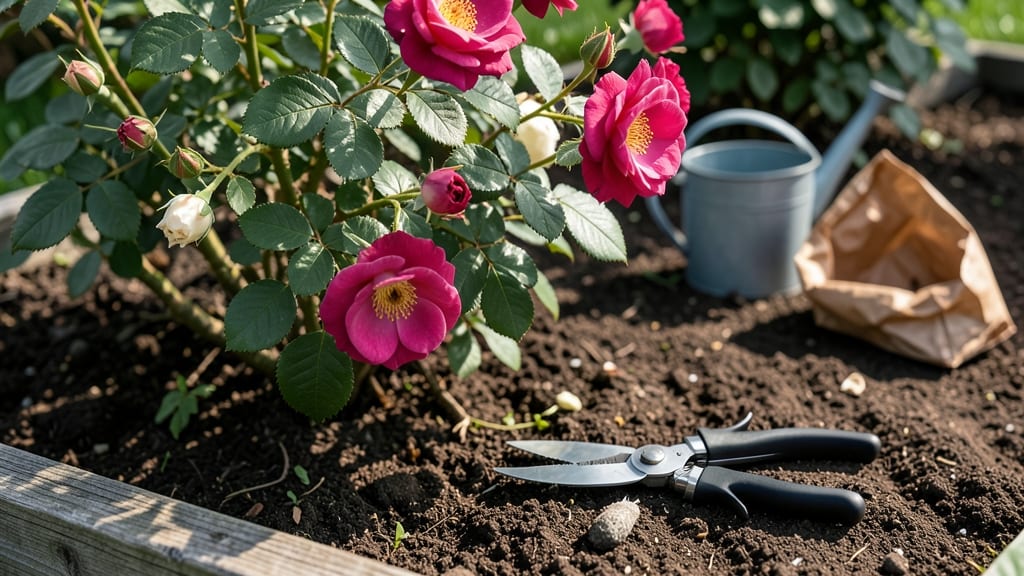
To prune roses in Michigan, time it for late March to April for hybrid teas and floribundas, February for climbing varieties, and June-July after blooming for shrub roses. Fall pruning is risky due to winter disease threats.
Michigan's Zone 5-6 climate makes timing critical—pruning too early risks frost damage, while late cuts can stress plants before winter. 🌸 I've seen hybrid teas thrive when pruned in early spring, but climbing roses need that February head start to establish strong canes before blooming season.
Shrub roses, meanwhile, benefit from a post-bloom trim to encourage next year's flowers without sacrificing current season growth.
What's often overlooked is how Michigan's late spring frosts (common through April) affect recovery. Always wait until nighttime temperatures consistently stay above 40°F before cutting back. For climbing roses, that February window gives them time to harden off before the worst winter winds hit.
💡 In This Article
- Michigan’s Climate and Rose Pruning Timing
- Step-by-Step Pruning Guide by Rose Variety
Michigan’s climate and rose pruning timing
Michigan’s Zone 5-6 climate creates a delicate balance for rose pruning, where timing directly impacts plant health and bloom production. The key factor is avoiding late spring frosts, which can damage new growth.
Hybrid teas and floribundas, for example, rely on early spring pruning (late March to April) to stimulate fresh canes before the growing season peaks. This timing aligns with when soil temperatures reach 50°F, signaling roots to activate and support new shoots.
The science behind this involves bud dormancy cycles. Roses enter dormancy when nighttime temperatures drop below 40°F, and pruning too early can wake buds prematurely, leaving them vulnerable to frost.
Climbing roses, which need stronger canes to support their growth, require an earlier prune (February) to establish structural integrity before Michigan’s unpredictable April weather arrives. Think of it like preparing for a marathon—starting too late means racing against time.
Shrub roses, on the other hand, benefit from a post-bloom trim (June-July) because their growth habit is less sensitive to frost. This timing encourages a second flush of blooms while allowing the plant to recover from the first flowering cycle.
The difference comes down to their genetic resilience—shrub roses evolved to handle Michigan’s shorter growing seasons better than their more delicate cousins.
Fall pruning is a common mistake in Michigan because wet, cold conditions create perfect conditions for fungal diseases like black spot. When you prune in autumn, the fresh cuts sit exposed through winter, absorbing moisture and providing entry points for pathogens.
The 40°F threshold isn’t just about frost—it’s about giving the plant time to seal cuts before winter sets in.
Here’s what most gardeners miss: Michigan’s hardiness zones 5-6 mean we’re in a transitional climate where winter and spring temperatures can swing wildly.
That’s why I always check the USDA Plant Hardiness Zone Map for my specific location—even within Michigan, a 5°F difference can mean the difference between successful pruning and plant stress.
For example, Detroit’s Zone 6 might be ready by early April, while Traverse City’s Zone 5 could need to wait until mid-April.
Consider these climate-specific adjustments:
- Northern Michigan (Zone 5): Delay pruning until mid-April to avoid late frosts
- Southern Michigan (Zone 6): Late March works, but monitor forecasts for 28°F nights
- All regions: Prune on dry days to prevent disease spread from tools
What’s fascinating is how Michigan’s climate forces us to work with nature’s rhythm rather than against it. The right timing isn’t just about cutting back—it’s about understanding how each rose type responds to our unique growing conditions. 🌿