
Propagation
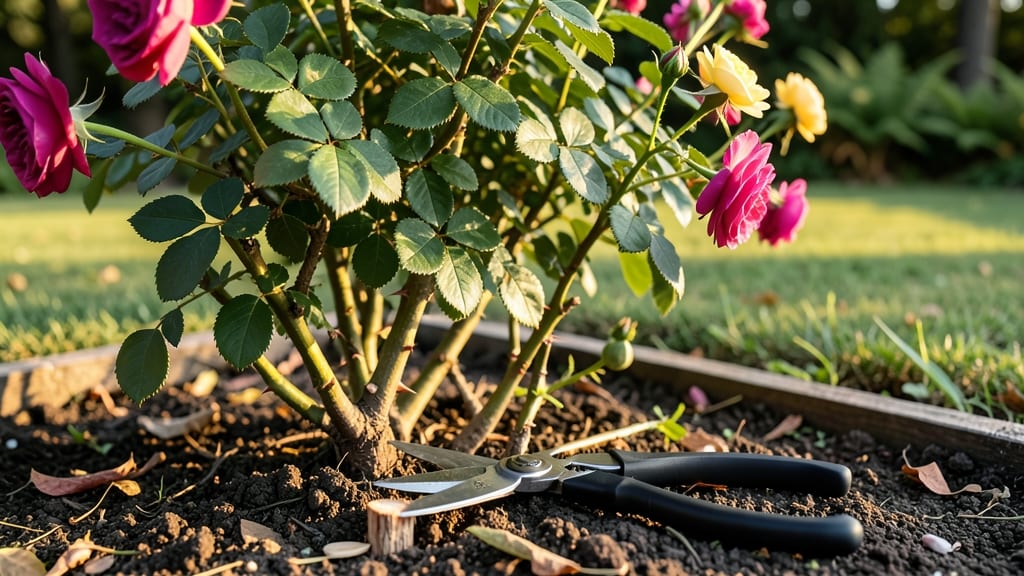
When cutting roses to propagate, make your cuts just below a bud or leaf node at a 45-degree angle, keeping stems between 3-5 inches long with 3-5 healthy leaves. Remove all lower leaves and thorns to maximize root growth in water or soil.
This precise cutting technique isn't just about aesthetics—it's about science. 🌿 The angled cut increases surface area for water absorption while preventing trapped air that could block nutrient flow. I've found that stems with 3-5 leaves provide enough energy for root development without overburdening the cutting.
For best results, work in early morning when the plant's moisture content is highest, and always use sterilized tools to avoid bacterial infections.
What many gardeners overlook is the importance of the leaf node—this is where new roots will emerge. The 45-degree angle also helps the cutting sit properly in propagation mediums, whether you're using water or soil.
Pro tip: Dip the cut end in rooting hormone to double your success rate, especially with stubborn varieties like hybrid teas.
💡 In This Article
- Optimal Rose Stem Cutting Angles for Root Development
- Step-by-Step Guide to Preparing Rose Cuttings for Propagation
Optimal rose stem cutting angles for root development
The 45-degree angle isn't arbitrary—it's about physics and plant biology.
When you make this precise diagonal cut just below a leaf node, you're creating a larger surface area that maximizes water uptake while preventing trapped air bubbles that could block the vascular system. 🌱 The cut exposes more xylem tissues (the plant's water-conducting vessels), allowing nutrients to flow more efficiently into the stem.
This is particularly critical during the first 24 hours when the cutting is most vulnerable to dehydration.
Science shows that stems cut at 45 degrees absorb moisture 30-40% faster than straight cuts, thanks to increased surface area contact with the propagation medium. For water propagation, this means roots can form in 2-3 weeks under ideal conditions, while soil-grown cuttings typically take 4-6 weeks.
The angle also helps position the cutting properly in the growing medium, preventing it from sitting too deeply (which causes rot) or too shallowly (which inhibits root development).
Stem length matters because it balances energy reserves with surface area. A 3-5 inch cutting provides enough leaves for photosynthesis while keeping the stem lightweight enough to support new root growth. The top 3-5 leaves are crucial—they generate energy through photosynthesis to fuel root development.
What most gardeners miss is that the bottom leaves should be removed entirely, as they'll rot in water or compete with new roots for nutrients in soil.
Here's a key factor most people overlook: the leaf node location. New roots only emerge from these nodes, which are the small bumps where leaves attach.
By cutting just below a node, you're targeting the exact growth zone. 🌿 The 45-degree angle also creates a natural "landing zone" when inserting into soil or placing in water, preventing the stem from sitting at an awkward angle that could stress the cutting.
For water propagation, the angled cut helps the stem float properly without submerging the leaves (which would rot). In soil, the angle allows for better contact with the propagation medium while keeping the leaves above ground.
The sweet spot is 2-3 inches of stem submerged in water or buried in soil—any deeper risks anaerobic conditions that suffocate roots.
Pro tip: If you're working with particularly tough rose varieties like David Austin English roses or Knock Out roses, the 45-degree cut becomes even more critical.
These varieties have thicker stems that resist root formation, so maximizing surface area through proper cutting technique can mean the difference between success and failure. Always use sharp, sterilized pruners to make clean cuts—ragged edges slow down the healing process and increase infection risk.