
Pests and Diseases
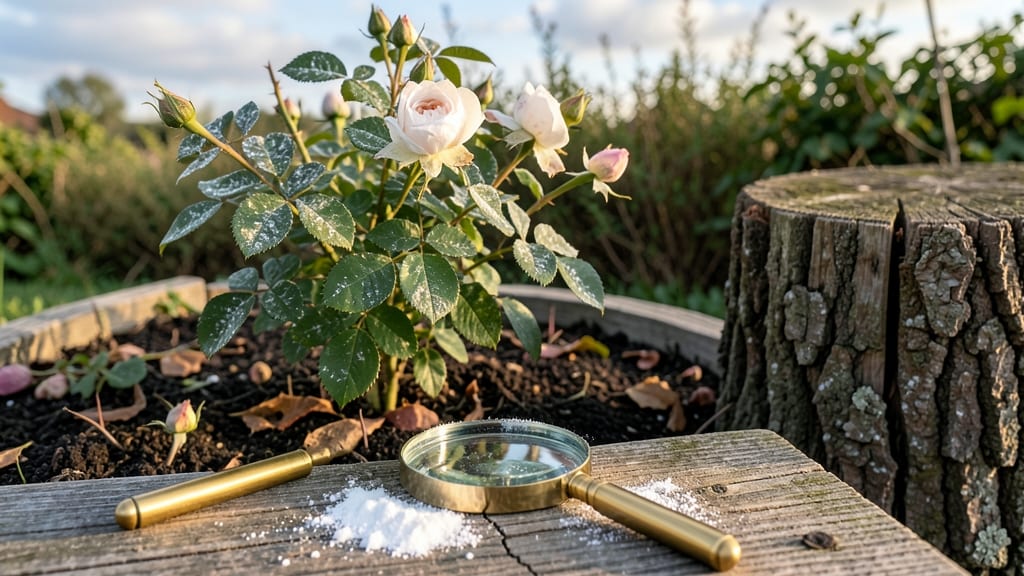
That fluffy white powder on your roses isn’t just unsightly—it’s a sign your plants are under attack. 🌿 I’ve battled this exact problem, and the first step is knowing whether it’s powdery mildew, sulfur dust, or something worse.
The difference between saving your roses and losing them often comes down to acting fast and choosing the right treatment.
Most of the time, that white powder is powdery mildew, a fungal disease that thrives in warm, humid conditions. It starts as tiny white spots on leaves and stems, then spreads like a blanket of dust.
But it could also be residual sulfur from a spray or even aphid secretions—each requires a different fix. The good news? Once you identify the cause, you can tackle it with simple, effective methods.
You’ll learn how to prune affected areas, apply organic sprays like neem oil, and adjust your watering habits to stop the spread. Within a week, your roses can bounce back stronger than ever—no more white powder, just lush, healthy blooms. The key is acting before the problem takes over.
This works for all rose varieties, whether you’re growing hybrid teas, climbers, or shrub roses. Let’s get your garden back to its full glory—without the powdery mess.
Why it happens
When you spot that unsettling white powder on roses, it’s rarely just dust—it’s a cry for help from your plants. The culprits behind this mysterious residue are usually fungal infections, pest activity, or environmental stress.
Let’s break down the science behind why your roses are sending up these warning flares.
🍄 Fungal Spores: The Silent Invaders
Fungi like Oidium (powdery mildew) or Sphaerotheca thrive in warm, humid conditions and release microscopic spores that cling to rose leaves and stems. These spores germinate and form a white, powdery coating, blocking sunlight and suffocating plant cells.
The fungus feeds on sugars produced by photosynthesis, weakening the rose over time.
Why it happens:
- High humidity (70%+) + warm temps (60–80°F): Ideal for spore germination. Morning dew or overhead watering creates the perfect petri dish.
- Poor air circulation: Dense foliage or crowded plants trap moisture, giving fungi a foothold.
- Nitrogen-heavy fertilizers: Encourage lush, tender growth that’s more susceptible to fungal attacks.
💡 Pro Tip: Fungal spores spread via wind, water, and even garden tools. Isolate infected plants immediately to prevent cross-contamination.
🐜 Pest Droppings: The Unseen Mess
Some pests, like aphids, whiteflies, or mealybugs, excrete a sticky substance called honeydew as they feed. This sugary residue attracts sooty mold fungi, which grow as a black or white powdery film on leaves.
While honeydew itself isn’t white, the mold that follows often appears as a fuzzy, powdery layer.
Why it happens:
- Pest infestations: Aphids cluster on undersides of leaves, sucking sap and leaving honeydew trails.
- Sooty mold colonization: Fungi like Capnodium thrive on honeydew, forming dark or white powdery patches.
- Weakened plants: Stressed roses (from drought, overwatering, or poor soil) are easier targets for pests.
🔍 Watch for: Sticky leaves, curled foliage, or tiny insects clustering on new growth—classic signs of pest-related powdery buildup.
🌡️ Environmental Stress: When Roses Sweat White
Not all white powder is biological. Mineral deposits from hard water or chemical residue (like fertilizer salts) can crystallize on leaves, mimicking fungal growth. These deposits are usually chalky, gritty, or uneven and don’t spread like spores.
Why it happens:
- Hard water irrigation: High calcium/magnesium content leaves white crusts when water evaporates.
- Over-fertilization: Excess salts (especially from synthetic fertilizers) accumulate on leaf surfaces.
- Drought stress: As plants conserve water, minerals concentrate in leaves, forming crystalline deposits.
🧪 Test it: Gently rub the powder between your fingers. If it’s gritty (not fuzzy), it’s likely mineral buildup—not fungus.
🌱 Cultural Mistakes: Giving Fungi a Green Light
Even the healthiest roses can develop white powder if their care routine is off. Common gardening errors create the perfect storm for fungal outbreaks.
Why it happens:
| Mistake | How It Helps Fungi |
|---|---|
| Overhead watering | Leaves stay wet for hours, promoting spore germination. |
| Planting too close together | Reduces airflow, trapping humidity near foliage. |
| Ignoring dead leaves/debris | Fungal spores overwinter in organic matter, reinfecting next season. |
| Using plastic mulch | Traps heat and moisture, creating a fungal greenhouse effect. |
✨ Prevention Hack: Space roses 18–24 inches apart and water at the base in the early morning to let foliage dry by nightfall.
Quick Fixes for Fuzzy Rose Foliage
If you’ve spotted that unsettling white powder on your roses, don’t panic—there are practical, step-by-step solutions to restore your plants to their vibrant best. The key is identifying the root cause (fungal, pest-related, or environmental) and applying the right treatment.
Below, we’ve mapped out targeted fixes for each scenario, along with prevention tips to keep your roses thriving long-term.
H3: 🧼 Cleanse and Treat Fungus
- Prune Infected Leaves 🔪
- Use sterilized pruners to remove heavily powdered leaves, stems, or buds. Dispose of them in the trash (not compost) to prevent spread.
- Pro Tip: 💡 Snip just above a healthy leaf node to encourage new growth.
- Apply Fungicide 💊 - Neem Oil Solution: Mix 1 tsp neem oil + 1 tsp mild soap + 1 quart water.
Spray early morning or evening (avoid direct sunlight) every 7–10 days until symptoms fade. - Baking Soda Spray (Mild Cases): Combine 1 tbsp baking soda + 1 quart water + 1 tsp oil (to help stick).
Test on a small leaf first. - Store-Bought Options: Look for copper-based or sulfur fungicides (follow label instructions).
- Improve Airflow 🌬️
- Space plants 18–24 inches apart and prune dense branches to reduce humidity pockets.
- Water at the base (not overhead) and water early in the day so leaves dry quickly.
- Prevent Recurrence 🛡️
- Mulch: Apply 2–3 inches of organic mulch (straw or wood chips) to keep soil moist but prevent fungal spores from splashing onto leaves.
- Resistant Varieties: Plant disease-resistant rose varieties like ‘Knock Out’ or ‘Dr. Huey’ for future gardens.
H3: 🦟 Banish Bugs Naturally
- Blast Off Pests 💦
- Strong Water Spray: Use a hose nozzle to dislodge aphids or mealybugs from leaves and stems. Repeat every 3–4 days for heavy infestations.
- Pro Tip: 🌡️ Do this in early morning or late evening to avoid shocking the plant.
- Soap Spray Attack 🧼
- Mix 1 tbsp horticultural oil or dish soap (like Dawn) + 1 quart water. Spray directly on pests (avoid flowers if possible). Reapply every 5–7 days for 2 weeks.
- Introduce Beneficial Insects 🐞
- Prevent Future Infestations 🚫
- Inspect New Plants: Quarantine new roses for 2 weeks before introducing them to your garden.
- Remove Debris: Clear fallen leaves and spent blooms where pests hide.
- Reflective Mulch: Use silver plastic mulch to confuse and repel soft-bodied insects.
H3: 💧 Adjust Care for Long-Term Health
- Check Your Water 🔍
- Hard water? The white crust may be calcium or magnesium deposits. Switch to rainwater or filtered water for roses.
- Test Soil pH: Ideal range is 6.0–6.5. Use a soil test kit and amend with sulfur (to lower pH) or lime (to raise pH) if needed.
- Revise Watering Habits 💧
- Water deeply but infrequently—roses hate soggy roots. Aim for 1–1.5 inches per week (including rain).
- Drip irrigation or soaker hoses deliver water at the base, reducing leaf wetness.
- Fertilize Smartly 🌱
- Avoid high-nitrogen fertilizers (they promote lush, powdery-mildew-prone growth). Use a balanced 10-10-10 or organic option like fish emulsion.
- Feed in spring and early summer—stop fertilizing 6–8 weeks before first frost.
- Protect from Stress 🌿
- Shade cloth (30–50%) can help in hot, humid climates where fungal issues thrive.
- Avoid late-season pruning—it stresses plants and opens them to infections.
If your roses are heavily covered and struggling:
- Isolate the Plant 🏝️ – Move it 10+ feet away from other roses until treated.
- Wipe Leaves 🧽 – Use a soft cloth dipped in soapy water to gently clean leaves (skip flowers).
- Repeat Treatments ⏰ – Fungus/pests often return; reapply sprays every 7–14 days for 30–45 days.
- Consider Replacement 🌹 – If the plant is beyond saving, dig it up and compost the roots (sterilize tools with rubbing alcohol).
💡 Final Prevention Checklist: ✅ Weekly inspections – Catch issues early! ✅ Morning watering – Lets leaves dry fast. ✅ 3-year rotation – Don’t plant roses in the same spot yearly (reduces soil-borne diseases). ✅ Winter cleanup – Remove all plant debris before winter to starve pests/fungus.
With these steps, your roses will bounce back faster than you think—and you’ll be the hero of your garden! 🌸🔥
Frequently asked questions
Is white powder on roses always a sign of disease?
Not necessarily! While powdery mildew is the most common cause, white powder can also come from mineral deposits (like calcium from hard water) or even residual sulfur from sprays. To test: Rub a small amount between your fingers. If it feels gritty, it’s likely mineral buildup. If it’s fluffy, it’s probably fungal.
Can I still harvest roses with white powder?
Yes, but with caution. If the powder is on leaves or stems, remove those parts before arranging. Cut flowers from healthy buds and rinse stems briefly under cool water to remove any residue. For severe cases, treat the plant first—harvesting from infected roses can spread spores to your bouquet.
How often should I spray neem oil for powdery mildew?
Apply neem oil every 7–10 days until the white powder disappears, then repeat 2–3 times as a preventive measure. Always spray in the early morning or evening to avoid leaf burn from sunlight. For best results, mix with a drop of mild soap to help it stick to leaves.
Will pruning help stop the spread of white powder?
Prune infected leaves and stems immediately to remove the fungal source. Use sterilized tools (wipe with rubbing alcohol) and dispose of pruned material in the trash—not compost. Thin out dense foliage to improve airflow, which reduces humidity and slows spore growth.
Can I use household vinegar to treat white powder?
Diluted vinegar can help, but use it carefully. Mix 1 tablespoon white vinegar + 1 quart water and spray on leaves (avoid flowers). Test on a small leaf first—vinegar’s acidity can damage tender foliage. For severe cases, combine with baking soda (1 tbsp per quart) for better fungal control.