
Pests
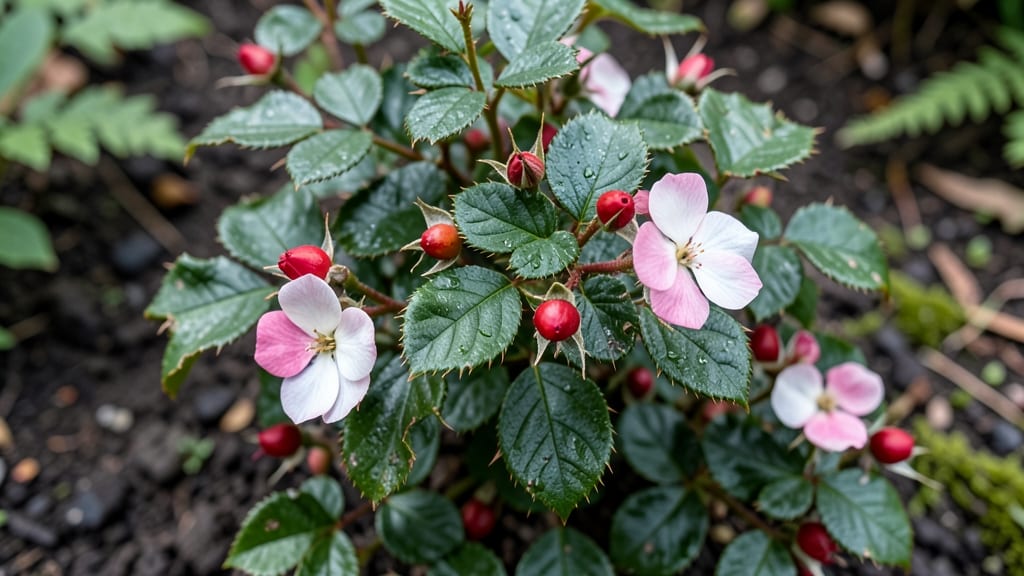
Moss roses (Portulaca grandiflora) are especially vulnerable because deer seek out plants with high moisture content and tender growth. 🌿 This makes newly planted moss roses prime targets, as their soft stems and vibrant leaves offer easy access to nutrients.
The key to protection lies in understanding deer foraging patterns—when natural food sources dwindle, ornamental plants like moss roses become convenient alternatives. I've found that combining physical barriers (like chicken wire) with natural repellents yields the best results for long-term garden safety.
What many gardeners overlook is how deer behavior changes with seasons. During summer months, when deer have access to abundant clover and grasses, they're less likely to raid your moss roses. However, late fall through early spring presents the highest risk period.
This seasonal pattern explains why some gardeners only notice damage after the first hard frost, when deer shift their focus to surviving on whatever's available.
💡 In This Article
- Why Deer Target Moss Roses in Gardens
- Natural and Physical Deer-Resistant Strategies for Moss Roses
Why deer target moss roses in gardens
Deer are drawn to moss roses primarily because their soft, fleshy leaves and tender stems offer high moisture content and easy digestion. Botanically, moss roses (Portulaca grandiflora) contain approximately 85-90% water in their leaves, making them an efficient snack when deer face water scarcity—common during late winter or early spring.
The plant's succulent texture also requires minimal chewing effort, which appeals to deer seeking low-energy meals during cold months when their metabolic needs increase by up to 30%. 🌱
The fragrance of moss roses plays a secondary but significant role in attracting deer. While not as pungent as herbs like mint, their delicate floral scent contains volatile organic compounds that deer can detect from 100-150 feet away through their exceptional olfactory system.
This sensory appeal is particularly strong in newly planted moss roses, where the concentration of aromatic oils is highest. Deer also target these plants when other preferred food sources—such as clover, alfalfa, or young tree shoots—become scarce after the first frost.
Studies show deer will consume up to 10% of their body weight daily during winter, making ornamental plants like moss roses convenient alternatives.
Seasonal growth patterns further explain why deer focus on moss roses. In summer, when these plants produce thick, waxy leaves as a drought adaptation, deer show less interest.
However, during spring and fall, when moss roses exhibit rapid new growth with thin, tender leaves (measuring about 1-2 inches long), they become prime targets. This preference mirrors how deer prioritize high-protein, low-fiber plants in their diet—moss roses provide both during their active growth phases.
The contrast between their summer resilience and spring vulnerability creates a clear window of risk for gardeners. 🌿
Deer also exhibit what wildlife biologists call "habitat generalization"—they adapt their foraging to whatever's most accessible. In suburban gardens, where natural food sources are limited, deer will browse ornamental plants like moss roses even when they wouldn't in wild settings.
This behavior explains why damage often appears in clusters: deer move systematically through gardens, sampling multiple plants until they find palatable options. The key insight here is that deer aren't necessarily "choosing" moss roses over other plants—they're responding to availability, texture, and nutritional payoff in real time. 🦌
What's often overlooked is how deer learn from their environment. If a garden has consistently provided easy access to moss roses without deterrents, deer will return season after season. This learned behavior creates a feedback loop: the more damage occurs, the more deer associate that location with reliable food.
The solution lies in disrupting this cycle through consistent protection methods that address both the plant's appeal and deer's foraging instincts. Understanding this dynamic helps explain why some gardeners see damage one year but not the next—it's rarely about the plants themselves, but about the deer's learned expectations.
Consider this comparison: A mature moss rose plant with woody stems (over 1 year old) is far less appealing than a 6-inch-tall seedling with soft, bright green leaves. The difference in texture and nutritional density is what drives deer behavior.
By recognizing these specific triggers—moisture content, fragrance, growth stage, and learned availability—gardeners can implement targeted protection strategies that actually work. 💡