
Shrubs
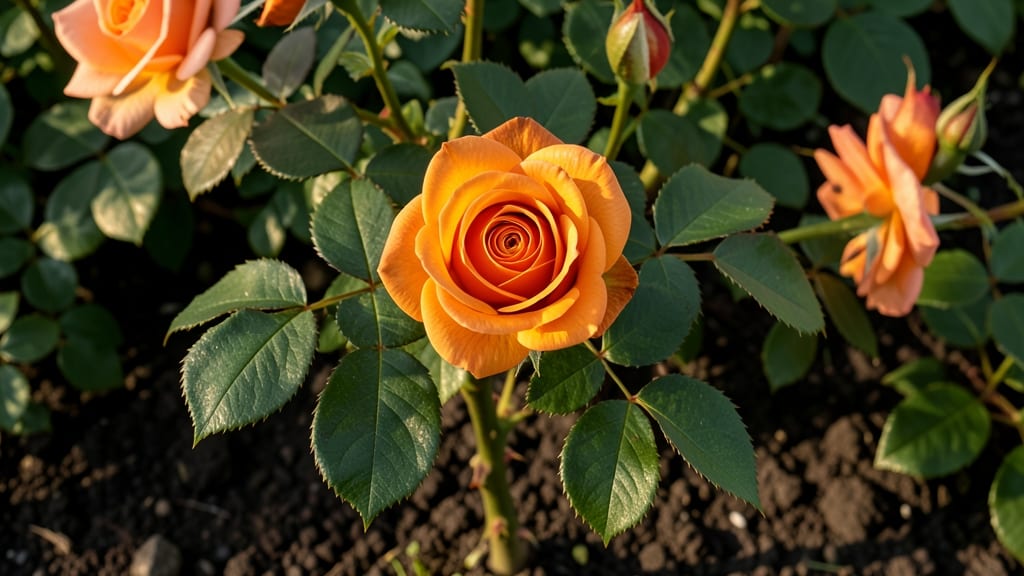
Growing an orange rose bud that bursts into fragrant, fiery blooms all season starts with the right variety—think 'Orange Triumph' or 'Orange Pillar' for dramatic climbers. 🌸 I learned the hard way that these roses demand attention, but the payoff is worth it: velvety petals that perfume the air and repeat bloom cycles that last until frost.
The secret to their vibrant color lies in full sun (6+ hours daily) and well-draining soil mixed with compost. Too much shade dulls the orange, and soggy roots invite disease.
My first attempt failed because I planted them in heavy clay—now I swear by raised beds or amended garden soil with perlite. Once established, these roses reward you with bold, repeat blooms if you prune correctly. Cut back dead wood in early spring and trim spent blooms regularly.
The key is balance: aggressive pruning encourages new growth, but overdoing it delays flowering. For year-round interest, pair them with climbing companions like clematis or jasmine. The contrast of their fiery blooms against green foliage creates a showstopping display that turns heads—and fills your garden with intoxicating fragrance.
📚 In This Guide
- What you need
- Instructions
- Tips and common mistakes
- Wrapping up and next steps
What you need
- ● Orange Rose Bud Cuttings or Bare-Root Plants: 1-2 healthy Rosa ‘Orange Rosebud’ cuttings (4-6 inches long) or a bare-root plant (available at nurseries in late winter/early spring).
- ● Pro Tip: 💡 Look for cuttings with at least 3-4 nodes and healthy green leaves!
- ● Well-Draining Potting Mix: 50% cactus/succulent mix + 50% perlite or coarse sand (1 gallon bag).
- ● Rooting Hormone: 1 small bottle (e.g., Clonex or Rooting Powder).
- ● 6-8" Pots or Containers: 2-3 pots with drainage holes (plastic or terracotta).
- ○ Grow Lights or Sunny Windowsill: 1 full-spectrum LED grow light (optional but ideal for indoor starters).
- ● Watering Can with Narrow Spout: 1 (to avoid disturbing soil).
- ● Pruning Shears (Sterilized): 1 pair (clean with rubbing alcohol before use).
- ● Garden Gloves: 1 pair (to protect from thorns!).
- ● Trellis or Climbing Structure: 1 5-6 ft tall trellis, arbor, or fence (for outdoor planting).
- ● Pro Tip: 🌡️ Orange roses thrive in full sun (6+ hours/day)—choose a south-facing spot!
- ○ Mulch (Optional): 2-3 inches of wood chips or straw (to retain moisture).
- ● Fertilizer (Balanced Rose Food): 1 slow-release 10-10-10 fertilizer or liquid feed (e.g., Miracle-Gro Roses).
- ● Patience & Passion! 🌸 Orange rose buds take 6-12 months to bloom—stay consistent!
Step-by-step instructions for growing orange rose buds
Here's how to coax vibrant orange blooms from tender buds—my foolproof method for lush, fragrant climbers.
🌱 Step 1: Select and Prepare Your Rose Bush
Start with a healthy orange rose bush (like 'Orange Triumph' or 'Orange Iceberg') from a reputable nursery. Choose a bare-root specimen in early spring or a container-grown plant with plump buds. Soak bare-root roses in lukewarm water for 4-6 hours before planting to rehydrate the roots. You'll see the roots plump up slightly—that's your signal they're ready.
Dig a hole twice as wide as the root ball but only as deep as the plant's graft union (the swollen bump near the base). Mix the excavated soil with 2 inches of compost to enrich the planting site. Loosen the roots gently if they're circling—this prevents girdling as the plant grows. Real talk: I always test the hole depth by placing the plant in first; if the graft union sits 1-2 inches above soil level, you're golden.
☀️ Step 2: Plant in Full Sun with Proper Spacing
Orange roses thrive in 6-8 hours of direct sunlight daily. Plant your bush where it gets morning sun and afternoon shade in hot climates to prevent leaf scorch. Space 3-4 feet apart for upright varieties or 4-5 feet apart if training as a climber. The hole should accommodate 3 gallons of water—if it doesn't, dig wider.
Backfill the hole with the soil-compost mix, pressing gently to remove air pockets. Water deeply until the soil 1 inch below the surface feels damp. Mulch with 2-3 inches of organic mulch (like wood chips) to retain moisture and regulate soil temperature. Keep mulch 2 inches away from the stem to prevent rot. Here's the thing—mulch too close to the stem causes crown rot, and you'll lose your plant before it blooms.
💧 Step 3: Water Deeply and Fertilize for Blooms
Water once a week for the first month, then every 5-7 days during dry spells, aiming for 1-2 inches of water per week. Soak the root zone until water drains through—you'll know it's enough when the soil feels damp 6 inches down. Avoid wetting the leaves to prevent fungal diseases like black spot, which turns leaves ugly and weakens blooms.
Fertilize every 4-6 weeks starting in early spring with a balanced rose fertilizer (10-10-10 or similar). Follow label instructions—over-fertilizing burns roots and stunts growth. You'll see new growth within 2-3 weeks of fertilizing, and that's your cue to increase water slightly. I swear by a slow-release granular fertilizer in late winter to kickstart blooming season.
✂️ Step 4: Prune for Airflow and Encourage More Buds
Prune in early spring before new growth starts. Remove dead, diseased, or crossing branches first—these compete with healthy growth. Cut back last year's blooms to just above a 5-leaflet leaf (the bud below it will become a strong new stem). For climbers, prune to 3-4 main branches to encourage upward growth.
Shape the bush by thinning out crowded areas—aim for an open center that lets air circulate. This prevents fungal diseases and ensures more vibrant orange blooms. Deadhead spent flowers regularly to redirect energy into new buds. You'll notice more buds forming within 4-6 weeks of proper pruning. Don't skip this—I've seen roses with half the blooms because of poor pruning.
🌿 Step 5: Protect and Maintain for Year-Round Blooms
In winter, protect young roses with 4-6 inches of mulch and a breathable frost cloth if temperatures drop below 20°F. Older, established roses handle cold better but still benefit from mulch. Water sparingly in winter—just enough to keep roots from drying out.
Watch for aphids or Japanese beetles, which love orange roses. Spray with neem oil at the first sign of pests—it's organic and effective. You'll see new buds forming in early spring, and that's your reward for consistent care. For climbers, install support structures (like trellises) in early spring before vigorous growth begins. Train stems gently to guide their upward path.
Tips & tricks for perfect orange rose bud growth
Transforming those tender orange rose buds into year-round blooms takes more than just planting—it's about understanding the little details that make all the difference.
Root Preparation: The 4-6 hour soak for bare-root roses isn't just about hydration—it's your chance to inspect the roots. Look for any dark, mushy spots that indicate rot, and trim them away with clean pruners before planting. Healthy roots should be firm and a light tan color. Confession: I skipped this step for years and wondered why some roses struggled to establish themselves.
Sunlight Strategy: Those 6-8 hours of sunlight are non-negotiable, but here's what nobody tells you—morning sun is your ally while afternoon sun can be brutal in hot climates. If you notice leaves curling or turning yellow in the afternoon, it's a sign your rose is getting too much midday heat. A simple solution is to plant near a structure that provides afternoon shade, like a fence or trellis.
Watering Wisdom: The key to that 1-2 inches of water per week isn't just about quantity—it's about technique. Water deeply but infrequently to encourage deep root growth. I've found that using a soaker hose buried 1-2 inches in the soil delivers water right to the roots without wetting the leaves, which prevents fungal diseases like black spot that can ruin your blooms. The soil should feel damp 6 inches down—that's your perfect moisture level.
Pruning Precision: When pruning to just above a 5-leaflet leaf, here's my game-changer: make your cuts at a 45-degree angle about 1/4 inch above the outward-facing bud. This creates more surface area for water absorption and directs new growth outward, giving you a fuller, more vibrant bush. I learned this the hard way after ruining three batches of pruning cuts that were too close or straight across.
Pro Tips for Orange Rose Bud
- Transforming those tender orange rose buds into year-round blooms takes more than just planting—it's about understand...
- Root Preparation: The 4-6 hour soak for bare-root roses isn't just about hydration—it's your chance to inspect the ro...
- Sunlight Strategy: Those 6-8 hours of sunlight are non-negotiable, but here's what nobody tells you—morning sun is yo...
Frequently asked questions
Got questions about nurturing your orange rose bud into a stunning, fragrant climber? Here are some of the most common ones—plus expert answers to keep your roses thriving year-round!
How long does it take for an orange rose bud to bloom after planting?
A freshly planted orange rose bud typically takes 6 to 12 months to produce its first blooms, depending on the variety and growing conditions. Young roses focus on root establishment first—patience pays off with vibrant, fragrant flowers! For faster results, choose established bare-root roses in early spring.
When is the best time to plant an orange rose bud for maximum blooms?
Plant your orange rose bud in early spring (after the last frost) or fall (4-6 weeks before the first frost). Spring planting gives roots time to settle before summer heat, while fall allows roots to establish before winter dormancy. Avoid planting in extreme heat or cold.
Can I grow an orange rose bud in a container? Yes—but how?
Use a large container (at least 15 gallons) with drainage holes and a well-draining potting mix. Choose a compact rose variety like 'Orange Crush' or 'Orange Pillar'. Place in full sun, water deeply when the top inch of soil dries, and fertilize monthly with a balanced rose food. Containers dry out faster—monitor moisture closely!
Why are my orange rose buds dropping before opening? Troubleshooting tips!
Bud drop is often caused by stress. Check for:
- Underwatering or overwatering—keep soil moist but not soggy.
- Extreme temperature swings (e.g., late frost or heatwaves). Protect with frost cloth if needed.
- Nutrient deficiencies—feed with a high-phosphorus fertilizer (like 10-30-20) to encourage blooming.
- Pests (aphids, spider mites). Spray with neem oil if you spot tiny critters.
Are there orange rose bud alternatives with similar fragrance?
If you love the citrusy-orange scent of blooms, try these fragrant alternatives:
- 'Orange Princess' (a hybrid tea rose with a sweet, fruity fragrance).
- 'Geranium Rozanne' (hardy, drought-tolerant, and lightly citrus-scented).
- 'Orange Zest' Climbing Rose (a disease-resistant climber with vibrant blooms).
- Jasmine 'Primrose' (not orange, but its creamy-white flowers have a heady, orange-like sweetness).
Wrapping up and next steps
The orange rose bud isn’t just a burst of color—it’s a promise of year-round fragrance and beauty with the right care. From choosing the perfect spot to mastering pruning and pest control, you now have all the tools to cultivate a thriving climber that steals the show. 🌸
Ready to transform your garden? Start by planting your first bud this season, then revisit our care tips as you watch it grow. Every snip and watering brings you closer to a lush, blooming masterpiece—so roll up your sleeves and get growing!