
Shrubs
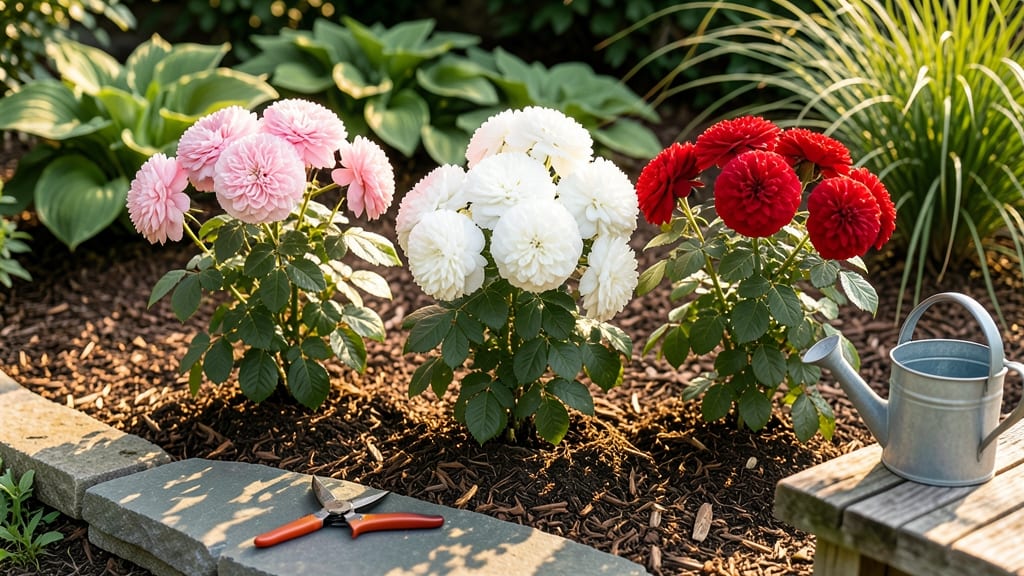
The Pom Pom Veranda rose transforms any garden into a fragrant, colorful dream with its year-round bursts of blooms and velvety petals. 🌸 I fell in love the first time I saw one climb a trellis in a cottage garden—it looked like a living bouquet, spilling over with soft pink pom-poms.
This rose isn’t just pretty; it’s a versatile workhorse that thrives in containers, borders, or even as a small hedge, making it perfect for urban gardens or cozy cottages.
What makes this rose truly special is its low-maintenance charm. It blooms continuously from spring through fall, with occasional winter flowers if your climate is mild. The fragrance? Imagine walking past a garden and catching a whisper of sweet, old-fashioned roses—it’s that intoxicating.
Plus, it’s disease-resistant, so you won’t spend your weekends battling black spot or powdery mildew like with fancier varieties.
You’ll want to plant it where it can spill over trellises, archways, or even hanging baskets—its cascading habit creates instant drama. Pair it with lavender for contrast, or let it mingle with climbing clematis for a layered, romantic look.
In small spaces, train it along a fence or let it climb a decorative post for vertical interest without taking up precious ground room.
Here’s the best part: it’s foolproof for beginners but still stunning enough to impress seasoned gardeners. Whether you’re dressing up a balcony or softening a modern facade, this rose delivers effortless elegance. Ready to add a touch of old-world charm to your garden?
📚 In This Guide
- What you need
- Instructions
- Tips and common mistakes
- Wrapping up and next steps
What you need
- ● Pom Pom Veranda Rose plant: 1 bare-root or container-grown rosebush (check for healthy canes and vibrant buds).
- ● Planting site: Full sun (6+ hours of direct sunlight daily).
- ● Well-draining soil (amend with compost if your soil is heavy or clay-like).
- ● Fertilizer: 1 bag of rose-specific fertilizer (balanced NPK, like 10-10-10, or organic options like fish emulsion).
- ● Mulch: 2–3 inches of organic mulch (e.g., shredded bark or pine straw) to retain moisture and suppress weeds.
- ● Support structure: 1 trellis, arbor, or rose cage (6–8 feet tall, sturdy enough to support blooms).
- ● Pruning tools: 1 pair of bypass pruners (for clean cuts).
- ● 1 pair of loppers (for thicker canes).
- ● Garden gloves: 1 pair (to protect your hands from thorns and debris).
- ● Epsom salt: 1 box (for magnesium boosts, especially in sandy soils).
- ● Rose food: Liquid or granular (for extra blooms and fragrance).
- ● Pest control: Neem oil or insecticidal soap (to deter aphids or black spot).
- ● Drip irrigation system: For consistent watering (especially in hot climates).
- ● Decorative accents: Solar-powered lights or hanging planters to complement your veranda.
Step-by-step guide to planting and cultivating Pom Pom Veranda roses
Here's how to establish your fragrant climber with vibrant, year-round blooms that will transform any outdoor space.
🌱 Step 1: Select the Perfect Planting Location
The Pom Pom Veranda Rose thrives in full sun to partial shade, ideally receiving at least 6 hours of direct sunlight daily. Choose a spot with morning sun and afternoon shade if you live in a hot climate—this prevents leaf scorch while ensuring abundant blooms. I always test locations by observing how sunlight moves across the area throughout the day, especially in summer when shadows shift dramatically.
Ensure the site has good air circulation to prevent fungal diseases like black spot. Avoid planting near walls or fences where humidity builds up, as this creates a damp environment that encourages mildew. If your yard lacks natural airflow, consider installing a small fan on a timer during humid months—this simple trick keeps foliage healthy and blooms prolific.
🪴 Step 2: Prepare the Soil and Plant with Care
Amend your native soil with 2-3 inches of compost mixed into the top 12 inches of soil. Pom Pom Veranda Roses prefer well-draining, slightly acidic soil with a pH between 6.0 and 6.5. Test your soil's pH before planting—if it's too alkaline, add sulfur or peat moss to lower it gradually. I like to dig a 12-inch hole that's twice as wide as the root ball to encourage root expansion.
Place the rose in the hole so the graft union (the bump where the rose was grafted onto its rootstock) sits 2 inches above soil level. This prevents soil from covering the graft, which can lead to rootstock suckering. Backfill with native soil mixed with compost, pressing gently to remove air pockets. Water deeply immediately after planting to settle the soil and eliminate gaps.
☀️ Step 3: Establish a Support System and Watering Routine
Install a strong trellis, arbor, or rose arch immediately after planting to give the climber something to grip as it grows. Pom Pom Veranda Roses can reach 6-8 feet tall, so choose a support that's at least 8 feet high and sturdy enough to handle the weight of blooms. I use metal or wooden arches for a classic look, but heavy-duty wire trellises work well too—just ensure they're anchored securely into the ground.
Water deeply 2-3 times per week during the first growing season, soaking the soil to a depth of 12 inches. You'll know you've watered enough when water runs out of the drainage holes if planted in a container, or when the soil feels moist 6 inches down. Avoid overhead watering, which can spread fungal spores. Instead, use drip irrigation or soaker hoses placed at the base of the plant for targeted hydration.
✂️ Step 4: Prune for Health and Abundant Blooms
Prune your Pom Pom Veranda Rose twice a year: once in late winter or early spring before new growth begins, and again after the first flush of blooms in early summer. Remove dead, diseased, or crossing branches first, then cut back 1/3 of the oldest canes to encourage new growth. I always make cuts just above an outward-facing bud to promote an open, airy structure that prevents crowding.
After the first bloom cycle, trim back spent flower clusters by cutting the stem back to the nearest 5-leaflet leaf. This encourages continuous blooming throughout the season. Avoid heavy pruning in fall—just remove any dead or damaged wood. Mulch around the base with 2-3 inches of organic mulch (like shredded bark) to retain moisture and regulate soil temperature, which is especially important in hot climates.
🌿 Step 5: Feed and Maintain for Year-Round Color
Apply a balanced, slow-release fertilizer (like 10-10-10) in early spring when new growth appears, then switch to a low-nitrogen, high-phosphorus formula (like 5-10-5) when buds form to promote blooming. I also add Epsom salt (1 tablespoon per gallon of water) every 4-6 weeks during the growing season to boost magnesium levels, which enhances flower production and fragrance.
Monitor for pests like aphids, spider mites, or rose slugs—these can quickly defoliate a plant if left unchecked. I treat infestations with neem oil or insecticidal soap, applying in the early morning or late evening to avoid harming beneficial insects. For fungal diseases, remove affected leaves immediately and apply a copper fungicide as a preventive measure. With consistent care, your Pom Pom Veranda Rose will reward you with fragrant, pom-pom-shaped blooms from spring through fall, and even into winter in mild climates.
Tips & tricks for perfect Pom Pom Veranda rose cultivation
These game-changing strategies will help you nurture a thriving, fragrant climber that bursts with color year after year.
Sunlight Strategy: While the instructions recommend at least 6 hours of direct sunlight daily, I've found that morning sun paired with afternoon shade creates the ideal balance—especially in hot climates. Use a simple sunlight tracker app to map your yard's sun exposure throughout the day. If you notice leaves curling or turning yellow, it's a sign of too much midday sun. For container growers, rotate pots weekly to ensure even light exposure on all sides.
Soil Preparation Secret: The 2-3 inches of compost mixed into the top 12 inches of soil is essential, but don't stop there. I recommend adding a handful of mycorrhizal fungi to the planting hole—these beneficial microbes help roots absorb nutrients more efficiently. For heavy clay soils, mix in perlite to improve drainage while maintaining that slightly acidic pH between 6.0 and 6.5. A quick soil test kit makes this adjustment effortless.
Pruning Precision: When pruning in late winter or early spring, focus on removing those oldest canes first—they're the ones that produce the weakest blooms. Make your cuts just above an outward-facing bud at a 45-degree angle to maximize water runoff and prevent disease. For summer pruning after the first flush of blooms, I use sterilized pruners to cut back to the nearest 5-leaflet leaf, which encourages continuous blooming while maintaining plant health.
Watering Wisdom: The deep watering routine of 2-3 times per week is perfect, but timing matters just as much. Water in the early morning so foliage has all day to dry, reducing fungal risks. I've seen dramatic improvements in bloom quality by adding a tablespoon of liquid seaweed fertilizer to each watering session during the growing season—it strengthens stems and enhances fragrance without altering the established routine.
Pro Tips for Pom Pom Veranda Rose
- These game-changing strategies will help you nurture a thriving, fragrant climber that bursts with color year after y...
- Sunlight Strategy: While the instructions recommend at least 6 hours of direct sunlight daily, I've found that mornin...
- Soil Preparation Secret: The 2-3 inches of compost mixed into the top 12 inches of soil is essential, but don't stop ...
Frequently asked questions
Got questions about the Pom Pom Veranda Rose? You’re not alone!
This stunning climber is packed with charm, but it’s natural to wonder about care, blooms, and more. Below, we’ve rounded up the most common queries—plus expert tips to keep your rose thriving year-round.
When does the Pom Pom Veranda Rose bloom, and how long do the flowers last?
The Pom Pom Veranda Rose is a repeat bloomer, meaning it produces flowers spring through fall (and sometimes into winter in mild climates!). Each cluster of pom-pom-shaped blooms lasts 7–10 days before fading, but new buds continuously replace them. For longer-lasting color, deadhead spent blooms regularly and ensure it gets 6+ hours of sunlight daily.
How often should I water this rose, and does it need special care in heatwaves?
Water your Pom Pom Veranda Rose deeply 1–2 times per week (more in extreme heat), aiming for 1–1.5 inches of water per week. Mulch the base (2–3 inches of organic mulch) to retain moisture and protect roots. During heatwaves, water in the early morning to reduce evaporation and avoid wetting leaves to prevent fungal issues like black spot.
Can I grow the Pom Pom Veranda Rose in a container? What size pot do I need?
Yes! This rose thrives in containers if given enough space. Choose a pot at least 15–20 gallons (18–24" diameter) with drainage holes. Use a well-draining potting mix (like a 50/50 blend of garden soil and compost) and fertilize monthly during growing season. Note: Containers dry out faster, so monitor soil moisture closely.
What pests or diseases should I watch for, and how do I treat them?
Common issues include:
- Aphids: Use a hose to blast them off or apply neem oil.
- Black spot: Remove infected leaves and spray with fungicide (copper-based works well).
- Spider mites: Increase humidity and wipe leaves with soapy water.
- Powdery mildew: Prune for airflow and apply sulfur spray.
Is the Pom Pom Veranda Rose cold-hardy? How do I protect it in winter?
This rose is USDA Zones 7–10 hardy, but in colder climates (Zone 6 or below), it needs winter protection. Steps to prep:
- Prune back 1/3 of the plant in late fall.
- Wrap the canes with burlap or rose cones.
- Mulch the base with 4–6 inches of straw or leaves.
- Cover with a cloche or frost blanket if temps drop below 20°F.
Wrapping up and next steps
The Pom Pom Veranda Rose is a stunning, low-maintenance climber that brings year-round color and fragrance to your garden with minimal effort. Its vibrant blooms and hardy nature make it a dream for both novice and experienced gardeners—perfect for adding charm to trellises, arches, or verandas.
Whether you're drawn to its romantic blooms or its resilience, this rose is a showstopper with a sweet reward for those who nurture it.
Ready to transform your outdoor space? Start small—plant one today and watch it flourish! For even more inspiration, explore companion plants or design ideas to create a lush, fragrant retreat. 🌸✨